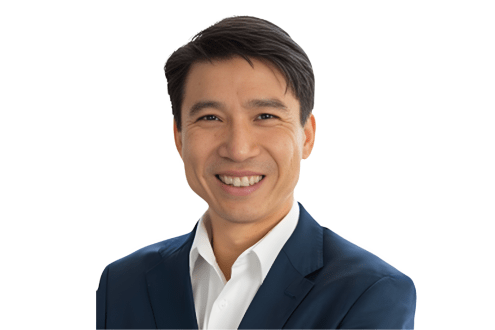
As the independent wealth management industry in Asia continues to develop, firms are increasingly being shaped not only by market forces, but by deeper questions around alignment, business model and long-term purpose. For Edwin Lee of Covenant Capital, which will turn ten this year, that reflection is particularly timely. As both a firm and an industry, he argues, the region is still relatively young, fragmented and far less mature than the more established advisory markets in the US and Europe. That creates opportunity, but it also creates real constraints around how quickly the sector can evolve and what kind of consolidation or professionalisation is realistically possible.
Looking back over the past decade, Lee frames Covenant Capital’s journey through a stewardship lens. The firm, he says, set out to be a catalyst for change by “realigning investment professionals back to the core role of stewardship,” but he is equally clear that the wider ecosystem has not yet moved as far or as fast as he once hoped. In his view, Asia still lacks the degree of business model consistency seen in the US RIA market, where fee-based, fiduciary models are more established and where firms have been able to scale, consolidate and professionalise around a more homogeneous foundation.
A Young Industry Facing Structural Constraints
Lee’s broader industry view is shaped by that comparison with more mature markets. He notes that Asia remains highly fragmented, both in the number of firms and in the variety of business models they operate. Some are closer to fee-based fiduciary practice, while many others still sit within retrocession-driven structures. That matters because it makes consolidation more difficult and slows the development of a more unified advisory standard across the region.
He is candid that his own view has become less optimistic over time. “In the past I was a bit more optimistic,” he says, referring to the possibility that advisers, clients and founders might gradually move together towards a more aligned, fee-based model. Today, he appears more cautious. Without stronger top-down shifts, especially from regulators, he believes progress in Asia is likely to be slower than in markets like the US.
That sense of structural friction also extends into the compliance environment. Lee acknowledges why the industry has moved towards stricter KYC and source-of-wealth checks, particularly given the rise in financial crime scrutiny, but he is also clear that the current system creates friction for legitimate clients. As he puts it, “the good clients are being penalized for all the bad actors in the industry.” For him, one of the key questions for the market is whether a better midpoint can be found – one that protects the system without making the experience unnecessarily burdensome for clients who are acting in good faith.
Client Expectations Are Expanding on Two Fronts
Lee describes client evolution through two distinct but increasingly connected fronts: the investment side and the broader wealth planning side. On the investment front, he points to a growing awareness that traditional portfolio construction is not always delivering the diversification many clients assume. In particular, he notes that the correlation between stocks and bonds has become a more serious concern in recent years, weakening the protective value of the classic 60-40 model during periods of stress. That has made alternatives more important, but it has also forced a more careful conversation about the trade-off between diversification and liquidity.
Covenant Capital’s answer to that challenge has been to focus more deliberately on liquid alternatives, especially hedge funds. Lee says this has been an important source of value for client portfolios, particularly in trying to achieve what he describes as “your holy grail of equity-like returns with bond-like volatility,” without imposing too severe a liquidity penalty. That focus has developed into a meaningful part of the firm’s positioning, not just for its own clients, but for other market participants as well.
He notes that the firm’s Fund of Hedge Funds programme, launched in a VCC structure, is now being used not only by Covenant’s own clients and single-family offices, but also by peer firms and other EAMs. That, in his view, is significant. “That’s a testament of trust,” he says, because for another firm to place Covenant in front of its clients requires a meaningful level of confidence, especially given that Covenant also operates as an MFO.
The second front is broader wealth planning and advisory. Here, Lee argues that clients are asking more fundamental questions about purpose, impact and values. He suggests that many families have historically separated their capital into two conceptual pockets – one for investment and one for giving – without fully thinking through the impact of the invested capital itself. That is starting to change. Increasingly, some families want to ask not only how their assets are allocated, but what those assets are doing in the world and whether their portfolios align with the values they claim to hold.
This is one of the areas where Covenant has tried to move earlier and more deliberately than many peers. Lee points to the launch of Asia’s first faith-aligned public markets portfolio as a fund, describing it as the first offering of its kind in the region. He links that directly to the broader advisory work the firm is doing with families around “values, mission, vision” and the role capital plays not just financially, but morally and socially.
A Differentiated Model Built Around Investment Depth and Holistic Wealth Stewardship
When asked what differentiates Covenant Capital, Lee points to two areas in particular. The first is the firm’s recognised capability in hedge funds, manager selection and portfolio construction. He highlights the presence of an experienced CIO with hedge fund background, along with in-house quantitative capability and a strong investment process. That combination, he suggests, has become increasingly visible in the market through the trust other firms and family offices have placed in Covenant’s hedge fund offering.
The second is the firm’s broader view of wealth itself. Lee argues that wealth advisory should not stop at financial planning or retirement projections. Instead, he believes the real challenge is helping multi-generational families articulate what they value, what they are trying to achieve and how they should steward not just financial capital, but all forms of wealth. As he explains, “It’s not just financial wealth, it could be financial, yes, but it’s your time, your energy, your relational wealth, your influential wealth.”
That broader philosophy is not presented abstractly. Lee offers practical examples from his own life and from his work in the industry. He speaks about fostering and serving children from children’s homes as an expression of relational wealth, and about using leadership roles in the AIWM to help seed a bursary initiative with SMU as an example of stewarding influence for wider benefit. His point is that wealth, properly understood, is not just about portfolio size. It includes relationships, time, credibility and the ability to create positive outcomes for others.
In that sense, Covenant’s differentiation is not simply product-based. It lies in trying to combine serious investment capability with a much wider advisory frame – one that asks families to think beyond return targets and into what stewardship actually means across generations.
Portfolio Construction with a Values Lens
On portfolio construction itself, Lee is clear that Covenant still begins with the fundamentals. Objective setting, asset allocation limits, fund selection and manager selection all remain core parts of the investment process. In that sense, the firm is not trying to reinvent the basics of wealth management. Rather, it is trying to add additional dimensions on top of a traditional investment foundation.
One of those dimensions is alternatives, particularly hedge funds, where the firm believes it has built a genuine edge. Another is values alignment. Lee says Covenant is increasingly helping families think about portfolio construction along a second axis: not only how much is allocated to equities, bonds, hedge funds or cash, but how much of the overall portfolio is values-aligned, traditional, impact-focused or directed towards giving. That, he suggests, is still relatively unusual in this part of the market and reflects a broader attempt to crystallise how a family wants its capital to behave.
The aim is not to replace performance as a concern, but to place it within a wider context. For Covenant, portfolio construction appears to be evolving from a purely financial optimisation exercise into something closer to an expression of family identity, purpose and stewardship.
Technology and AI as Internal Multipliers
Lee’s discussion of technology and AI is notably practical. Rather than presenting it as a futuristic talking point, he describes it as a way of magnifying internal capability and allowing a relatively lean team to scale more effectively. One area of development is an internal proposal and portfolio review system that enables wealth managers to model allocations, simulate changes and generate statistics such as Sharpe ratios, drawdowns, volatility and returns in a matter of clicks. In Lee’s telling, this is not just about efficiency for its own sake. It is about giving advisers better tools to walk clients through the effects of allocation changes and risk-return trade-offs in a more visual and intuitive way.
The second, and more ambitious, application lies in using AI as a form of virtual analyst layer. Lee describes a model where different AI agents can act as sector analysts, financial analysts or competitive analysts, with their insights then fed into a higher-level virtual portfolio manager before being used in portfolio construction. He describes this as giving the team “your army of analysts and PMs effectively through AI,” which in his view is particularly powerful for a firm that does not have the scale of a large bank.
He also points to forensic accounting as an example of where this can add value. In his description, AI can identify red flags in financial statements that might otherwise be easy to miss. Taken together, these tools appear central to Covenant’s proposition for current and future advisers within the firm: not just a platform, but a business designed to equip wealth managers with better systems to serve clients on both the technical investment side and the broader wealth consulting side.
The Next 12 to 18 Months
Looking ahead, Lee identifies three priorities. The first is continuing to grow the Fund of Hedge Funds platform, which he now sees as a genuine edge for the team and a business line with growing traction among institutions, partner firms and families. The second is expanding the values-aligned wealth practice, especially the parts of the business that help families think more deeply about stewardship, purpose and alignment.
The third is growth in the broader wealth practice itself, including bringing in new bankers and banker teams. Lee says there has been a pipeline over the last year and that supporting incoming advisers well will be a key focus over the next two years. At the same time, he is intentionally open to deeper collaboration with like-minded firms and believes that some form of consolidation is likely over time. But he is equally clear that this cannot just be about scale. In his view, any coming together has to rest on genuine values alignment. “Whoever’s coming together must be able to resonate in terms of values,” he says.
That final point ties the whole interview together. Covenant Capital is not just positioning itself around investment capability or product innovation. It is trying to build a model where investment professionals, families and partner firms are all moving in a direction more closely aligned with stewardship. In a region where the industry remains fragmented, uneven and still relatively young, that may prove both its biggest challenge and its clearest differentiation.