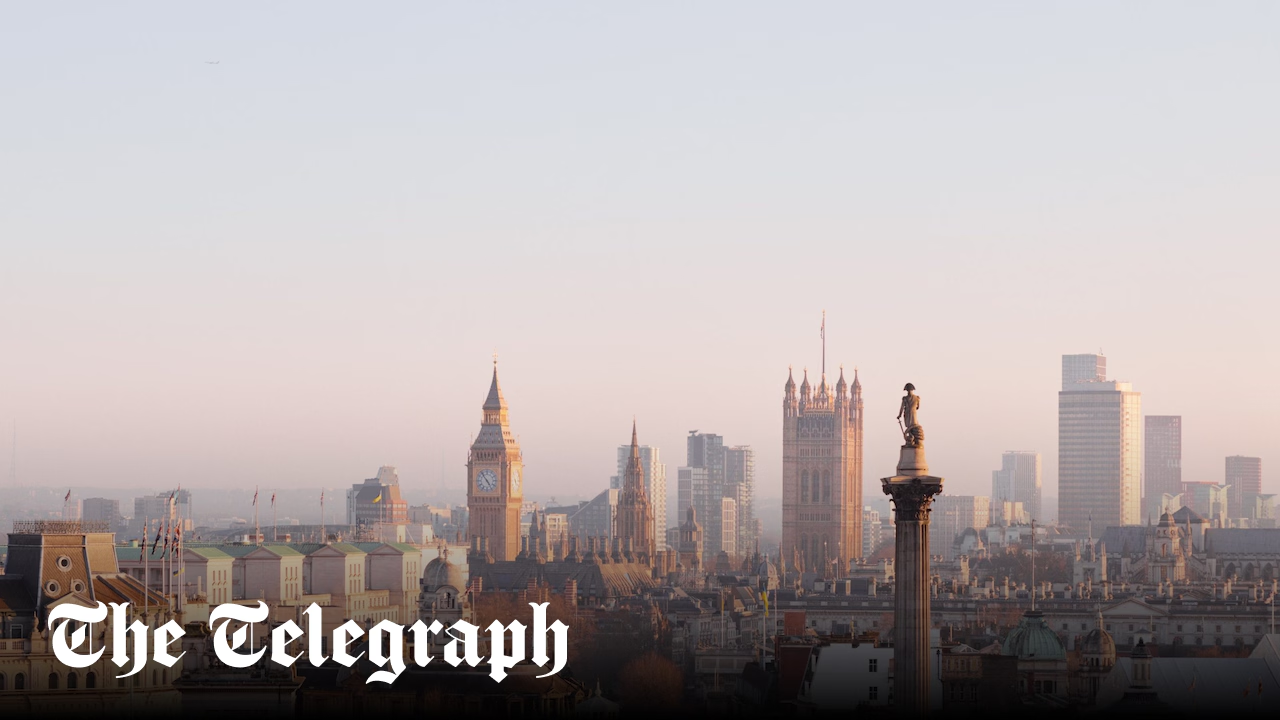
Historically, Westminster has been more reliant on government funding because of its low tax take.
But the Government has stripped back its funding over the next four years from £219m to £119m. Combined with an expected rise in costs, demand for services and inflation, the council believes it will be left with a £160m shortfall by 2029.
Westminster’s cash allocation has been cut in favour of redistributing it to poorer local authorities. Under nationwide reforms, Labour believes its new “fairer, evidence-based funding system” will target deprived areas.
But Paul Swaddle, the council leader, said the Government’s funding review was a “transfer of wealth dressed up in technical language”.
“We collect £2.5bn in business rates in this city and don’t keep a penny of it, it goes straight back into the Government’s system,” he said.
“We have around 200,000 residents and up to 800,000 visitors coming into Westminster on any given day, and we’re still expected to fund all of that from a shrinking grant and a council tax base that was never designed to carry it alone.”
Kensington and Chelsea, Wandsworth, Hammersmith and Fulham, and City of London councils were all also granted powers to raise council tax above 5pc for the next two years.
A spokesman for the Ministry of Housing, Communities and Local Government said: “Our reforms are targeting funding where it is needed most and removes the unfairness in the system where a house worth £5m in Westminster will pay less than a family home in places like Blackpool and Darlington.
“Decisions on whether to increase council tax are ultimately for local authorities to make and justify but we continue to expect any decisions to put taxpayers first.
“The flexibility given to Westminster council is time-limited and the resources available for them are increasing by £10.8m between 2024-25 and 2028-29.”