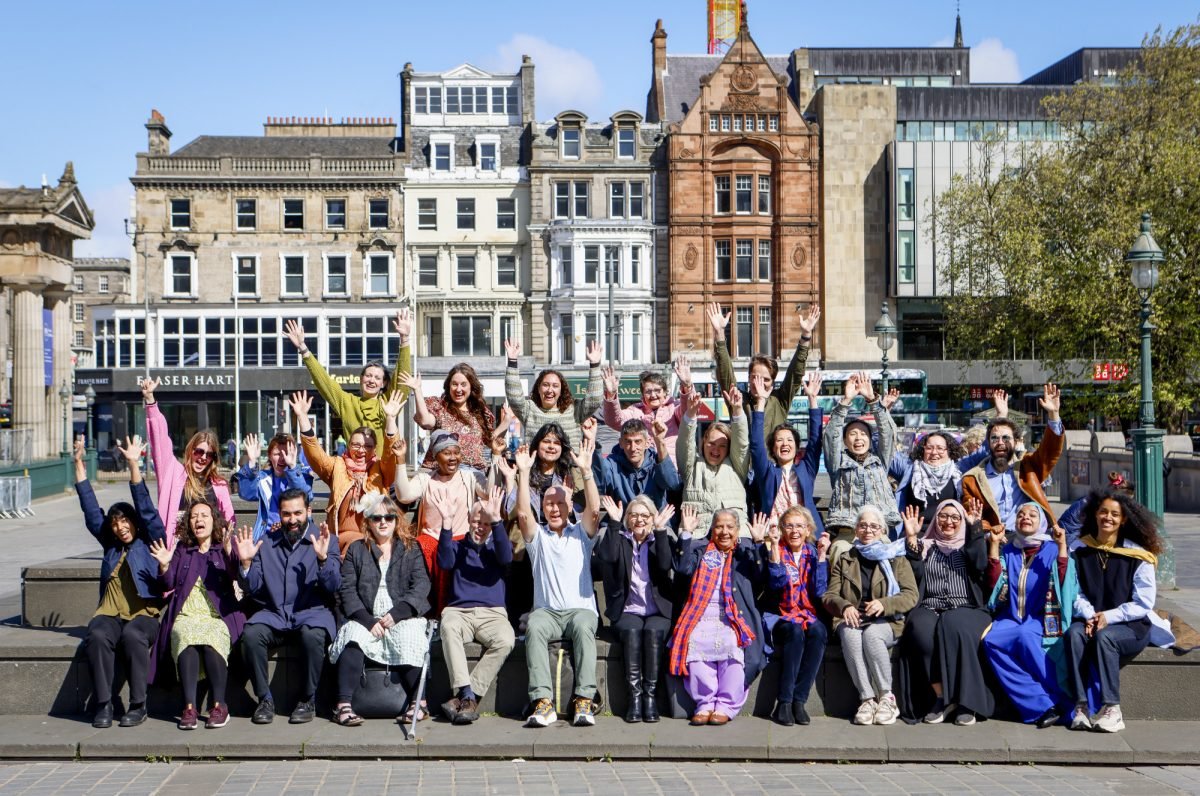
Eleven organisations and collaborative partnerships have been selected to receive sustained support following an open city-wide application process.
Projects supported include those building financial security and tackling stigma around poverty within Edinburgh’s Sikh community, supporting paid opportunities for Black creatives to address structural barriers in the arts sector, and co-designing local food and medicine production and distribution.
Each award will provide up to a million pounds over ten years, offering long-term, unrestricted funding designed to enable deep and lasting change in communities across Edinburgh.
Funding decisions were made by a Residents’ Panel made up of local people with lived experience of poverty and racism.

Other awards span a range of organisations and partnerships across the city, delivering initiatives such as advocating for improved local housing conditions, supporting community-led climate focussed activities initially within the Sudanese community, and engaging local communities around the development of heat network implementation.
Leah Black, co-head of the Fund, said: “Reaching this stage is hugely significant, allowing organisations and partnerships to turn long-held ambitions into long-term action.
“The Regenerative Futures Fund represents a real shift in how funding can be transformational when communities are placed at the centre.
“We are deeply grateful to all involved, and to the Residents’ Panel whose time and insight shaped every stage of this journey.
“In the wealthiest city in Scotland, where 17% of people – including 21% of all children – live in relative poverty, we are operating in a complex environment.
“Poverty, racism and climate change are interconnected, real and present challenges for us all, and tackling them requires long-term commitment, trust and collective action.”
Aala Ross, co-head of the Fund, said: “This is a landmark moment for Edinburgh. These organisations will receive long-term, unrestricted funding to support the work they are already leading in their communities.
“This has been a long, collaborative process shaped by months of dialogue and reflection across the city.
“This Fund is about trust, and about recognising that communities already hold the knowledge needed to create change. We will continue working alongside them and learning from them over the years ahead.”
Representatives from Migrant Justice Edinburgh said: “The Regenerative Futures Fund represents a funding approach that feels both timely and important within the current landscape.
“It offers something that remains relatively rare: long-term, 10-year support that enables organisations to think and act beyond short-term cycles.
“This creates the conditions for work that is strategic, adaptive, and focused on long-term change.
“Just as importantly, the Fund places strong emphasis on centring residents — particularly those most affected by poverty — and encourages an intersectional approach that recognises how poverty is shaped by racism, the climate crisis, and wider structural inequalities.”
The Residents’ Panel said: “This wasn’t just about selecting projects, it was about responsibility to the city and the future. We wanted to create a better Edinburgh and that has driven this work from the very beginning.
“We’ve seen the strength, creativity and ambition that already exists across the city, and this process was about giving groups the capacity and trust to deliver the real change we all need to see.
“It has been a real privilege to be part of something that is so grounded yet so innovative.”
The Fund is supported by a coalition of national and local funders, including charitable foundations, local authority and philanthropic partners, who pooled resources but stepped back from decision-making to place control within communities.
Those who have already committed funding towards the pooled Fund include the City of Edinburgh Council, Esmée Fairbairn Foundation, The National Lottery Community Fund Scotland, The Robertson Trust, Turn2us Edinburgh Trust, and Foundation Scotland, who also host the Fund. Recent local philanthropic support from Tom Ward and other local philanthropists reflects growing confidence in the Fund’s approach. The Fund continues to welcome new funding partners supporting long-term, community-led change.
Giles Ruck, chief executive of Foundation Scotland, said: “The Regenerative Futures Fund represents something quite rare in the funding world.
“It offers long-term, collaborative funding, where those who already hold the expertise and lived experience of the issues this fund is designed to challenge, are leading.
”We need to see more of this. It puts trust in communities and gives organisations the time and flexibility they need to address complex challenges.
“This Fund offers a powerful alternative to short-term thinking and could influence place-based funding far beyond Edinburgh.”
Over the coming months, the funded cohort will begin long-term delivery work across Edinburgh, focused on tackling the root causes of poverty, racism and climate inequality through community-led approaches.
The eleven organisations and partnerships receiving support from the Regenerative Futures Fund are: Be United; Cables Wynd House Residents Group with Making Rights Real; Sudanese Community Edinburgh with Edinburgh Science Foundation; Lauriston Farm Collective; Living Rent Edinburgh; Migrant Justice Edinburgh (Empowering Multicultural Communities Alliance, Citizens’ Rights Project, Workers’ Observatory); Networking Key Services Ltd; Porty Community Energy; Scottish BPOC Writers Network; Sikh Sanjog; Transition Edinburgh South with Edinburgh Community Food.