In Scotland winter has arrived. But not it seems at Westminster.
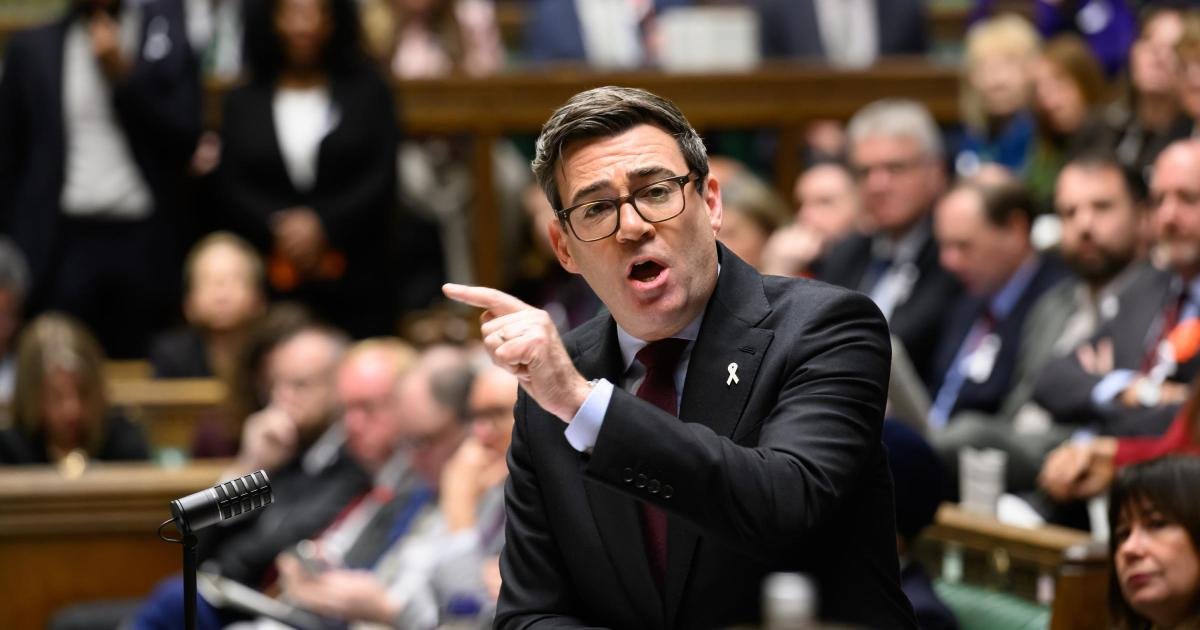
Despite yesterday’s shocking announcement of an energy price cap that will rise a record 26% in January, it was not affordable heating but point-scoring over Europe and social influencers that dominated Prime Minister’s Questions.
Kemi Badenoch disparaged Burnham’s EU deal, demanded welfare cuts and attacked Max Beledge (me neither) who filmed himself outside Number 10 miming lyrics about “Bomboclaat pussywagon chicken nuggets”.
READ MORE: NHS Grampian surgeon removed from theatre while recovering from endoscopy
Yip – fairly yuk. But not as yuk as the certainty folk will die this winter because of soaring energy prices. Or the fact politicians and the media have disengaged with the ‘energy story’ because it seems intractable, insoluble, above the generalist’s paygrade and likely caused by specific circumstances – the war in the Straits of Hormuz.
We need politicians telling it like it is, pinpointing problems and solutions – is that what’s happening?
At PMQs, Lib Dem leader Ed Davey did call for a windfall tax on big energy company profits.
In response Andy Burnham said he acknowledged the price cap “will cause concern”.
Jings. Concern.
Outside in reality-land, others were calling a spade a spade.
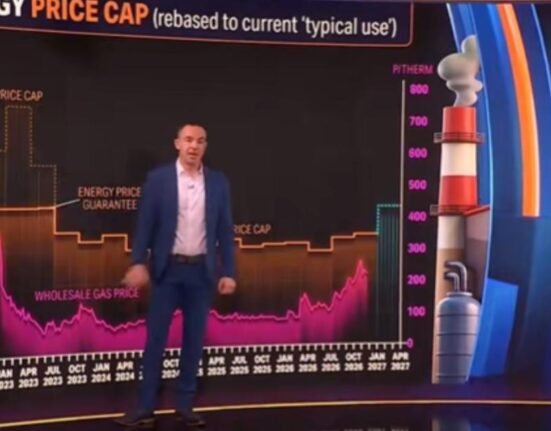
Consumer expert Martin Lewis on Good Morning Britain spoke of the “devastation” facing a lot of families: “The people are in desperation, and lives are at risk. I do not apologise for giving out information (about how to heat the person not the home) but I don’t want a society and a situation where I have to do that. Our system is broken and it is going to continue to be broken.”
The estimable Frazer Scott of Energy Action Scotland told Radio Scotland the latest price cap will push gas up to its highest ever unit price with electricity almost at its highest. For useful and terrifying context, he pointed out the price rise in January is higher than in 2022/23 when the UK Government gave everyone £400 to offset hikes caused by the Russian invasion of Ukraine and reopening of industry after the Covid crisis.
Yet despite that support (four times more generous than what’s on offer today) a record number of excess winter deaths occurred in 2022/3– the highest for 30 years.
So, let’s be clear.
The price cap actually kills. Though no one in polite society is putting it quite like that. Even John Swinney’s condemnation seemed a tad performative: “Scotland’s energy sends billions in revenue to the Treasury, yet our bills are skyrocketing. Scotland’s energy is projected to send an additional £2.6 billion in revenue to the Treasury next year – we are one of the most energy-rich nations in the world and yet we pay some of the highest bills – it does not add up. The UK Government came to office promising to cut energy bills by £300 but bills are already around £300 higher and will rise further in January. We need to see the Prime Minister deliver on that promise and urgently set out how he will bring bills down substantially.”
That’s all true. But it lacks bite.
The PM must bring down bills or else … what? I know. This is why we want independence.
Scottish independence supporter outside the Scottish National Party (SNP) annual conference, at The Event Complex Aberdeen (TECA). Picture date: Thursday October 15, 2026.
Devolution is a miserable halfway house where an independence-supporting First Minister can only point out the unfairness of our energy-rich/heat poor predicament over and over and over again hoping that it rankles sufficiently with Scottish voters to boost Yes support.
Or is it?
Could the Scottish Government give their o’er wary lawyers the day/week/month off, close the doors to corporate lobbyists, stick their necks out, follow some more ambitious leads and produce some much needed hope and vision – even if that doesn’t 100% solve the energy crisis?
Well, yes.
First, they could back Octopus boss Greg Jackson, speaking on Tuesday, who said Scottish consumers should get free electricity during periods of high wind generation, instead of everyone paying to switch off turbines and switch on gas instead. I may have missed it but where was SNP backing for that inspired call?
The Octopus CEO also pinpointed the heart of Britain’s energy dilemma – not just wars and Donald Trump’s deranged Iran attack but a more mundane and enduring problem.
Electricity prices in the UK are set by the cost of gas – a link Jackson wants us to break. Why is he almost the only voice calling for this right now?
Has everyone else given up?
Remember, Jackson was also the man who stunned in 2025, suggesting that Ofgem should create different zones with different pricing instead of one overall UK energy price – such zonal pricing would be fairer and make energy in Scotland almost free acting as a huge spur to jobs and industry and tackling fuel poverty.
Did the SNP bite his hand aff? No they didnae.
The zonal pricing plan made total sense, but as rival energy firms pushed back, John Swinney sat firmly on the fence.
The SNP National Council did adopt Jackson’s zonal pricing in 2025 but too late. Starmer ruled it out and though John Swinney did protest, the moment had passed.
The time to get behind good ideas is when they are made. Or better still, when you have a bold plan of your own. Like the Welsh.
On St Andrew’s Day, the Welsh will finish their consultation on beefing up their National Energy Company – established two years ago despite operating within exactly the same devolved constraints as Scotland.
Our ministers say they stop us setting up a full public energy company that can cut energy bills – why they scrapped their own 2017 energy company pledge.
Meanwhile, Wales horsed on with something less – Trydan Gwyrdd Cymru and Ynni Cymru – which look set to become a single Welsh public energy company.
Yes, the SNP’s initial plan was more ambitious than the Welsh – to create a retail energy supplier with power to set consumer bills, and build grid connections – but when that failed because those levers sit with Westminster, why did we not go on to create SOMETHING?
Trydan Gwyrdd Cymru was set up by the Welsh Labour government and though it cannot set bills it keeps energy profits in Wales.
And that is not nothing.
On behalf of the Welsh government, Trydan has nine wind farms in development, which together should produce 1000 MW by 2040, returning revenue from electricity sales to the Senedd and reinvesting profits in Welsh communities and public services.
It might reduce energy costs over time and it will give the Welsh government a direct state an energy production and communities a share in financial returns.
Above all it creates a template, renewable expertise, hope and the birth of a different publicly owned model in Wales.
All of that could be happening in Scotland too. If only perfection was not the enemy of the good.
We could also deviate from the individualistic, Thatcher-inspired British model in heating and rejoin the collective North European approach by setting up a Scottish district heating company.
If that’s difficult, the Scottish Government could convert just one town or one street and make the point we could co-ordinate a wholesale switch after independence. Once again, we cannot tackle the lack of collective heating overnight, but we can would show that Scots won’t sit back and accept excess winter deaths in the Saudi Arabia of renewables.
We need signals. Action. Not just well-crafted rebukes. We should be bolder than the Welsh – we have more devolved powers, more energy, a colder climate and district heating/heat pump pioneers like Govan’s Dave Pearson.
Analysis matters. Political attacks must be sharp. But Yes supporters yearn for the days when there was more. Practical alternatives. Action.
Scottish advances in this archaic British state that we could point at in pride. What better cause than saving Scottish lives this winter – and next?