As electricity costs rise and climate conditions intensify, Gree is rethinking air conditioning with smarter, more efficient technology. From AI-driven cooling to durable, low-maintenance systems, the focus is shifting from just comfort to long-term savings and sustainability
Md Nurul Afser, Deputy Managing Director, Electro Mart Group. Sketch: TBS
“>
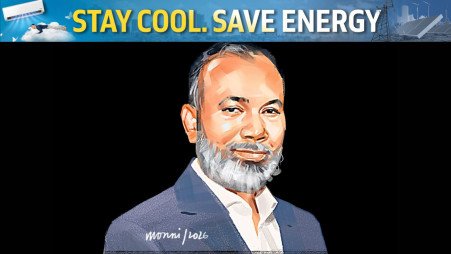
Md Nurul Afser, Deputy Managing Director, Electro Mart Group. Sketch: TBS
Energy efficiency in Bangladesh is no longer a lifestyle choice—it has become a financial necessity. Over the years, I have noticed a clear shift in consumer behaviour: people are no longer satisfied with just cooling performance; they want solutions that can meaningfully reduce electricity bills without compromising comfort. That is exactly where our focus at Gree lies.
At the heart of our approach is our proprietary G-Inverter technology. Unlike conventional air conditioners that operate in a fixed on-off cycle, our system continuously adjusts the compressor speed based on real-time room demand. This allows the unit to maintain a high coefficient of performance (COP), especially at partial loads where ACs spend most of their time running. The result is a reduction in electricity consumption of up to 70% compared to non-inverter models.
Gree Air Conditioner. Photo: Courtesy
“>
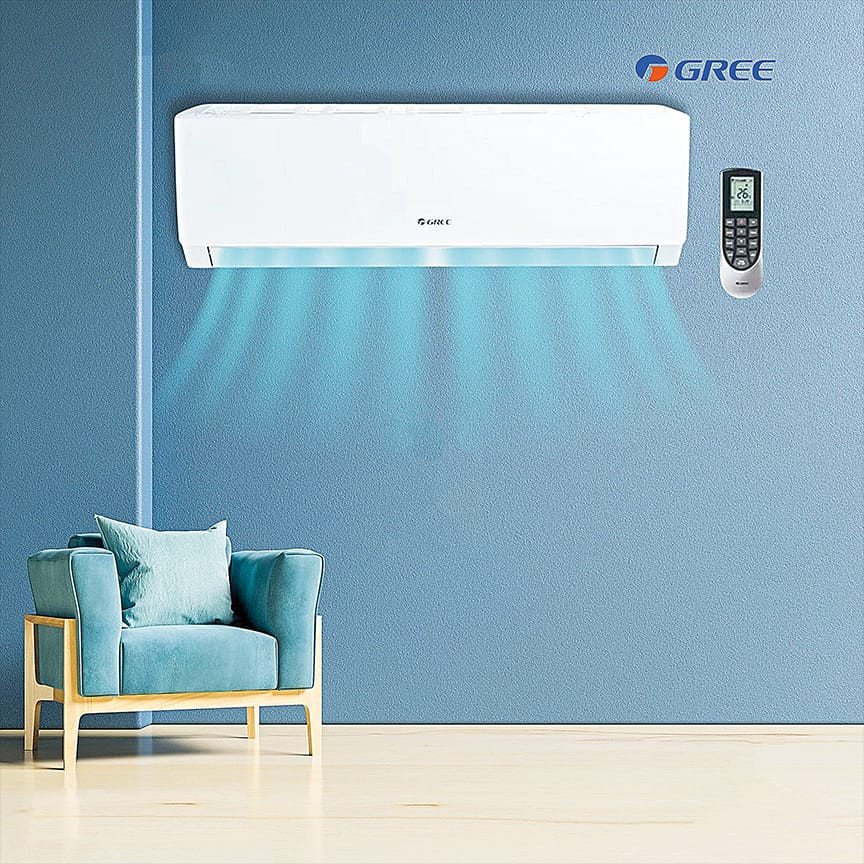
Gree Air Conditioner. Photo: Courtesy
We have also adopted Refrigerant R-32, which improves heat transfer, reduces compressor workload, and has a significantly lower environmental impact—around 68% lower Global Warming Potential than R-410A. But efficiency on paper is not enough. Bangladesh’s power conditions can be unpredictable, so our inverter ACs are designed to operate reliably within a wide voltage range—typically between 130V and 265V—ensuring consistent performance even during frequent voltage fluctuations.
In real-world usage, these efficiencies translate into tangible savings. A typical 1.5-ton Gree inverter AC can use 40–50% less electricity under similar conditions, reducing the AC’s share of monthly electricity bills by roughly 35–45%. Over an entire cooling season, households can recover nearly half of their running costs compared to conventional units. Features like I-Feel technology further enhance efficiency by sensing the temperature at the user’s location and preventing unnecessary overcooling, adding another 10–15% in energy savings.

Photo: TBS
“>
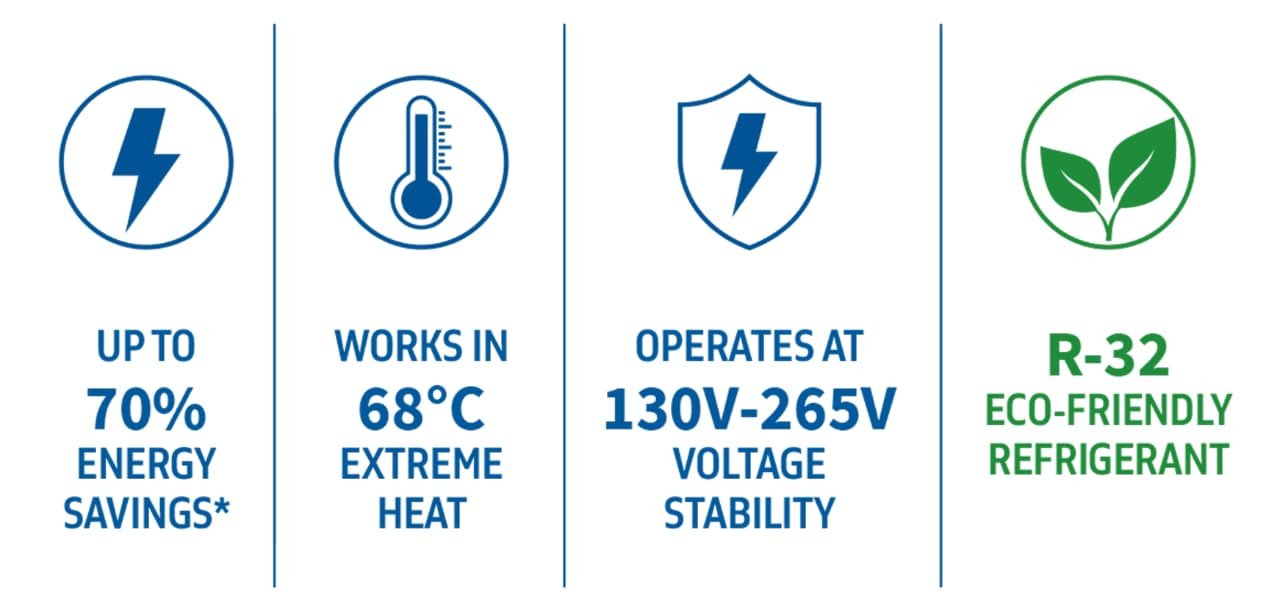
Photo: TBS
Of course, Bangladesh presents its own set of challenges—particularly voltage instability and extreme heat. We have engineered our systems to handle both. Built-in surge protection and a wide operating voltage range ensure stable performance, while Intelligent Auto Restart allows the AC to resume operation smoothly after power cuts, avoiding sudden surges that can strain the compressor. For extreme temperatures, selected models feature G-Boost compressor technology, which enables them to maintain cooling performance even when outdoor temperatures rise above 43°C and, in some cases, up to 68°C.
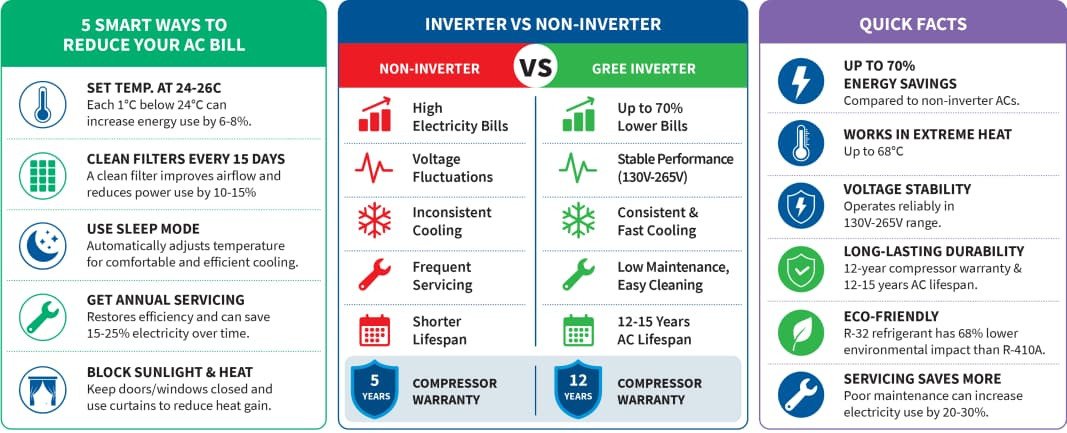
That said, even the most advanced technology cannot deliver optimal efficiency without proper maintenance. In Bangladesh, we often see three common mistakes that drive up electricity consumption. The first is neglecting to clean air filters. A clogged filter restricts airflow, forcing the system to work harder and increasing energy use by 10–15%, even though cleaning it every two weeks is quick and simple. The second is skipping annual servicing, which allows dust and biofilm to build up inside components, raising power consumption by 15–25% over time. The third is setting the temperature too low—often between 18°C and 20°C—in the belief that it will cool the room faster. In reality, this only prolongs compressor operation, with each degree below 24°C increasing energy use by 6–8%. The ideal range remains 24–26°C.
Banner: TBS
“>

Banner: TBS
To make maintenance easier—especially in a market where after-sales awareness can be limited—we have focused on simplifying the user experience. Our indoor units now feature self-cleaning functions, while Cold Plasma technology helps neutralise bacteria and allergens on the heat exchanger, reducing microbial buildup and the need for frequent servicing. At the same time, a top-mounted, tool-free filter design allows users to clean filters easily without any technical assistance. We have also introduced self-diagnostic systems that display error codes directly on the unit, making troubleshooting faster and more straightforward.
Regular servicing makes a measurable difference. An AC left unserviced for over two years can use 20–30% more electricity, while a well-maintained 1.5-ton inverter unit can cut monthly costs by 25–35%. In many cases, servicing costs are recovered within months through energy savings, driven by better airflow, efficient heat exchange, and proper refrigerant levels.
Smart technology is also changing energy use. At Gree, features like I-Feel direct cooling where needed, while models such as the Clivia and Airy series use AI to learn user habits. This enables predictive cooling—for instance, pre-cooling a room before arrival instead of relying on a high-power start—delivering comfort with lower consumption.
Infographic: TBS
“>
Infographic: TBS
For households, simple steps go a long way: setting temperatures between 24°C and 26°C, cleaning filters every 15 days, using sleep mode, and scheduling annual servicing. Blocking sunlight with curtains and choosing the right AC size further improve efficiency.
Durability remains crucial in Bangladesh’s humid and dusty conditions. We address this with 100% copper tubing for better heat transfer and corrosion resistance, Golden Fin coating to protect outdoor units, and self-cleaning indoor features to reduce dust buildup. Compressor warranties of up to 12 years reinforce long-term reliability.
Looking ahead, ACs will become more adaptive, with deeper AI integration to optimise usage and predict maintenance needs. Advances like next-generation inverter technology and solar hybrid systems will further improve efficiency and reduce costs. Ultimately, the focus remains on delivering reliable, cost-effective cooling over the long term.