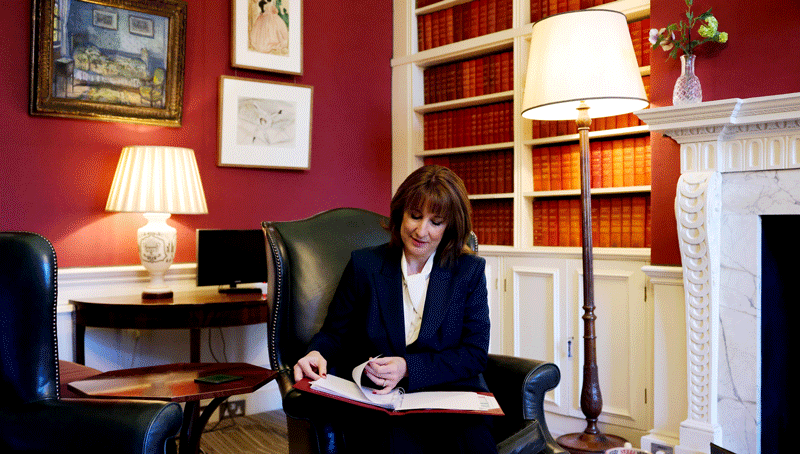
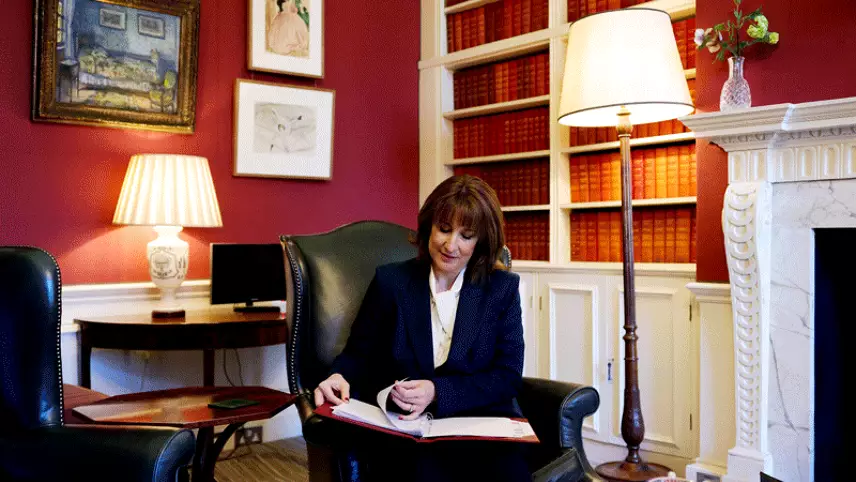
Image: Kirsty O’Connor for HM Treasury.
Market volatility has driven UK gas prices up more than 46%, reaching a three-year high. With Ofgem confirming the new energy price cap that will apply from July, the Chancellor has delivered a swathe of measures to shield businesses and consumers from price volatility caused by the war in Iran.
Reeves announced in a speech several measures to help consumers against rising energy costs.
The main introduction is new measures to stop oil and gas firms exploiting tax loopholes that would stop them from contributing to the UK economy.
The “foreign branches exemption” has enabled companies to offset losses that occur overseas, which in turn reduces the amount of tax they pay in the UK. It has meant that energy firms have paid “little or no” corporation tax on UK energy trading profits.
The changes are expected to raise hundreds of millions of pounds annually, and will be reinvested into measures that respond to the cost-of-living crisis, including free bus fares for children, tariff cuts on food and tax breaks for family attractions and hospitality.
It comes just days after the Energy & Climate Intelligence Unit (ECIU) found that prices of weather-hit foods are rising more than twice as fast as the rest of the grocery basket.
“When a country faces challenges because of higher oil and gas prices, we must ensure that those who benefit from increased prices and volatility pay their fair share,” Reeves said.
“Currently, some oil and gas groups that operate overseas through foreign branches have structured their tax affairs in a way which ensures they pay little or no Corporation Tax on their UK energy trading profits. Today we are putting an end to that practice.”
In Reeve’s first Budget, she extended and increased the Energy Profits Levy. The Energy Profits Levy is a temporary tax on the profits of companies producing oil and gas in the UK or the UK Continental Shelf (UKCS), which was first imposed in spring 2022 by then-Chancellor Rishi Sunak, to capture the extraordinary profits from oil and gas price hikes due to the Russian invasion of Ukraine.
It was set at 25% of profits, and an initial end date of the end of 2025 was set. It was subsequently increased by then-Chancellor Jeremy Hunt to 35% in early 2023. Hunt extended it to March 2029.
Under Labour, the Levy was increased to 38% and extended to the end of March 2030, unless oil and gas prices dip for six consecutive months. The Levy exists on top of 30% Ring Fence Corporation Tax, and a 10% Supplementary Charge. The overall tax burden can reach 78% as a result.
Reeves also spoke of pre-existing support for businesses to shield them from energy price shocks.
Reeves said: “We stand ready to act if market conditions worsen significantly later this year, and I have been leading cross-government contingency work on design of potential future targeted and temporary support.
“For businesses, any support will also need to be carefully targeted at firms most exposed to the crisis. But while many firms have been insulated from recent prices rises through fixed price contracts, there are sectors that face particular structural issues related to energy costs.
“That is why we have already increased support for our most energy-intensive companies through the British Industry Competitiveness Scheme and we’ve brought that forward.”
Industry reaction
Reeves’ announcement has been generally well received by green groups, although many argue that this does not equate to a line in the sand for fossil fuel profiteering.
Flossie Boyd, senior campaigner at Global Witness said: “Closing a loophole that oil giants use to dodge taxes is a welcome step in the right direction. For too long the fossil fuel industry has been allowed to make outrageous profits and siphon billions of profit into tax shelters, while millions struggle with spiralling energy costs.
“But one closed loophole does not create a fair tax system. We’re still handing billions in subsidies to the very industry that is driving up bills and destabilising our climate. The UK Government must now go further by ending fossil fuel subsidies, implementing a proper polluter-pays tax, and using the UK’s G20 Presidency and the UN tax negotiations to push these reforms globally.
“We need to end the fossil fuel doom loop once and for all. We can’t keep letting oil giants make monstrous profits from war, climate crisis and poverty.”
Susanna Elks, Senior Policy Advisor at E3G, said: “The elephant in the room is the missing announcement on energy bills. The Chancellor must prioritise removal of all remaining hidden taxes on electricity bills for households, business and industry. This would save households over £100 a year, help wean us off imported gas which drives up people’s bills every time there’s a new war, and help spark the economy back to life.”
Tom Greatrex, Chief Executive of the Nuclear Industry Association said: “This is a welcome step. The Chancellor is doing the right thing: if the UK is serious about energy security, clean power and economic growth, we need a planning system that enables delivery, not delay.
“New nuclear projects are vital national infrastructure, delivering reliable clean power, skilled jobs and major investment across the country. Giving developers and investors the confidence to move ahead is essential if the UK is to build at the pace this moment demands. These reforms rightly recognise that nationally important infrastructure cannot be left stuck in the slow lane.”
Chris Binns, Planning Director at Pegasus Group, comments: “The energy sector needs every buffer it can get to soften the blows from international conflict. The Chancellor’s reforms to shield energy infrastructure from court challenges today are a strong signal that the Government is serious about keeping home grown energy projects moving.
“Clearer Parliament powers to intervene in legal challenges should help to maintain a balance of scrutiny without creating unnecessary delays. It cannot be overstated how important it is right now that we protect nationally important renewables projects like solar and wind farms if the UK is to achieve energy independence while meeting net zero targets.”