It sounds almost impossible at first.
A “marine plant” that generates energy… without using water. No waves. No tides. Not even wind in the traditional sense.
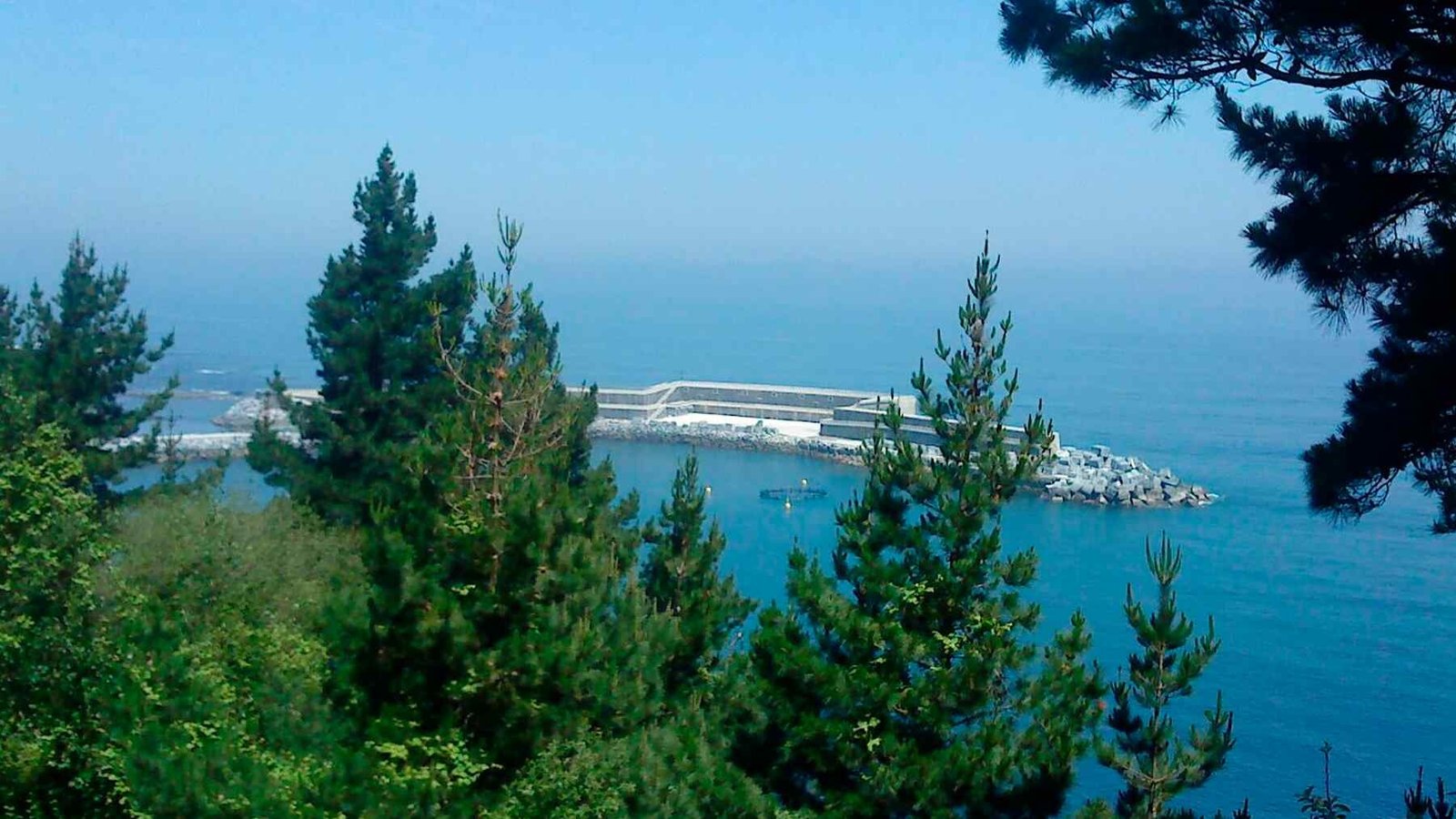
And yet, a new project in Japan is doing exactly that—quietly producing energy with an efficiency compared to tens of thousands of trees.
So what’s really happening behind this strange system?
How energy innovation is moving beyond what we expect
The way we generate power is changing faster than ever.
Solar panels are becoming more efficient. Wind turbines are getting larger and smarter. Even cities are experimenting with new ways to capture energy from everyday movement.
But some of the most interesting ideas don’t look like traditional energy systems at all.
They look… different.
In recent years, researchers have explored ways to generate power from temperature differences, pressure changes, and even subtle chemical imbalances.
Because energy doesn’t always need motion you can see.
Sometimes, it comes from forces you barely notice.
And that’s where this new system begins.
A hidden force that could reshape clean energy
At first glance, the concept seems simple.
Place two types of water close to each other—freshwater and saltwater—and separate them with a special barrier.
Nothing dramatic happens. No waves crash. No blades spin.
But something invisible starts to build.
Salt ions naturally try to move from one side to the other, seeking balance. And that quiet movement creates pressure.
A steady, continuous force.
Now imagine capturing that force.
Not in bursts, but nonstop.
This is the idea behind a growing field known as “blue energy.” And in Japan, one project has taken it further than most.
Because what looks passive… is actually producing power.
The Pacific Northwest National Laboratory may have a few answers to our next generation of energy production.
The real mechanism behind the ‘marine plant’
We’re used to seeing power plants become more innovative and “extreme” The Elephant foot at Chornobyl is still releasing radioactive dust particles into the immediate surroundings, despite years and years having passed.
But this system is not a plant in the traditional sense.
It is an osmotic power plant, and its core is a highly specialized membrane.
This membrane separates freshwater from saltwater, allowing ions to move in a controlled way. As they pass through, they generate osmotic pressure.
That pressure is then used to drive a turbine.
And that turbine produces electricity.
No combustion. No visible motion from the outside. Just a constant internal process driven by chemistry.
The facility in Fukuoka generates around 880,000 kWh annually using this method.
And its environmental impact is significant.
Over time, its energy output can offset carbon emissions comparable to planting around 30,000 trees.
What seemed like a “marine plant” is actually a precise system built around one of nature’s simplest forces.
Why this quiet technology could matter more than it seems
Unlike solar or wind, this type of energy does not depend on weather conditions.
It works continuously, as long as the chemical gradient exists.
That makes it stable. Predictable. And potentially scalable.
For countries with access to both freshwater and seawater, the opportunity is clear.
And as global energy demand continues to rise, solutions like this are becoming harder to ignore.
Because the future of energy may not come from bigger machines.
It may come from understanding the smallest forces—and learning how to use them to generate sustainable, clean energy to power our cities.
The plant in Japan can offset carbon emissions drastically, equivalent to planting 30,000 trees. The country has been working on several new energy generation technologies in recent years, but this one has accelerated the energy transition to “blue energy”.