Those who believe Andy Burnham will step up oil and gas production in the North Sea — including Donald Trump — may be surprised by his choice of energy secretary.
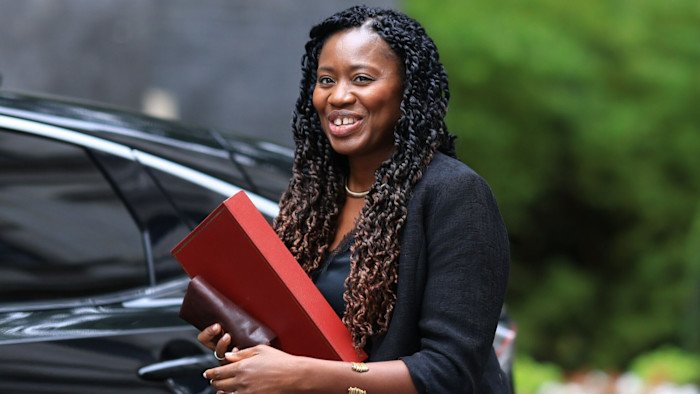
Far from marking a clean break from Ed Miliband, whose pursuit of net zero in the role made him a hate figure for rightwingers, Miatta Fahnbulleh is one of his longstanding intellectual allies.
Miliband’s attempts to keep the UK on track to achieve net zero carbon have been attacked by critics including Kemi Badenoch, whose Conservative Party first enacted the plan.
Yet Fahnbulleh has previously called for the target to be brought forward much more swiftly to the 2030s.
In 2019 she said there should be a “global Green New Deal” with the goal of achieving net zero “within 10 to 15 years”.
Imogen Dow, energy lead for environmental charity Friends of the Earth (FoE), welcomed the appointment given that Fahnbulleh had been “vocal about the need to reduce our reliance on fossil fuels”.
Burnham’s team has encouraged speculation that he will allow more drilling in the North Sea through measures such as more flexibility around the use of “tiebacks”, which enable drilling to take place adjacent to sites with existing licences.
Media reports about Burnham wanting to expand drilling delighted climate sceptic Trump, with the US president claiming on social media this would turn Britain from a “Poverty Stricken Disaster” to a very rich country.
But at the weekend Lucy Powell, deputy Labour leader, said the party’s ban on new exploration licences would remain in place, describing Burnham’s approach to energy policy as “a change of emphasis” rather than a “change of policy”.
In 2021 Fahnbulleh was head of the New Economics Foundation when it produced a report calling for a total end to new drilling in the basin.
The think-tank, in a joint report with FoE, called for the cancellation of all future licensing rounds, the revocation of all undeveloped licences and the rejection of any applications for development consent.
It also recommended that planning policy should be altered to specify that no additional fossil fuel extraction was needed.
The NEF called for an end to all financial support for fossil fuels, including tax breaks, in the UK and abroad. It also recommended that some existing, under-developed fields could be closed early.
Offshore Energies UK (OEUK), a lobby group representing North Sea oil and gas companies, urged Fahnbulleh to meet company representatives to clarify that the new government “backs homegrown energy production” over imported oil and gas.
It also said the industry “urgently needs” the government to approve the multibillion-pound Jackdaw and Rosebank projects off the coast of Scotland, which have been strongly opposed by climate campaigners.
Although both schemes received licences years ago, they were thrown into legal limbo by a court decision last year.

“The UK will still need oil and gas for decades to come,” said David Whitehouse, OEUK chief executive. “We urge our new energy secretary to back North Sea production as part of a secure and managed energy transition.”
Brian Gilvary, the chair of Ineos Energy, a North Sea oil and gas producer, said there was still a “huge opportunity” for the UK to produce more oil and gas, and that it made “absolutely no sense” for the country to be importing so much gas from Norway instead of trying to produce it domestically.
Fahnbulleh is one of the fastest-rising stars in the Labour Party, having been made a junior minister just after entering parliament in 2024.
Before becoming MP for Peckham she worked in the Cabinet Office, then at the Institute for Public Policy Research think-tank, before running NEF for six years until 2023.
Last year, as an energy minister, she told the Commons the energy shocks of recent years had shown Britain why it had to break its reliance on global fossil fuel markets.
“We will sprint to clean power, because that is the route by which we achieve energy security for the country . . . we are on the right side of history and on the side of consumers,” she said.
“The price cap went up . . . because of our reliance on global fossil fuel markets. We must break that reliance. We have to wean ourselves off this rollercoaster of price spikes and price falls.”
In 2023 she criticised then-PM Rishi Sunak for failing to impose a tougher windfall tax on energy companies after Russia’s full-scale invasion of Ukraine. She has also called for the Bank of England to do more to support the transition towards net zero.
Michael Jacobs, a former Downing Street climate adviser to Gordon Brown, said the appointment would reassure supporters of the green economy that Burnham was not retreating from the climate agenda.
“After all the speculation that Andy Burnham wants to grant new exploration licences in the North Sea, the appointment of Miatta Fahnbulleh is a clear signal that he is not rowing back on the UK’s climate and clean energy commitments,” he said.
“Fahnbulleh is strongly committed to the net zero programme, to the electrification of the economy and to the job-creating green economy.”
A Department for Energy Security and Net Zero spokesperson said: “Net zero is the economic opportunity of the 21st century — we’ve secured £100bn in private investment into clean energy this parliament.
“As the energy secretary said, her focus is bringing bills down for good.”