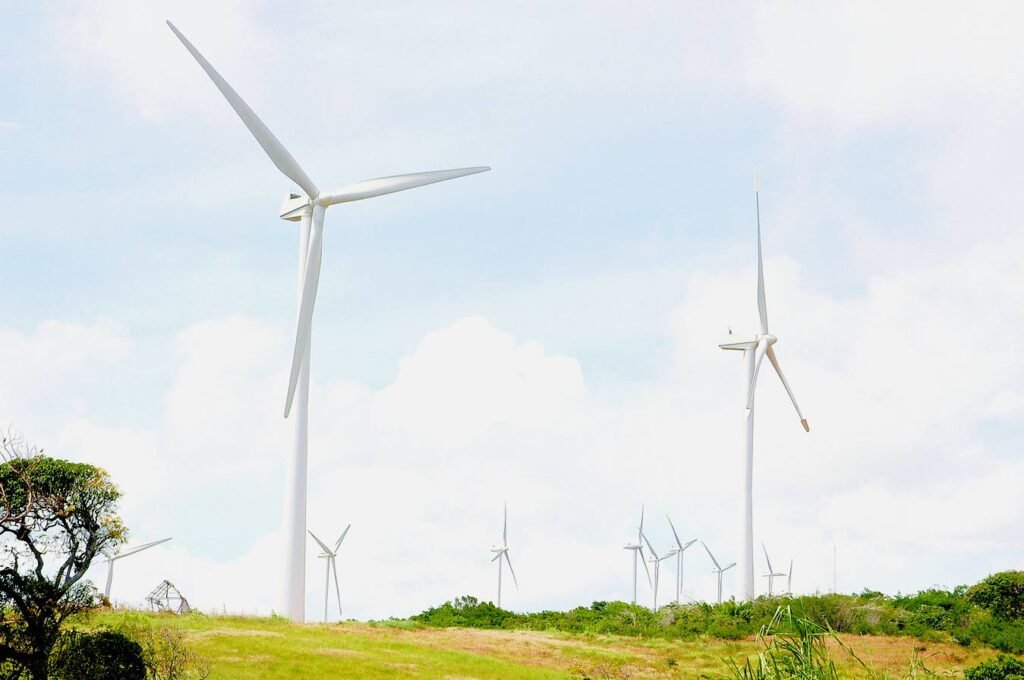
Jamaica has a goal to generate 50 per cent of its electricity from renewable sources by 2030, backed by wind, solar, and battery storage.
Last month, on June 10, for its sixth annual Maurice Facey Lecture, the Pan Jamaica Group and the CB Facey Foundation brought Uruguayan energy expert Dr Ramón Méndez Galain to outline Uruguay’s tremendous success in transforming its energy sector from one that was very dependent on imported fossil fuels to one that now generates 99 per cent of its electricity from renewable sources at a price, he said, of US$0.05 or $0.06 per kilowatt hour.
His key response to the event’s theme, ‘Breaking the Grid: Charting Jamaica’s Path to Renewable Energy’, was that Jamaica had a unique opportunity to transform its energy sector, reduce electricity costs, and boost economic competitiveness, but only if it can build a political consensus to pursue the bold reforms required to accelerate its transition to renewable energy.
Dr Galain argued Jamaica’s abundant solar and wind resources, declining global renewable energy costs, and rapid advances in battery storage technology made a faster transition increasingly achievable. Critically, however, he observed policymakers “have to stop asking renewables to play the game with rules that were not made for them”, meaning: Compete under the rules designed for a fossil fuel-based system.
This issue of the “rules of the game” cannot be ignored any longer. Jamaica has a target of 50 per cent of its electricity from renewable energy by 2030, with some of our Caricom neighbours targeting 100 per cent of electricity from renewable energy by 2030.
While some have reasonably questioned, based on our past experience, our ability to reach even the 50 per cent, Sunterra CEO Emanuel DaRosa has been writing a series of excellent articles on renewable energy. While we will make no attempt to summarise all of them today, importantly, his latest observes that with the new planned 300 megawatt (MW) procurement tender, total solar and wind capacity would deliver approximately 558.3 MW of energy to the national grid, compared to Jamaica’s average grid demand of approximately 550 MW. Peak demand is higher, of course, at approximately 700 MW. In short, he notes, at current demand, under certain times of the day and year, we would approach renewable energy generation of 100 per cent.
He breaks this 558.3 MW down as follows: Jamaica already has utility-scale solar on the system, including Content Solar of 20 MW and Eight Rivers/Paradise Park of approximately 52 MW DC, which delivers approximately 37 MW AC to the grid. In addition to solar, he notes that Jamaica has utility-scale wind generation, including Wigton Windfarm at approximately 62.7 MW, BMR/InterEnergy Jamaica Wind at 36 MW and the Jamaica Public Service Company (JPS) Munro Wind Farm at 3 MW for a combined installed wind capacity of approximately 101.7 MW.
The 2024 procurement exercise awarded approximately 100 MW of new solar capacity, including SunTerra’s Midnight Sun project at 50 MW and Wigton’s project at 49.6 MW.
DaRosa observes the new 300 MW of renewables tender includes, importantly, 150 MW of battery storage, with media reports suggesting a 20-year power purchase agreement structure with a co-located renewable energy and battery storage model.
Local energy expert Stephen Wedderburn notes that one of the remarkable aspects of Uruguay’s energy sector is that it has achieved almost 100 per cent renewable electricity without battery storage or other energy storage facilities, despite the inherent variability of renewable energy production being often cited as a barrier to greater renewable energy use.
The traditional approach to addressing this variability has been to install battery energy storage systems (BESS), but Uruguay has taken what he describes as a “very innovative approach” of using existing fossil fuel plants to address the variability of renewable energy production rather than acting as baseload or what is called “despatchable” power.
He argues that while this means Uruguay will never reach 100 per cent renewable electricity, its innovative approach has taken it closer to this target than virtually every other country in the world, and it has avoided large capital investments in BESS by simply changing how it used existing fossil fuel power plants. These plants now perform a role similar to batteries, coming online when renewable energy production drops, and, therefore, run for much less time than they do in most electricity systems around the world.
Interestingly, in his analysis of Haiti in the presentation, Dr Galain recommended solar with backup from heavy fuel oil as the correct solution.
It is worth noting that Uruguay also has significant hydro and biomass that can act as baseload, although Dr Galain noted that due to climate change the hydro now acts more as backup for the solar and wind, hence reducing the need for batteries.
Wedderburn argues this backup approach for fossil fuels is worthy of close study in Jamaica: “As we push for more renewables, the thinking has been that we will gradually shut down most of our fossil fuel plants. However, if these plants can be used to promote greater use of renewable energy, as Uruguay has done, we have a win-win situation. We continue to utilise existing fossil fuel plants, which represent sunk capital, thereby reducing the need for new capital expenditure on BESS while increasing the speed at which renewables can be added to the grid and reducing our overall fossil fuel emissions.”
Global renewable energy expert Roberto Krell, who also happens to be Uruguayan but has done projects all over the world, expanded on one of Galain’s key points: “The cost of capital is key. With solar and wind, there is no fuel bill, almost the entire cost of the electricity goes toward repaying the money borrowed to build the project. The interest rate, therefore, has a critical influence on electricity production costs. Uruguay pushed that rate down through 20-year contracts and by giving investors confidence through a clear legal framework, freedom of capital flows, transparent rules, and equal enforcement for local and foreign investors. Jamaica has the opportunity to emulate that effort.”
Galain noted the critical importance of a political consensus around the country’s energy future, with a large part of Uruguay’s success being due to a shared vision among Uruguay’s political parties on a long-term energy plan. In future articles we will explore what such a partnership could look like.
Keith Collister