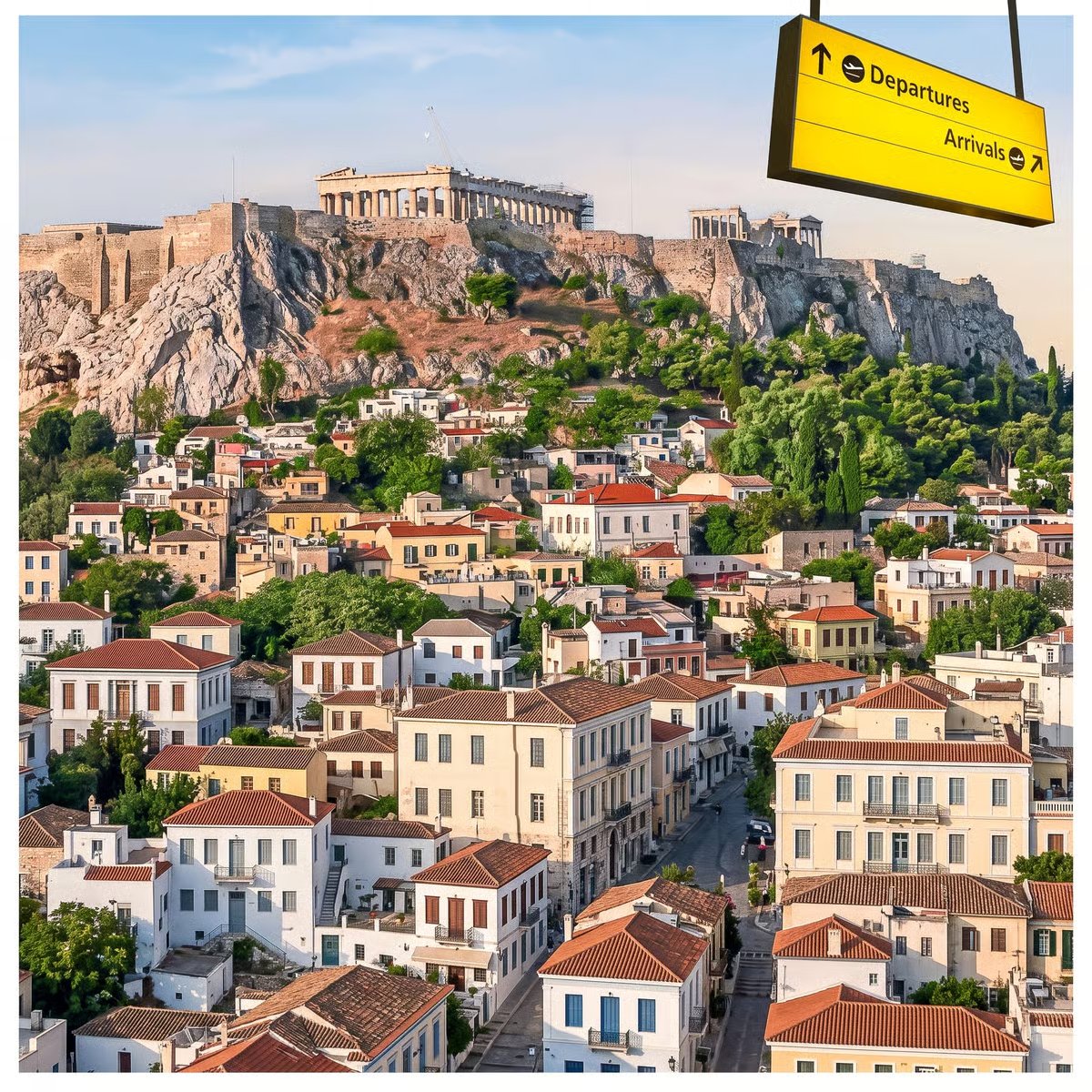

It is the size of Chris Rokos’s tax bill that gives pause. A cool £330 million. Yes, the hedge fund founder is leaving London, to set up in Athens. Yes, he is extremely wealthy, worth an estimated £2.9 billion. But that isn’t what sets his decision apart. Plenty of other entrepreneurs have departed the UK. Likewise, a fair number of them are ultra-rich. But none have contributed as much to the nation’s public coffers as Rokos.
The 55-year-old Londoner is third on the list of current highest-paying UK taxpayers, only exceeded by Betfred owners Fred and Peter Done and their families (£400m) and financial trader Alex Gerko (£331m). If Rokos’s exit does not sound alarm bells inside Downing Street, then it should.
To put it in context: his going is the equivalent to missing the tax receipts from 21,000 households, based on the average British family’s £15,700-a-year payment. His bill, calculates Dan Neidle, founder of the think tank Tax Policy Associates, “is enough to fund 4,500 teachers… we have entire taxes that raise less than £330m.”
‘His tax bill is enough to fund 4,500 teachers’
Rokos is used to hefty HMRC demands. True, they have been rising as his own financial success has increased. Is it really then, that he fears some sort of wealth charge, such as a mansion levy, coming down the track when John Healey presents his first Budget next month? Rokos owns Tottenham House near Marlborough in Wiltshire. It’s a 100-room stately home, which is undergoing a £175m restoration. He is also the owner of Mawley Hall, an 18th-century country house in Shropshire, which was on the market for £10m before he bought it in 2018. It, too, is being refurbished.
In London, in 2007, he purchased the former Hyde Park West Hotel in Pembridge Square, Notting Hill. He paid £18m for the run-down hotel, formed from two adjacent listed houses. So ambitious were his £20m improvement plans for his new home that Kensington and Chelsea council said they should be classed as a commercial development.
They encompassed a home cinema, basement swimming pool, 16ft deep diving pool and “climbing wall” under the house and garden. The two houses were to be linked by an 80ft high glass atrium and suspended glass walkways. Rokos agreed to pay £500,000 in “planning gain” to be used for social housing in return for the council’s permission to build.
So, yes, Rokos may expect to be hit by a whopping mansion tax charge. There again, whatever Healey is contemplating in that regard, if indeed he is, would still be loose change for someone so rich. No, what is particularly exercising him apparently, say sources close to him, is the prospect of an exit levy. He is said to have taken the decision to leave because he was “terrified” about the “risk of an exit tax being introduced” after there was talk ahead of last year’s Budget that the then chancellor Rachel Reeves would impose a 20 per cent “settling-up charge” on wealthy emigrants.

Chris Rokos is reportedly preparing to switch his residency (Nick Saffell/University of Cambridge/PA)
PA Media
The idea that was mooted back then would see them charged capital gains of 20 per cent on their business assets when they relocated abroad. There would have been an option to delay payment but nevertheless that would still land a quitting Rokos with a bill that would make even him shudder.
As for the choice of Greece, he is of Greek descent, so it is a natural fit. But this mathematics whizz, who won a full scholarship to Eton and gained a first-class degree from Oxford University, could have chosen to settle there virtually at any time in his illustrious career and didn’t. He started in the City with UBS, then went to Goldman Sachs. That was followed by Credit Suisse, where he worked as a star trader under Alan Howard. Rokos was one of four heavy-hitters who left Credit Suisse with Howard in 2002 to begin their own asset management firm, Brevan Howard.
By 2012, Rokos had made so much money he “retired” from Brevan Howard to establish his own family office in Mayfair to manage his own fortune. He could easily have decided then to head to Greece. Three years later, still in London, he was back full-time, investing on behalf of clients with his own hedge fund, Rokos Capital Management. In its first year of operation, it racked up gains of 20 per cent. Part of that return was based on heavy bets on Donald Trump winning the US presidential election.
Rokos is also a major philanthropist
Taking bold market positions was his forte and earned him a stellar reputation. Not that he was always on the winning side — Rokos came unstuck believing the UK would vote Remain in the EU Referendum. He was a Tory donor, giving £1.9m to David Cameron’s 2015 campaign and subsequently supporting Theresa May.
Rokos is also a major philanthropist, donating to Water Aid, Amnesty, Chatham House and Policy Exchange. He was one of the contributors towards the saving of Titian’s Diana and Actaeon for the National Gallery. He’s also thought to be the mystery buyer of Domenichino’s Saint John the Evangelist who then loaned it to the same gallery. This year, he made headlines with the largest single gift to a British university in the modern era — £190m to Cambridge for the creation of the Rokos School of Government.
Greece is wooing London’s wealthy
It’s not known if his generosity will last once he is ensconced in Greece. Sources close to the Tottenham House project maintain the work will go on and there are no plans to sell the property.
Strange then, that this lover of British heritage and countryside, culture and education should suddenly up sticks. But Greece has been deliberately wooing people like him — it has cut its tax rates on hedge fund and private equity bonuses from 15 per cent to five per cent (Millennium Management, another UK hedge fund is also said to be establishing a Greek presence). The combination of that, together with his Greek background and the fact he can operate remotely from there, proved too enticing.
In heading abroad, he is not alone. His old boss, Howard, left for Switzerland last year. Steel tycoon Lakshmi Mittal has gone to Dubai and Icelandic investor Thor Björgólfsson has shifted his tax residency out of the UK to Italy (where he pays a flat tax of €300,000 per year on foreign income). Joining him there is Richard Gnodde, CEO of Goldman Sachs International and the bank’s long-time London chief. Guillaume Pousaz, founder of Checkout.com, has moved away, as has another UK non-dom, Nassef Sawiris, Egypt’s second richest person.

Thor Björgólfsson and Kristin Olafsdottir
Gareth Cattermole/Getty Images
According to the Adam Smith Institute, the number of UK millionaires has fallen to 442,000 — the lowest level since 2008 and around seven per cent down year-on-year. Reeves’s first Budget, when she scrapped the privileges of non-doms and imposed VAT on private school fees, was seen as a sign that the wealthy were in Labour’s revenue-raising crosshairs. Pressure from the trade unions to make them pay more taxes added to the feeling that under Labour they were viewed as easy prey.
With the advent of Andy Burnham and the knowledge that the new prime minister must find extra funds to meet the promises he is making, the rich are afraid further measures against them are planned — steps that could include an exit charge to try to force them to stay and pay.
Every relocation comes at a cost to the UK
More than half of the UK’s millionaires are considering leaving. High net worth investment service Wealth Club claims the majority of its clients (61 per cent) with an average wealth of £4.5m are thinking of settling elsewhere. Almost all (97 per cent) believe their taxes will definitely or probably increase over the next 12 months.
Every relocation comes at a cost to the UK — in taxes, possibly in charity-giving, but also in likely future investment and spending on homes and their day-to-day living and on domestic staff.
It is seemingly lost on tax-the-rich proponents that these are people who do not need to live in the UK, who choose to base themselves here, that they can function just as effectively as they did here, with improved telecoms and transport links from pretty much anywhere. What the hit-the-wealthy lobby also fails to address is that while we are clobbering them, other nations, such as Greece, are keen to draw them away.
The Government likes to maintain it is doing the same, making the UK attractive to rich foreigners wishing to come and invest. It is a policy hard to square with the targeting of the wealthy for extra cash. Ministers do not provide any tangible evidence as to how many they have persuaded. They could say definitively there is no intention to chase the wealthy with additional taxes and an exit charge but they don’t. So, they must fill the giant hole left by Rokos. The way things are unfolding it won’t be the last.