Thailand’s wealth management market is becoming more sophisticated, more international, and more demanding for advisers seeking to stay relevant. As wealthy families look beyond domestic assets, ask deeper questions about legacy planning, and expect more transparency from providers, the conversation is changing. The challenge is no longer simply to provide investment access, but to guide families through a broader set of decisions around global allocation, long-term stewardship, and intergenerational preparedness.
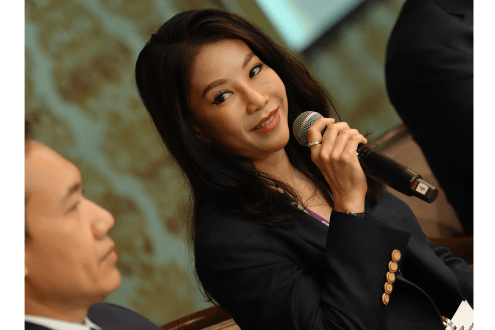
At the Thailand Wealth Management Forum 2026, a panel discussion chaired by Alex Ng, Managing Director, Head of Intermediary, Asia Client Group at Janus Henderson Investors, explored how Thailand’s wealth industry is evolving in response to changing client behaviour, rising sophistication, and growing cross-border ambition. Among the panellists, Thidatip Thitikarunwong, Managing Director, Market Head of Thailand, Relationship Management at Raffles Family Office, shared observations from a family office perspective on these shifts. Her remarks highlighted how Thai wealth remains underpenetrated but is maturing quickly, how the conversation is broadening beyond domestic assets towards global and private market opportunities, and how advisers are increasingly expected to support not just the principal wealth holder, but the wider family as well.
Key Takeaways
- Thailand’s wealth market remains underpenetrated, but is maturing quickly: Client expectations have advanced significantly over the past two years.
- Global assets are now central to client discussions: Families are increasingly looking beyond domestic markets to international and private market opportunities.
- Advice is becoming more holistic: Clients want help not only with investments, but also with legacy planning and family continuity.
- Intergenerational readiness matters more: Advisers are increasingly expected to engage younger family members and support wealth transfer preparation.
- Local trust must be combined with global capability: Thai clients still value local understanding, but increasingly expect international access and expertise.
An Underpenetrated Market That Is Changing Fast
Thitikarunwong began with an important observation about the structure of the Thai market. “Actually, we cannot deny that the Thailand wealth market still remains significantly underpenetrated,” she said.
That point matters because it frames both the opportunity and the challenge. Thailand is not a fully saturated wealth market. There is still room for growth, deeper engagement, and broader participation. Yet underpenetration does not mean that client expectations are still basic. On the contrary, she stressed that the market has evolved quickly.
“We could observe that in the past 24 months, Thai wealth market has become more sophisticated and globally oriented,” she said.
That short time frame is striking. It suggests that change is not gradual or theoretical. Clients are already thinking differently about wealth, risk, and opportunity. For advisers, that means the market still offers substantial upside, but it also demands a sharper and more sophisticated response.
From Domestic Assets to Global Opportunity
A central theme in Thitikarunwong’s remarks was the growing international focus of Thai wealth clients. “The clients increasingly ask about the global assets, not only the domestic assets,” she said.
This marks a significant shift in a market that has historically been shaped by local familiarity and domestic bias. While Thai clients may still retain a strong attachment to home markets, they are increasingly aware that diversification and long-term growth require a broader perspective.
Importantly, this shift is not limited to conventional public markets. “The global asset is including the private asset, private market, along with the traditional investment,” she said.
That is a revealing point. It suggests that client sophistication is rising not only in terms of geography, but also in terms of product appetite and investment structure. Families are not simply asking for more offshore mutual funds or listed equity exposure. They are also becoming more interested in private market participation and more differentiated opportunities.
Thitikarunwong added that this is happening “not only through the private fund, but it’s also by the direct participation as well”. That detail points to a more engaged and ambitious client base. Direct participation often requires stronger due diligence, better judgement, and a more tailored advisory relationship. It is a sign that many clients now want more than packaged access.
For a family office, this broadening scope raises the advisory bar. The role is not just to provide access, but to help families assess and prioritise a wider opportunity set with care.
The Conversation Is Becoming More Holistic
While global investing is clearly a major part of the story, Thitikarunwong also emphasised that wealth conversations are becoming broader in nature. “It’s about the conversations that have been shaped into the more holistic view,” she said.
This may be one of the most important shifts in the market. Clients are no longer only asking what to buy or where to allocate next. They are increasingly asking how investment decisions fit into wider family objectives.
She noted that people “would like us to help them to navigate in terms of the legacy planning”. That marks a move away from a narrower product or market-focused discussion towards one centred on continuity, family purpose, and long-term stewardship.
In the family office context, this is particularly important. Legacy planning is not simply about structures or documents. It is about helping families think more clearly about what wealth is for, how it should be transferred, and what support future generations will need.
Thitikarunwong’s remarks suggest that this broader conversation is becoming more common in Thailand. As wealth becomes more substantial and more international, the advisory relationship naturally expands beyond investments alone.
Clients Want Guidance, but Also Empowerment
Thitikarunwong also spoke clearly about how clients now want that advice delivered. “The client requires more holistic guidance,” she said, adding that they “heavily expect more transparency”.
That reflects an important change in what clients value. Transparency is no longer just about reporting or disclosure. It is increasingly connected to trust, empowerment, and the quality of the advisory relationship.
“They would like to feel the empowerment,” she said. “And they would like to feel that they have the choice for comparison, they are able to choose the best for their family members.”
That is a significant point. Clients are not simply looking for advisers to take decisions away from them. Clients increasingly expect greater transparency and the ability to evaluate choices independently in a way that leaves them better informed and more confident. In other words, the modern advisory relationship is not only about expertise. It is also about helping clients understand enough to make meaningful decisions themselves.
This raises the standard for firms. Advisers need to explain clearly, compare thoughtfully, and avoid overwhelming families with complexity while still giving them real visibility over their options.
The Next Generation Is Becoming Central
One of the most distinctive points in Thitikarunwong’s remarks was her emphasis on intergenerational preparation. She made clear that advisers are increasingly expected to engage with the wider family, not just the main decision-maker.
“This highlights a broader expectation for engagement beyond a single decision-maker, the key person of the family, but they also expect us to be able to get along very well with the third generation,” she said.
This is important because it shows how the definition of the client relationship is expanding. In many wealthy families, advisers are no longer serving one person in isolation. They are expected to support the long-term continuity of the family’s financial life.
Thitikarunwong linked this directly to wealth transfer and readiness. “The message is about how we could navigate them for the wealth intergenerational transfer, and how we can ensure that the readiness is there for their children, the knowledge is there for their children,” she said.
That insight is crucial. Wealth transfer is not only about legal execution. It is also about education, maturity, and preparedness. Families want reassurance that the next generation will not simply inherit assets, but will be able to understand and manage them responsibly.
This gives advisers a more strategic role. They are not just protecting capital. They are helping families prepare for continuity across generations.
Balancing Local Understanding with Global Capability
Thitikarunwong also drew attention to an important tension in the Thai market: the need to combine global reach with local understanding.
She said clients want to ensure “that the global platform can be very well pitched with the local capabilities as well”. This is a powerful observation. Thai clients may be increasingly international in their financial outlook, but they still value cultural understanding, proximity, and trusted local relationships.
She summed this up neatly when she said that “Thai person is still home biased, but we cannot deny or cannot avoid for getting him to become the global citizen also.”
That line captures the balance many Thai families are trying to strike. They remain rooted locally, but their portfolios, ambitions, and needs are becoming more global. Advisers therefore have to bridge both worlds.
This is also why partnership matters. Thitikarunwong suggested that Thai wealth managers and global players should see each other “less as competitors and more as potential collaborators”, because international firms bring “scale, facilities, accessibilities”, while local firms offer “client proximity, the cultural understanding and long-term relationship”.
That is a pragmatic view of how value may increasingly be created in the market. The firms best placed to succeed may be those able to combine local intimacy with international capability rather than rely on one without the other.
What Will Matter Most in Thailand’s Next Wealth Phase
Taken together, Thitikarunwong’s remarks suggest that Thailand’s wealth market is moving towards a more mature and more family-centred model. The clients she described are not just asking for better products or broader access. They are asking for advice that integrates global investing, private market participation, legacy planning, transparency, and next-generation readiness.
That raises the bar for advisers. Technical expertise remains essential, but so does the ability to educate, guide, and build trust across generations. Wealth management, in this sense, is becoming less transactional and more relational.