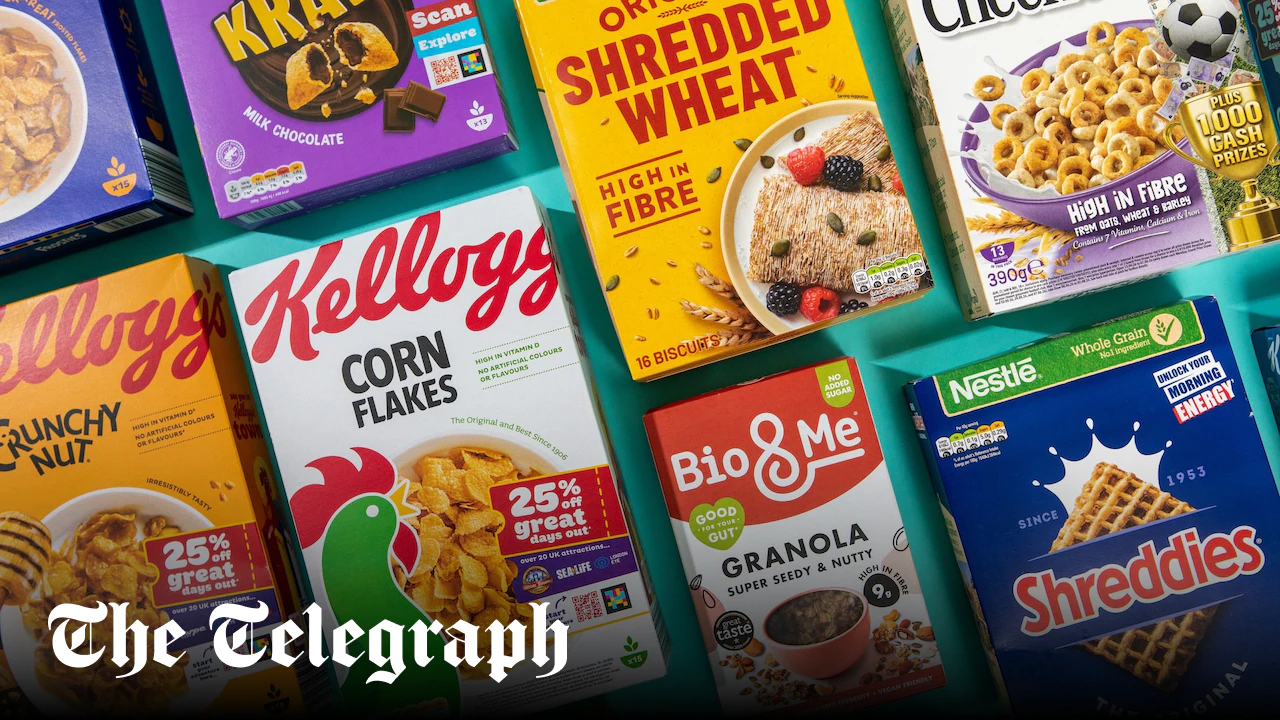
1. Choose wisely – or mix your cereals
For the best gut health effects, pick one of the top ranking cereals, Dr Amati says – ideally one with more than 6g of fibre and less than 5g of sugar per 100g.
“Once you recognise which cereals have a better nutritional profile, you can mix them up and try to combine them in a way that’s helpful. If you love Crunchy Nut or Frosties, for example, use them as a topper to Shredded Wheat or Weetabix,” she says. “You get some of the flavour and texture but you’ve changed the composition of the bowl to be richer in fibre and contain less sugar.”
2. Swap milk for yogurt or kefir
Another option is to try swapping your milk for yogurt or kefir, which is fermented with a much wider range of bacteria and yeasts than standard yogurt, and has a thinner, drinkable consistency.
3. Top with nuts, seeds and fruit
“Add a sprinkling of seeds and a handful of nuts and fruit to get those essential protein, healthy fats and even more fibre that is going to help with satiety and to make it a balanced meal,” Dr Amati says.
“Diversity is the best policy. Every seed and nut has a slightly different nutritional profile, so go for mixed bags. For fruit, change it up. Blueberries one day, strawberries the next. For affordability, frozen berries are great, but seasonal fruit tastes best.”
Dr Amati’s perfect bowl would be Shredded Wheat with kefir topped with fresh berries, almonds, walnuts and mixed seeds.