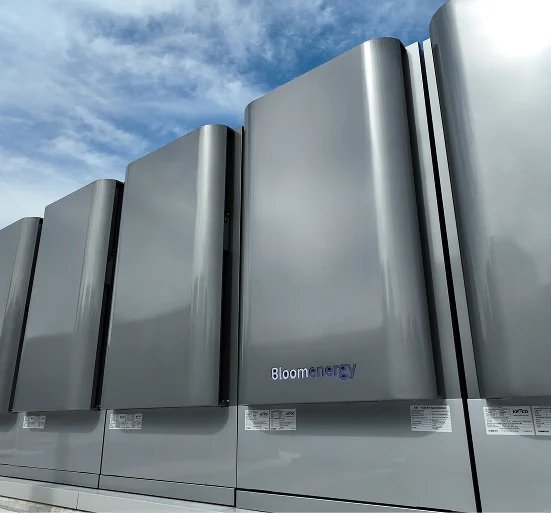
A quarterly index reshuffle just handed one fuel cell maker a flood of forced buying while simultaneously punishing a former Wall Street darling with an unusually steep demotion, and the two moves are opposite sides of the same mechanical trade.
S&P Dow Jones Indices is adding Bloom Energy (NYSE:BE) to the S&P 500 before the open on September 21, and the announcement is driving a sharp move in the fuel cell maker this morning, according to S&P Dow Jones Indices. The catalyst is mechanical, tied to index-fund rebalancing, and nothing at the company changed over the weekend. Every fund benchmarked to the index needs to own the shares by that effective date, which creates buying that has little to do with fuel cell economics.
The SPDR S&P 500 ETF Trust (NYSEARCA:SPY) is down 0.45%, putting Bloom Energy’s rally squarely against a softer tape. At the same time, Bloom Energy stock is up 8% to $274.18 in Tuesday trading.
The mirror image sits on the other side of the same reshuffle. The Trade Desk (NASDAQ:TTD | TTD Price Prediction) exits the S&P 500 and drops all the way down to the S&P SmallCap 600, bypassing the MidCap tier entirely. That’s an unusually steep step-down, and it flips the mechanical flow from forced buying into forced selling inside the same rebalance. Trade Desk stock declined 2% to $14.13 Tuesday morning.
Index Inclusion Rewires the Flow
The addition takes effect as part of the quarterly S&P 500 rebalance, and every fund benchmarked to the index needs to own Bloom Energy stock by then. That mechanical demand is already showing up in Tuesday’s session.
UBS analyst Manav Gupta raised his price target on Bloom Energy stock to $325 and maintained a Buy rating, arguing that index inclusion historically produces a meaningful step-up in passive ownership. He framed the addition as a significant positive catalyst layered on top of Bloom Energy’s AI data center power story.
Bloom Energy’s Q2 FY2026 report set the operating backdrop that made the addition possible. The company’s revenue reached $1.07 billion, up 165.5% year over year, and its product revenue surged 215% as hyperscalers and neocloud operators validated its onsite fuel cell systems for AI factories. CEO KR Sridhar declared, “Bloom is now a standard for AI onsite power.”
Bloom Energy also expanded its Brookfield financing framework from $5 billion to $25 billion during the quarter, a fivefold step-up that management said follows firm bankable orders. The company raised its full-year 2026 revenue outlook to $3.9 billion to $4.2 billion, roughly doubling 2025 revenue at the midpoint.
Trade Desk Heads the Other Way
The Trade Desk’s demotion to the SmallCap 600 is an unusually steep drop for a former high-growth name. It flips the mechanical flow the other way, as large-cap trackers sell the stock while small-cap trackers absorb only a fraction of that supply.
The advertising platform’s slide follows a soft Q2 2026 report where revenue grew just 3% year over year and both lines missed expectations. Meanwhile, Trade Desk stock is already down 63% year to date, a slump CEO Jeff Green tied to macro pressure on large CPG and auto advertisers alongside execution missteps.
The Trade Desk has since reset its leadership bench with a new CFO, CMO, and Chief Commercial Officer, and Q3 2026 revenue guidance of at least $650 million implies further sequential softness. The company also plans to reduce its workforce by 15%, though none of that reverses the passive-selling arithmetic hitting Trade Desk stock through the September rebalance calendar.
Fuel Cell Peers Sit Outside the Rebalance
Bloom Energy stock is up 210% year to date, so today’s inclusion pop lands on top of an already extended run. A name that has already tripled is now being bought for reasons unrelated to why it tripled, and that’s the distinction worth internalizing here.
Listed fuel cell comparables Plug Power (NASDAQ:PLUG) and FuelCell Energy (NASDAQ:FCEL) aren’t part of the reshuffle and don’t get the same flow support. Also, Plug Power stock is up 13% year to date, while FuelCell Energy shares are up 116% year to date on their own AI data center pipeline growth.
Neither peer captures the mechanical index-fund bid that Bloom Energy is set to absorb through the effective date. The broader buildout behind these fuel cell rallies is the same one powering data center demand, and we profiled seven suppliers riding that wave in a free AI infrastructure report. Sympathy interest may still ripple through the sector, yet the flow dynamic driving Bloom Energy today doesn’t extend to Plug Power or FuelCell Energy in any structural way.
What to Watch Next
The effective date is the key marker on the calendar. Passive rebalances typically cluster into the closing auction the trading day before and the open of the addition itself, which is when index-tracking demand for Bloom Energy stock and forced selling in Trade Desk stock usually peak.
Investors weighing their exposure here can separate the flow event from the fundamentals. The rebalance could support Bloom Energy shares into the effective date, yet the stock’s rich year-to-date gain argues for measured position sizing rather than chasing the move higher.
Furthermore, traders can watch for how much of the run-up front-runs the actual index add. A stock that gets bought aggressively before the effective date often gives back part of that move once the passive demand clears the auction.
Contact [email protected] for any questions or corrections.