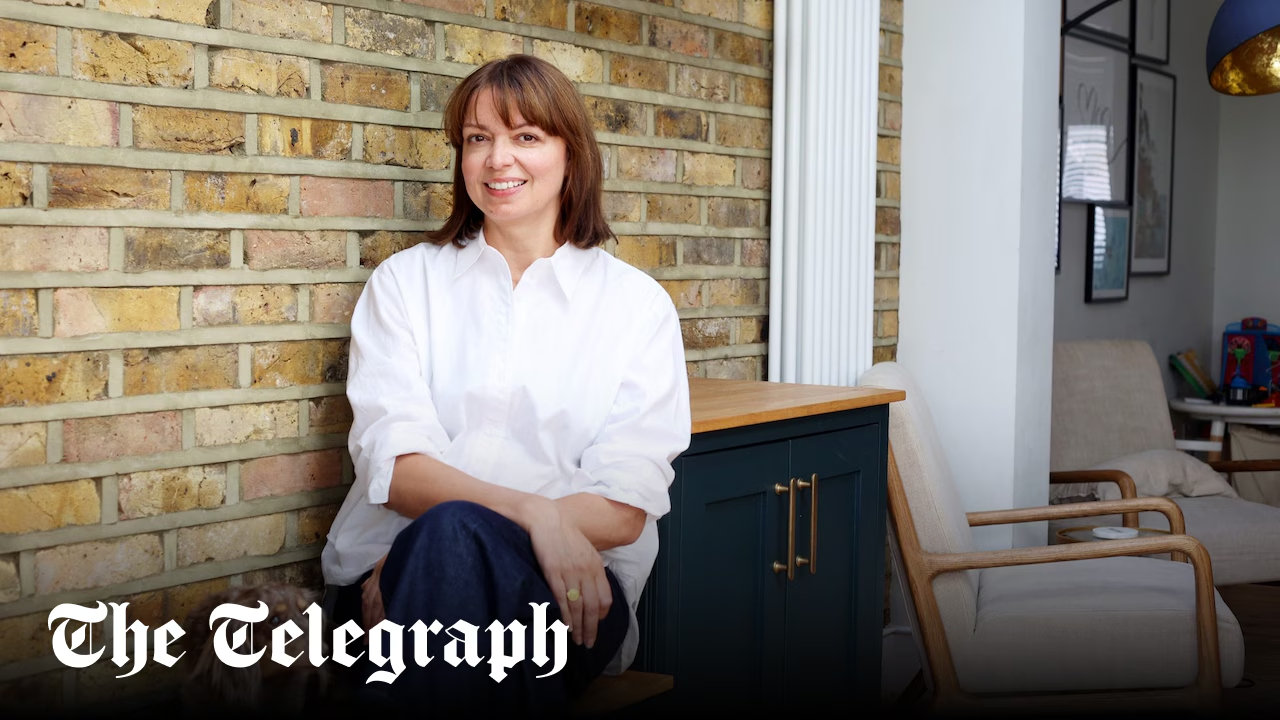
Feeling tired, stressed, bloated, lacking in energy and not in the mood for sex isn’t exactly unusual for women in midlife. Neither is constant anxiety, irritation and finding the way your partner walks around the house – or simply exists – completely intolerable.
The diagnosis? Perimenopause. At least, that’s what we’re increasingly being led to believe by the celebrities and influencers filling social media with their symptoms and solutions. Even governments are getting in on the act. This summer, the Australian government launched a national awareness campaign with the slogan “Could this be perimenopause?”, featuring women experiencing symptoms including anxiety, poor sleep, fatigue and brain fog.
This is, of course, a good thing. The more we can talk about the long-dismissed nuances of [women’s health], the better. My generation grew up with boomer mothers who were either ignored or [mis-sold the risks of HRT] and struggled terribly as a result. Others – mine included – didn’t seem to think it was an issue at all, and were convinced, in that stoic Boomer way, that they were “absolutely fine”.
But when governments are running campaigns, celebrities are talking about it and Instagram is selling you everything from mushroom gummies to skincare and supplements, it is perhaps not entirely unreasonable to wonder whether we have moved from perimenopause being something women know too little about to an entire, highly lucrative industry making sure we never stop thinking about it.
Which brings me to my own HRT experiment – and why I eventually decided to stop taking it.
The perimenopause craze
“Peri” has become something of a social currency amongst my peer group. After we’re done talking about the kids, the holidays, the cost of the side return and Andy Burnham’s eyelashes, our conversations inevitably turn to testosterone, oestrogen gels, patches and progesterone pills. Those who haven’t started HRT yet are the odd ones out. I should know, I was one of them.
At the age of 46, after hearing about the miracle qualities of HRT many times over, and with a social-media feed that definitely seemed to think I was in hormonal trouble, I decided I needed in on this revolution.
To be clear, my periods were regular, I had never experienced a hot flush and I didn’t have night sweats. But I did have heightened anxiety, brain fog and an inability to wear anything with a waistline. Everything and everyone told me it was peri.
I got HRT easily from my doctor, although I understand that that is not always the case, and started taking it – looking forward to a clearer head and an ability to wear my jeans again without feeling I might pop. Granted, that was unrealistic.
Instead, after three weeks I developed a collection of mouth ulcers that made it absolutely impossible to eat for a week. Do I think that HRT was the cause? No. But did it make me think twice about taking a new medication without having done any of my own research? Yes, it really did.
I happened to be staying with my parents at the time and I mentioned to my Dad, a retired doctor, that I wondered whether the ulcers could have been brought on by the hormonal changes of HRT. He didn’t answer that, he was more concerned that I had started HRT while my periods were still regular.
The dangers of misdiagnosis
I decided to look into the medical definition of perimenopause a bit more and found Susan Davis, a consultant endocrinologist and women’s health researcher at Monash University in Australia.
“Other than changed menstrual bleeding patterns, vasomotor symptoms [hot flushes and night sweats] and vaginal dryness, most other symptoms of perimenopause are not specific and can be caused by a multitude of other health conditions and personal circumstances,” she told me. Ah. I sort of wish I’d asked earlier. Or been told.
She went on to tell me that misdiagnosing those symptoms can result in delayed treatment of the real underlying cause, which can be anything from sleep apnoea, thyroid deficiency, stress, iron deficiency. The list goes on.
It did ring alarm bells for me. I had been going through a particularly stressful phase of life: my sister had died two weeks before; I had just had my second baby; I had two young children, work and all the usual middle-aged complications of ageing parents and too much to do. Is it really surprising that I am anxious, eating more than I should and occasionally unable to remember why I’ve walked into a room?