Imagine having a life insurance policy with one insurer, health insurance with another, a motor policy renewed through an intermediary and perhaps an old life policy whose documents are sitting in a cupboard. Now imagine trying to find all of them when you need to make a claim—or when a family member has to do it after your death.
This is the problem that a proposed Public Insurance Registry (PIR) seeks to address. The Insurance Regulatory and Development Authority of India (Irdai) recently proposed this PIR. It will be a population-scale digital public infrastructure aimed at making the insurance ecosystem more connected, transparent and accessible.
The idea is to create a common digital record of insurance relationships, so that policyholders do not have to depend entirely on scattered physical documents, emails, insurer apps and intermediary platforms to keep track of their policies.
For policyholders, the proposal could eventually mean something much simpler: one place to get a clearer picture of the insurance cover they own and manage it more easily.
But what could that actually mean for consumers?
1. You could see all your insurance policies in one place
Today, a person may have several types of insurance from different companies. The policy documents could be sitting in different places—some in email, some in physical files, and others inside insurer or intermediary apps.
This can make it difficult to answer even basic questions: How many policies do I have? When is the next premium due? Which policy is active? Who is the nominee? Am I adequately covered, or have I bought overlapping policies?
Sarbvir Singh, Joint Group CEO, PB Fintech, says the problem is that a policyholder may have life, health, motor and other policies spread across different insurers and platforms.
“A Public Insurance Registry (PIR) would create a unified, trusted record of a policyholder’s insurance relationships across insurers,” he says.
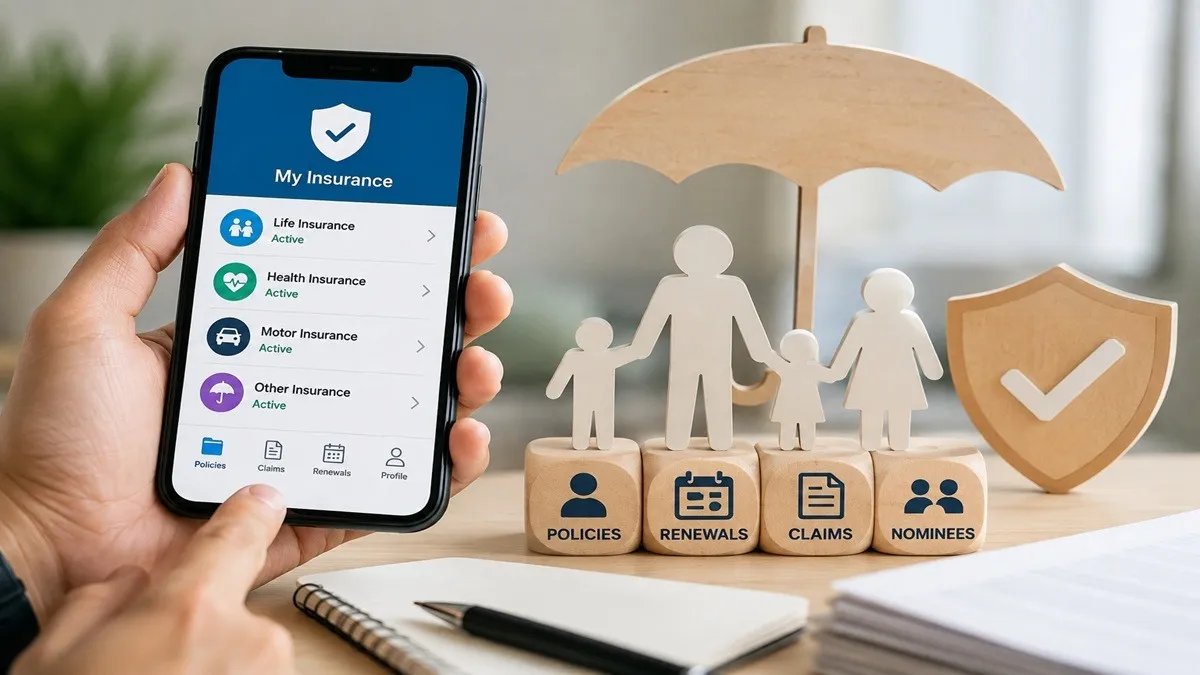
The proposed registry could give consumers a consolidated view of their policies, including details such as coverage, premiums, nominees, renewals and claims.
That could also help consumers spot gaps or duplication in their insurance cover.
For example, someone may discover that they have adequate motor insurance but insufficient health cover, or that they are paying for policies they had forgotten about.
The benefit, therefore, is not simply having all the documents in one place. It is having a clearer picture of the protection you actually have.
2. Forgotten life insurance policies could become easier to find
This could be particularly important for life insurance.
People sometimes forget about old policies, lose documents or simply fail to tell their families about every policy they own. After their death, the family may not even know that a particular life insurance policy exists.
At present, discovering such a policy could involve going through the deceased person’s papers, emails, bank records or other financial documents.
A registry could potentially make this process much easier.
Singh says one of the strongest consumer benefits of the PIR could be policy discovery. It could work as a searchable record of a person’s insurance relationships and potentially show active, lapsed, matured or otherwise inactive policies across insurers.
This could become particularly useful after the policyholder’s death.
An authorised representative or nominee could potentially access the deceased person’s insurance portfolio and identify policies for which a claim or maturity process needs to be initiated.
“The key advantage is that the family would no longer have to rely only on physical policy documents, old emails or the deceased’s personal records to discover a life policy,” Singh says.
That does not mean the registry would automatically pay a claim. The nominee would still have to approach the relevant insurer and complete the required claim process.
But the first hurdle—knowing that a policy exists—could become easier.
3. Renewals, premiums and nominees could become easier to manage
Insurance is not something you buy once and forget about.
Premiums have to be paid, policies need to be renewed and details such as your address, phone number or nominee may need to be updated over time.
With information spread across multiple insurers, it is easy for something to get missed.
A central registry could give policyholders a single view of important information such as premium payments, renewal dates, policy status, nominees and claims.
It could also potentially send reminders for upcoming premium payments and renewals and flag policies that have lapsed.
That could be especially useful for people who have several policies and different renewal dates.
Singh describes this as a shift towards “proactive policy management” rather than simply storing insurance information.
Another possible benefit is easier updating of personal information. Instead of having to separately remember every policy when a person changes their contact details, the proposed system could eventually simplify such servicing through a common interface.
However, consumers should not assume that every update across every insurer will automatically happen from day one. The exact functionality will depend on how the registry is ultimately designed and implemented.
4. Families could have an easier starting point when making a claim
The biggest value of organised insurance records may become apparent when something goes wrong.
When a policyholder makes a claim—or when a family member has to make one—the first challenge can be figuring out which policies exist and where the relevant documents are.
A central registry could give the policyholder or an authorised family member a single place to identify policies, check nominee details and access relevant information.
It could potentially also streamline parts of the claims process, such as claim intimation, document submission and checking the status of a claim.
Singh says the registry could help by allowing policyholders and authorised family members to access policy information without having to search through multiple insurers and documents.
It could also potentially provide claim-status updates and facilitate faster access to policy benefits through registered payment details.
But there is an important distinction here: a registry does not necessarily mean every claim will be settled faster.
The insurer would still need to assess the claim, verify documents and apply the terms and conditions of the policy. What the registry could potentially do is make the information-gathering and administrative part of the process less cumbersome.
For a grieving family member trying to locate a deceased person’s insurance policies, even that could be a significant improvement.
5. More convenience also means more responsibility around your data
Putting insurance information in one place could make life easier—but it also means that a large amount of sensitive financial and personal information could be connected through the system.
This makes privacy and security a critical part of the proposal.
Policyholders would need to make sure that information such as their nominee, contact details, policy status and claims record is accurate.
Singh says consumers should regularly verify important information and report discrepancies to the insurer.
“Given the sensitivity of insurance and financial data, strong authentication, encryption and strict controls on who can access or modify records will be critical,” he says.
This is particularly important when it comes to access after a policyholder’s death. The convenience of allowing an authorised family member or nominee to discover policies has to be balanced with safeguards against someone gaining access without proper authorisation.
So, while a central registry could reduce the risk of losing track of insurance, it should not lead consumers to become careless about their data.
The larger idea: making insurance easier to manage
The proposed Public Insurance Registry is therefore more than a digital locker for insurance documents.
From a policyholder’s perspective, its potential value lies in bringing together information that is currently scattered across insurers, intermediaries, emails and paper records.
It could help a consumer discover policies, keep track of premiums and renewals, check nominees, manage policy information and make it easier for families to locate insurance after a policyholder’s death.
But it is important to remember that the PIR is a proposed framework, not a fully operational consumer service yet. The final design, data-sharing arrangements, access mechanisms and safeguards will determine how much of this potential benefit actually reaches policyholders.
For consumers, the underlying lesson is already useful: don’t wait for a registry to organise your insurance. Keep a consolidated record of your policies, check that nominees and contact details are correct, and make sure your family knows where the important information is kept. If the PIR eventually delivers on its promise, it could make that job considerably easier.
Every financial journey has a turning point. What’s yours?
Financial Express is launching a new series highlighting real experiences with money, investments, and the taxman. Did a sudden tax rule catch you off guard? Did a piece of financial advice change your life? Your story could provide invaluable, practical lessons for thousands of fellow taxpayers. Share your experience with us. We respect your privacy: no stories will be featured without a direct conversation and your full consent. Thank you.