Deep inside a White House proposal to overhaul how the government awards grants is a short section that health disparities researchers say could disqualify much of their work from federal funding — perhaps the most serious threat yet to the future of their field.
Since it was issued last month, the 412-page proposal has drawn thousands of public comments, in large part because it would diminish the power of peer review in determining which grants are funded, and place that authority with political appointees. Less attention has been given to how the proposed changes could affect efforts to eliminate health disparities research.
At the height of the Covid-19 pandemic, which dealt a disproportionate blow to Black, Latino, and Native American populations, research on health disparities saw a groundswell of support: new funding opportunities, declarations that racism amounted to a public health crisis, and newfound interest from academic journals to publish articles on the topic.
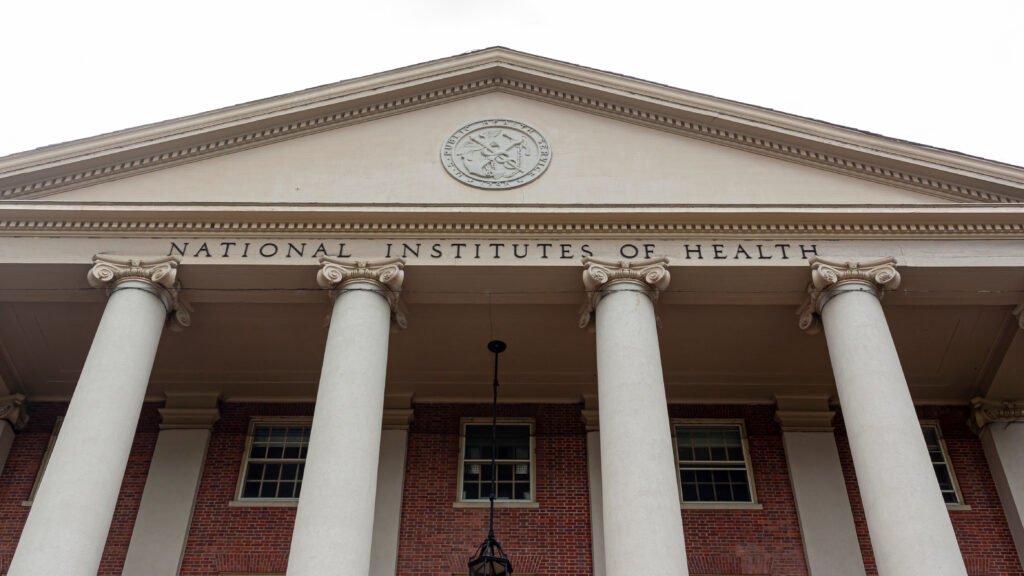
But since the start of the second Trump presidency, health disparities researchers have found themselves in the crosshairs of the administration. As part of a campaign against anything it deems related to “DEI,” projects investigating health disparities have been terminated, and as researchers scramble to apply for new funding from the National Institutes of Health, they are being forced to avoid certain terms that get their grant proposals flagged, or to apply for increasingly competitive private dollars.
Now, the proposed rule from the White House Office of Management and Budget could make their prospects even more dire.
Section 200.218 of the proposed regulation would prohibit the use of federal funds to “Promote or Support Theories of Disparate-Impact Liability.” Disparate impact theory is a legal concept by which seemingly race-neutral policies can be deemed as discriminatory if they disproportionately harm members of a specific group that is protected by law.
“If this rule is taken to mean that you’re not supposed to compare groups because some of them have quote-unquote protected status, then you’re ruling out actually understanding what’s truly going on in the population about distributions of exposures, distributions of health outcomes, and what the causes of these patterns are,” said Nancy Krieger, a social epidemiologist, who is considered a leader in examining the impact of structural racism on health and commented on the OMB proposal. Others share that concern — nearly 200 public comments that have been submitted mention “health disparities.”
The injection of that language is part of a broader push by the administration to adopt a colorblind view of the world that ignores race, said Andrew Twinamatsiko, director of the Center for Health Policy and the Law at Georgetown Law who has written about the administration’s attacks on diversity, equity, and inclusion initiatives. Critics argue that such colorblindness ignores the country’s long history of racism.
“It’s the same reasoning that they used to undermine the Voting Rights Act that the Trump administration is using to undermine employment protection, or even federal funding,” he said. “The very law that was designed to advance civil rights is now being used to entrench white supremacy.”
In response to concerns that the updated Uniform Guidance, as it is called, could be used as grounds to terminate or not fund health disparities work, an OMB spokesperson said, “In the past, unaccountable deep state bureaucrats have funded woke and wasteful projects like, ‘engaging Black sexual and gender minority youth social media influencers,’ and ‘Addressing Social Determinants of Health Among Racially Diverse Trans Women in the Deep South,’ under the guise of studying health disparities. That ends now.” The official added, “With this new rule, the Trump Administration will bring much-needed accountability to the grantmaking process and ensure taxpayer dollars are spent wisely.”
Under the Trump administration, health disparities researchers are already feeling crunched. Many projects that touch on health equity were terminated by the NIH in early 2025. Academics who are currently applying for funding are having to tread carefully to not use terms in their grants that may get them flagged for changes by NIH staff. This can be heart-wrenching for equity researchers, many of whom have a personal connection to the communities they study.
“It’s moral distress at so many levels, to be in a position where people were calling on health disparities researchers to comment during the height of the Covid-19 pandemic. Then where we are now, you potentially are losing grant funding. But from a personal perspective, what’s deeply troubling for me is being really committed to this work … and now being told when I work on grants that I need to remove [the words] ‘disparities’ and ‘social determinants of health,’” said Faith Fletcher, a bioethicist and public health researcher at Baylor College of Medicine. “It’s just ethically problematic.”
Even those outside of academia are feeling pressure from the administration, added Davena Longshore, a clinical psychologist and CEO of the Cummings Foundation for Behavioral Health, which works to support first responders. She submitted a comment opposing the OMB proposal, saying it “is going to make this harder for us to get funding, but also it’s going to have a huge impact on certain communities that already are overlooked, that already don’t get a lot of attention.”
Tiarney Ritchwood, a health equity researcher at Wake Forest University who has been writing on social media about how researchers can navigate fast-changing NIH policies, emphasized that despite the political headwinds, researchers will find a way to make sure the work they see as vital will get done. “I’m never going to abandon the communities that I partner with,” she said. “We’re in a pivotal time right now, where we have to decide, ‘Are you going to just turn your back on the communities that have given their time, given their data, given you space and their space?’ From what I know, most of us are going to continue. We’re going to find a way. We’re resourceful.”