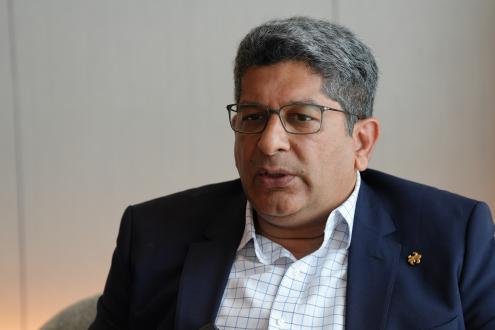
India’s wealth management industry is being reshaped by several forces at once. Household savings are moving further into financial assets, demand for alternative investments is broadening, affluent Indians are looking increasingly beyond domestic markets, and generational wealth transfer is bringing different expectations around transparency, technology and access.
For Manish Kathuria, Chief Business Officer at Kotak Neo, these shifts are expanding the opportunity for wealth managers while raising the standard required to serve clients effectively. Kotak Neo is responding by extending relationships historically rooted in direct equities into broader wealth solutions, combining open architecture, the manufacturing and research capabilities of the wider Kotak Group, digital delivery and an expanding relationship-management model.
Key Takeaways
- Financialization and formalization are reshaping Indian wealth: Household savings are increasingly moving towards market-linked investments, while wealth management itself is becoming more organized and sophisticated.
- Global diversification is becoming structural: As Indian families become increasingly global in their outlook and aspirations, the debate is no longer about investing overseas, but about choosing the right approach. Kotak Neo is broadening relationships beyond direct equity: Its Private Client Group serves high net worth (HNW) clients, while its Elite Client Group extends the proposition across more than 100 Indian cities, offering Direct Equity & Wealth Management as an integrated proposition.
- Open architecture sits alongside in-house capabilities: Kotak combines external investment selection with the wider Group’s ability to manufacture strategies including discretionary portfolio and private-credit solutions.
- Research remains a core differentiator: Institutional equity research and managed-portfolio capabilities support the move towards a more comprehensive portfolio advice.
- Relationship managers remain central: Kathuria believes that as investment products and markets become more complex, the value of trusted, high-quality relationship managers only increases. Talent development is being built internally: the firm is investing in internal capability building, experienced talent acquisition, and structured development of young professionals to support its growth ambitions. Technology is intended to increase frontline capacity: Digital onboarding, assisted journeys and artificial intelligence (AI)-enabled portfolio tools are being used to reduce operational work and improve client engagement.
- Offshore wealth requires more than product selection: International investing increasingly requires consideration of compliance, tax, succession and estate implications alongside investment opportunities.
A Wealth Market Becoming More Financial
Kathuria sees two structural forces underpinning the development of Indian wealth management: the financialization of savings and the formalization of how wealth is advised and managed.
Gold is a great example here. Indian investors have traditionally held substantial physical gold, but overtime exposure through gold exchange-traded funds (ETFs) has expanded sharply. By June 2026, average assets under management (AUM) in Indian gold ETFs reached approximately INR 1.76 trillion.
Appetite for alternative investments has also broadened, particularly across areas such as private equity and private credit. The result is a market in which wealthier investors increasingly expect access to a wider set of asset classes rather than relying principally on conventional listed investments.
“We are seeing the financialization of savings happening alongside the formalization of wealth management,” Kathuria says. “The range of products clients are willing to consider has become much broader.”
Generational transition is adding another dimension. As wealth moves from one generation to another, younger family members are often seeking greater openness, transparency and digital access.
Yet greater use of technology does not, in Kathuria’s view, weaken the role of the relationship manager, rather than augmenting the value that an RM equipped with technology and AI tool can add to the relationships they manage.
“As markets become more complex and products more sophisticated, the role of relationship manager remains as critical as ever,” he says. “The challenge is how you enable that relationship team to meet the changing needs and expectations of the customer.”
From Direct Equity to a Broader Wealth Relationship
This evolving investor demand is driving Kotak Neo’s efforts to deepen relationships that have traditionally been anchored in direct equity investing. According to Kathuria, the firm operates through two distinct propositions: the Private Client Group (PCG), which caters to high-net-worth investors, and the Elite Client Group, designed to serve affluent clients across a broader geographic footprint. With a presence in over 100 cities, Kotak Neo has extended its wealth proposition well beyond India’s traditional financial hubs, bringing sophisticated investment solutions closer to investors across the country
“We have relationships from Amritsar in the north to Kottayam in the south,” Kathuria says. “Those customers are increasingly asking us for a more comprehensive wealth solution that goes beyond direct equity.”
Direct equities, therefore, remain a core part of the Kotak Neo proposition, but increasingly get complemented by managed investments and other wealth solutions designed around the client’s broader portfolio requirements.
The aim is to deepen those relationships over time, using a wider investment toolkit rather than viewing individual products or transactions as the center of the proposition.
Open Architecture Backed by Kotak’s Own Capabilities
Product breadth does not, however, mean relying exclusively on proprietary solutions.
The firm operates with an open-architecture philosophy, using research and product due diligence to select investment products across the market. Alongside that, sits the manufacturing capability of the wider Kotak Group, giving business access to bespoke strategies. That includes discretionary portfolio management services and private-credit products, among other solutions.
“Open architecture allows us to look for what we believe are the best available investment options,” Kathuria says. “At the same time, the manufacturing capability within the Kotak Group gives us an additional advantage when we have strong solutions of our own.”
Research is another strong pillar for the company and is provided by the Group’s Kotak Institutional Equities. The research arm of the firm covers more than 300 stocks, and its research is widely used by domestic and international institutional investors. Kathuria says, “a similar research-led approach extends into managed portfolios”.
Together, these capabilities allow Kotak Neo to combine direct-equity expertise with a broader set of investment solutions rather than treating the two as separate propositions.
Building Advisers Rather Than Simply Recycling Them
Expanding into wider wealth management services changes the skills required on the frontline.
Kotak Neo is focused on reskilling employees with strong direct-equity capabilities, adding knowledge across managed investments and other wealth-management products. This is being complemented by selective hiring of experienced professionals and efforts to develop younger talent through graduate recruitment and external training partnerships.
Kathuria contrasts that model with an industry in which experienced relationship managers and the AUM they oversee can frequently move between institutions.
“There is a significant amount of recycling of talent and AUM in the industry,” he says. “Our approach is to spend more time building talent, developing the right skills and giving people the training they need to do a good job for customers.”
Technology also plays a key role in talent development.
Industry research suggests relationship managers spend only around 25% to 30% of their time on client interactions, with operational and administrative processes consuming much of the remainder. Digital onboarding and standardized portfolio-review processes help shift that balance.
“The question is how we get relationship teams out of day-to-day operational processes and give them more time with clients,” Kathuria says.
Technology as an Assisted Wealth Model
For clients, Kotak Neo serves as the central digital platform through which portfolios, research and investment capabilities can be accessed.
The firm allows investors to bring external holdings into the Kotak Neo environment for analysis, providing a broader picture than assets held directly with Kotak alone.
Kathuria nevertheless believes HNW wealth management requires more than purely self-directed experience. Clients may want the convenience of completing transactions independently while retaining access to support when required.
Kotak Neo has consequently developed assisted journeys through which relationship managers and service teams help clients complete the same processes available digitally.
Neome is Kotak Securities’ conversational investment intelligence platform designed to help investors access research-backed insights through natural conversations. Rather than searching across multiple reports, screens and information sources, investors can engage with Neome in a conversational manner and receive contextual guidance based on Kotak’s research and intelligence ecosystem.
Neome has been built to operate within a regulated financial-services environment, emphasizing responsible deployment, transparency and reliability. It is multilingual by design, helping broaden access to investing knowledge across investor segments.
Kathuria highlights its use in direct-equity portfolio reviews, where it can draw on Kotak Securities research to help clients assess holdings and explore relevant information.
“The client should be able to do things seamlessly on the platform, but there also needs to be an assisted journey when support is required,” he says. “Technology should make that relationship easier, not remove the relationship.”
Offshore Investing Moves from ‘Why’ to ‘How’
Kathuria sees international investing as another increasingly structural change in Indian wealth.
Families are becoming more globally connected through business, travel, education and consumption, strengthening the case for geographic diversification. Recent relative performance between Indian and international markets and movements in the rupee-dollar exchange rate have added momentum, but he believes the underlying shift runs deeper.
“The narrative has moved from ‘why do I need to invest globally?’ to ‘how do I invest globally?’” he says. “More and more clients are asking us how they can access overseas markets.”
The routes available to investors are also evolving.
Domestic Indian mutual funds have historically provided overseas exposure through feeder and international strategies, but industry-wide regulatory limits have materially constrained that channel.
At the same time, Gujarat International Finance Tec-City (GIFT City) and its International Financial Services Centre (IFSC) have become increasingly important avenues for international investment. The International Financial Services Centres Authority (IFSCA) reported more than USD 39 billion in cumulative fund commitments within GIFT IFSC by March 2026.
Kathuria expects access to global investments to broaden progressively beyond ultra-high net worth (UHNW) and HNW clients towards affluent and, over time, retail investors.
Greater accessibility, however, also raises the importance of structuring. Indian investors can increasingly access international markets through overseas brokers and emerging domestic or IFSC-based channels, but the investment itself is only one part of the decision.
Tax treatment, regulatory compliance, succession arrangements and estate implications can all become relevant once wealth crosses jurisdictions.
“Global investing should not be treated simply as product diversification,” Kathuria says. “You have to think about the structure as well — the compliance, taxation, succession and estate implications.”
For Kotak Neo, that points towards a broader role for the wealth manager: combining investment access and research with the advice, technology and structure required to navigate a market that is becoming both more sophisticated and global.