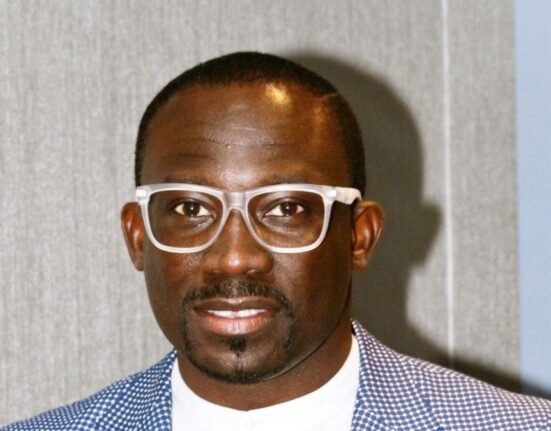
Dan Arnold has returned to wealth management nearly two years after LPL Financial fired him as CEO, joining New York-based Stirlingshire Investments as executive chairman. The assignment puts the executive who helped turn LPL into an industry giant inside a much smaller firm preparing to launch an AI-native operating system and compete for the same independent advisors Arnold spent years learning how to recruit.
Arnold won’t be a ceremonial chairman. He’ll work directly with founder and CEO Steven Woods and the executive team on advisor recruiting, operations, strategic partnerships and scaling the business. Woods called Arnold’s decision to join a validation of Stirlingshire’s platform and vision, giving a young company something technology alone can’t manufacture quickly: an executive with deep relationships across the independent advice business.
The return necessarily carries the circumstances of Arnold’s departure. LPL’s board terminated him in October 2024 after an outside law firm investigated statements he made to employees and concluded that he had violated the company’s respectful workplace policies and Code of Conduct. Arnold resigned from the board, and LPL subsequently reached a settlement allowing him to retain roughly 48,000 stock options then valued at about $12 million.
That ended a long run in which Arnold had become closely identified with LPL’s expansion. He joined the company in 2007 after LPL acquired UVEST, became CEO in 2016 and oversaw acquisitions including National Planning Holdings, Crown Capital Securities and Boenning & Scattergood. LPL shareholders earned a 537% total return during his tenure.
Stirlingshire gives Arnold a very different machine to work with. The firm operates both RIA and broker/dealer entities, uses Apex Fintech Solutions for custody and is trying to attract advisors with free access to its proprietary technology while allowing them to keep 100% of their payout. Its Stirling One platform, scheduled to launch at the Future Proof Festival, combines onboarding, portfolio management, trading, rebalancing, tax optimization, compliance, reporting, CRM, communications and AI tools.
The contrast is what makes Arnold’s return more interesting than another executive appointment. At LPL, he helped scale an enormous independent platform by assembling technology, custody, recruiting and practice support around thousands of advisors. Stirlingshire is starting with a similar ambition but trying to collapse much of that infrastructure into a technology platform built for an AI-native operating environment.
Arnold therefore arrives with exactly the experience Stirlingshire’s proposition still has to prove. Offering sophisticated technology for free and letting advisors retain their payout sounds compelling on paper, but wealth platforms ultimately scale through recruiting, service, operations and trust. Those are organizational problems as much as software problems, and Arnold spent much of his career solving them at industrial scale.
The arrangement gives Arnold something too. Returning as CEO of another established financial institution after his abrupt LPL departure would have required a board willing to make his history part of its own story. Stirlingshire offers a different path: an active chairman role at a young company where his operating experience and industry relationships can matter immediately without asking anyone to recreate his old job.
That puts two reputations under construction at the same time. Stirlingshire wants Arnold’s history of building one of wealth management’s largest platforms to accelerate its own ascent. Arnold gets a chance to establish that the final episode of his LPL tenure doesn’t have to be the final judgment on his career.
The former LPL chief once helped scale the infrastructure that independent advisors already use. His second act begins with a much smaller company betting that the next generation of that infrastructure needs to be built differently.