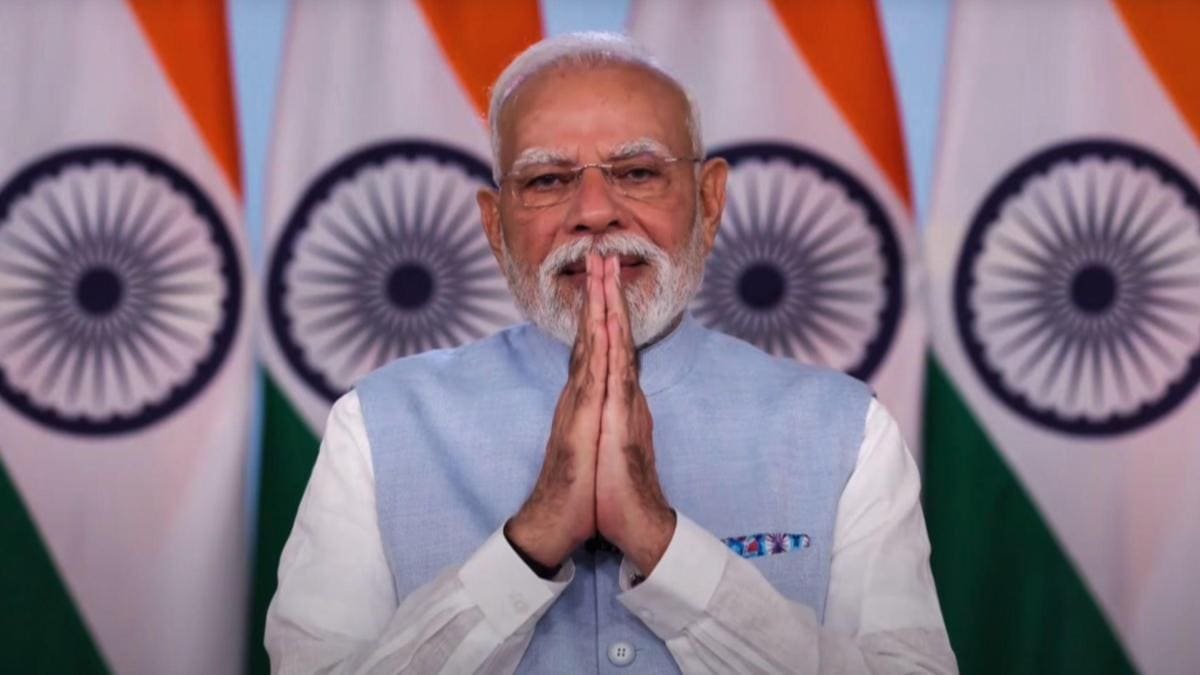
Prime Minister Narendra Modi praised the Indian scientific community in a post on ‘X’ on the occasion of National Technology Day. He referred to the 1998 Pokhran nuclear tests as a ‘landmark moment’ that showcased India’s scientific excellence and commitment.
In his post, Prime Minister Narendra Modi wrote, “Greetings on National Technology Day. We recall with pride the hard work and dedication of our scientists, which led to the successful tests in Pokhran in 1998. That landmark moment reflected India’s scientific excellence and unwavering commitment.”
Importantly, in his post, he called technology a key pillar of a self-reliant India. He said innovation continues to drive growth, broaden opportunities, and strengthen multiple sectors of the economy. While adding that the government of India remains focused on supporting talent, encouraging research, and developing solutions.
Technology has become a pillar
PM Modi also said, “Technology has become a key pillar in building a self-reliant India. It is accelerating innovation, expanding opportunities, and contributing to the nation’s growth across sectors. Our continued focus remains on empowering talent, encouraging research, and creating solutions that serve both national progress and the aspirations of our people”.
Why is Technology Day celebrated today?
The National Technology Day is celebrated today, i.e., on May 11, to honor Indian scientists, engineers, and technologists who worked for India’s scientific and technological advancement and ensured the successful conduct of the Pokhran tests.
The celebration of National Technology Day was started by former Prime Minister Atal Bihari Vajpayee in 1999. After which it is celebrated annually.
How did India conduct Nuclear Tests?
India conducted Pokhran-II tests, which were a series of five nuclear explosions, in May 1998 at the Indian Army’s Pokhran Test Range in Rajasthan. It was overseen by the then Prime Minister Atal Bihari Vajpayee. The test was also led by scientific figures, including R Chidambaram and APJ ABdul Kalam.