Unlock the Editor’s Digest for free
Roula Khalaf, Editor of the FT, selects her favourite stories in this weekly newsletter.
Sir Keir Starmer has refused to stand by Labour’s manifesto pledge to not raise income tax, employee national insurance or value added tax, as he acknowledged the backdrop to next month’s Budget was tougher than expected.
The UK prime minister has previously said that “the manifesto stands”, but refused to repeat that assurance in the House of Commons on Wednesday and his spokesperson also refused to use the phrase.
Instead, Starmer cited gloomy official forecasts on UK productivity growth — first reported by the Financial Times — which analysts have estimated could cause a £20bn hit to the public finances.
He blamed the downgraded productivity forecasts by the Office for Budget Responsibility on the austerity and Brexit policies of the previous Conservative government, along with Liz Truss’s disastrous “mini” Budget.
“The forecasts are now coming through and they confirm the Tories did even more damage to the economy than we previously thought,” he told MPs at prime minister’s questions.
Breaking the manifesto commitment not to raise the rates of income tax, employee NICs or VAT would be a major breach of faith with voters and would almost certainly be one of the principal lines of attack against Labour in future elections.
However, Labour officials maintain that chancellor Rachel Reeves has not yet decided to raise income tax rates in her November 26 Budget, a move that would draw heavy political criticism.
A Labour spokesperson noted that “we are still awaiting the final OBR forecast” on the overall state of the public finances.
Reeves hopes the OBR will include in its forecasts various government “growth measures” and more favourable developments on growth, wages and borrowing costs to shrink the ultimate size of the fiscal hole she will have to fill.
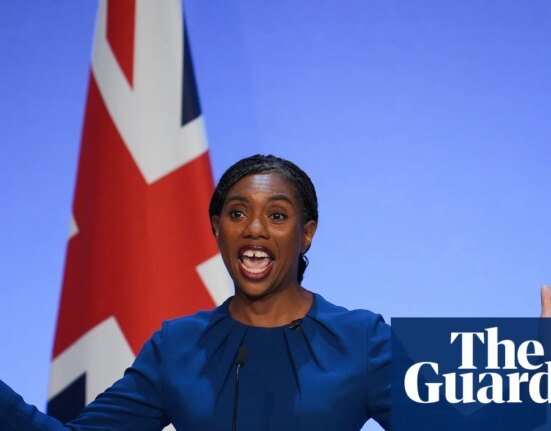
Conservative leader Kemi Badenoch said: “He won’t rule out tax rises because he can’t cut spending. He knows nothing about economic growth except how to destroy it.”
Both Starmer and Reeves are now in the “pitch rolling” phase ahead of the Budget, in which they are trying to prepare voters for difficult choices to come.
Normally, such preparation exaggerates the scale of the likely fiscal hole that has to be filled, in the hope that the public end up being relieved that tax rises or spending cuts are not quite as severe as they had feared.
The OBR’s productivity forecast downgrade is expected to form the biggest single component of a fiscal hole estimated by economists at £30bn or more, but Labour officials still hope that more benign economic developments will cut the size of the ultimate repair job.
Starmer gave a hint of Labour thinking when he said on Wednesday: “Retail sales are higher than expected, inflation is lower than expected, growth has been upgraded this year, and the UK stock market is at an all-time high.”
One Labour insider said the chancellor was drawing up a “twin track” set of Budget proposals, depending on what the final OBR forecasts look like, with one set of options including an income tax rise.
Reeves is expected to announce in her Budget an extension of the existing freeze on income tax thresholds and allowances, which would raise almost £10bn. Starmer declined to rule out extending the freeze in the Commons, saying only that it was originally introduced by the Tories.
An increase to the basic rate of income tax by 1p would raise more than £8bn a year in 2028-29, according to HM Revenue & Customs. A 1p increase to the higher rate of tax would lift revenue by £2.1bn, while a 1p boost to the additional, 45p rate, adds £230mn.