Despite this, it said a wealth tax was “the most widely discussed policy option” among those who believe inequality is too high.
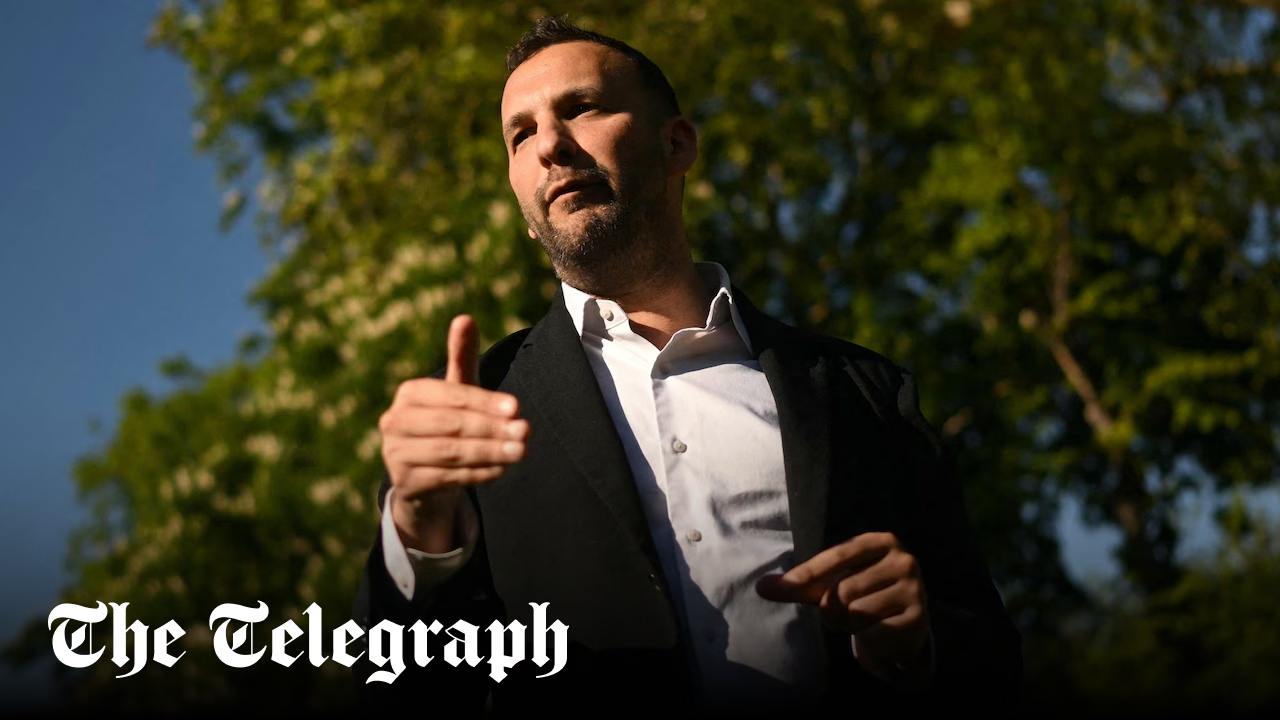
Zack Polanski, the Green Party leader, called last month for an annual levy of 1pc for those with assets worth more than £10m, rising to 2pc for those with more than £1bn. He said it would raise £15bn per year for the Exchequer.
Mr Polanski said: “A wealth tax won’t fix everything and no one’s ever pretended it would but it’s a good place to start.”
A group of Labour MPs led by Richard Burgon has also urged Ms Reeves to adopt a wealth tax.
Momentum is growing across the globe for levies on the rich.
Zohran Mamdani, the mayor of New York, posted a video this month saying he would be making good on his campaign promise to “tax the rich” by imposing “an annual fee on luxury properties worth more than $5m (£3.7m), whose owners do not live full-time in the city”.
The IFS warned that there were major practical difficulties in implementing a tax on assets.
The report said: “On a practical level, valuing certain forms of wealth (such as private businesses) is extremely difficult, and challenges in defining and valuing taxable wealth would inevitably create distortions and unfairness.”
While property transactions are kept in a public register, cash in the bank can be counted and shares in listed companies have a published price, private companies are hard to value and can be attributed to an owner, their family and key members of staff.
Valuations also typically include the value of anticipated earnings, meaning business founders effectively being taxed on income they have not yet received.
The IFS said a one-off wealth tax may theoretically be more appealing, as it should have less effect on long-term incentives to invest in the economy. However, this would depend on trust that the tax really is a one-off.
The IFS said other steps could be taken to reduce inequality, including making it easier for people to move to London from poorer parts of the country.
“Policies to expand access to London include planning reforms to reduce restrictions on developing land in and around London – for example, on the green belt,” it said. “Moving costs could be lowered by reducing or abolishing stamp duty.”
The Government said it has taken action to increase taxes on the rich.
“The Government is not introducing a wealth tax but is reforming its established system of taxing wealth,” said a Treasury spokesman.
“At Budget 2025, we reformed salary sacrifice, a taxpayer-funded perk largely benefitting the better off, and ensured a £10m Westminster mansion doesn’t pay less in tax than a typical family home in England.
“At Budget 2024, we also abolished non-dome status, applied VAT to private school fees, introduced new taxes on private jets, increased capital gains tax, and closed the carried interest loophole for private equity.”
The Green Party was contacted for comment.