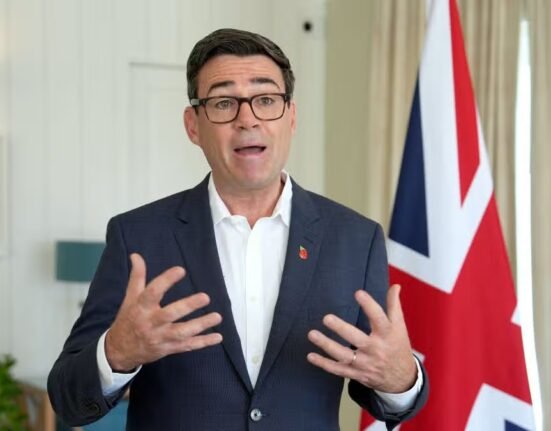
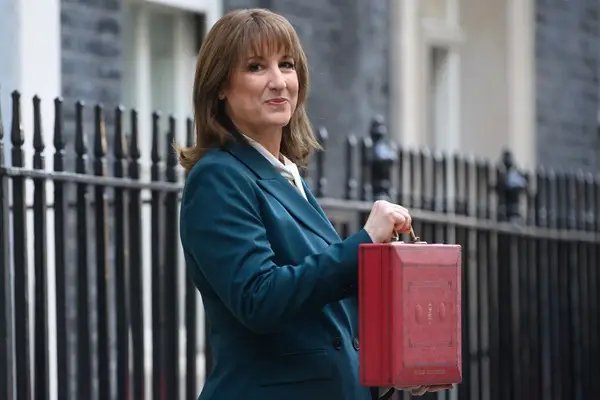
Rachel Reeves has defended her £ 66bn programme of tax increases, insisting Britain would have faced higher borrowing costs, weaker public finances, and more expensive mortgages had she not imposed the controversial measures during her time as chancellor.
In her first major public address since being removed from the Treasury by Prime Minister Andy Burnham, Ms Reeves argued that the tax rises helped bring down interest rates and saved some households as much as £800 on their mortgage repayments.
Speaking at Harvard University on Monday, the former chancellor said the measures were necessary to end what she described as a “failed austerity experiment”, acknowledging that her decisions involved “difficult choices” and were “not without controversy”.
“There was no way to raise revenue on the scale required which would be free of pain,” she said.
Ms Reeves argued that her approach had reduced government borrowing and eased pressure on interest rates, claiming that without the additional revenue the government would have needed to borrow a further one per cent of gross domestic product this year – equivalent to about £30 billion.
That, she said, would have pushed up borrowing costs and fed through to household finances. Treasury modelling suggested a family taking out a £200,000 two-year fixed-rate mortgage could have faced up to £800 in additional repayments.
The defence comes after a turbulent period for the former chancellor, whose two Budgets attracted criticism from businesses, economists and opposition politicians over their impact on investment, employment and the cost of doing business.
Among her most contentious decisions was a £25billion increase in employers’ National Insurance contributions. The rate rose from 13.8 per cent to 15 per cent, while the threshold at which employers began paying the levy was reduced from £9,100 to £5,000.
Business groups warned that the changes would discourage recruitment, squeeze wages and undermine investment. Ms Reeves, however, maintained that she had deliberately concentrated tax increases on businesses and wealthier households to reshape the tax system.
She said the objective was to “shift the tax system towards rewarding work, enterprise and investment, rather than the passive accumulation of wealth”.
Her broader ambition, she argued, was to break Britain’s “low-wage, low-investment cycle” and establish stronger foundations for sustainable economic growth.
“Many disagreed with those decisions then. Many still do. But without them, the UK economy would have been weaker,” she said.
That assessment remains contested. Bank of England Governor Andrew Bailey has warned that the tax increases contributed to higher prices and rising unemployment, adding to concerns that the policy burden on employers was weighing on the labour market.
By the end of Ms Reeves’s tenure at the close of 2025, unemployment had climbed to 5.2 per cent, its highest level in five years. The Office for Budget Responsibility also forecast after her 2025 Budget that the tax burden would reach a postwar high of 38.3 per cent of national output.
Her first Budget alone raised taxes by about £40billion, increased annual public spending by roughly £70billion and left borrowing around £28billion a year higher over the following five years. Across both fiscal statements, the total tax increases amounted to £66billion.
Ms Reeves nevertheless argued that the fiscal buffer she had established gave her successor, John Healey, room to respond to fresh economic pressures. She said the £24billion headroom she built up enabled the Government to absorb the impact of the Iran war while retaining a £15billion cushion in last week’s Budget.
Beyond her record in office, Ms Reeves used the Harvard speech to renew her call for Britain to rejoin the European Union, describing the 27-member bloc as the “single biggest opportunity” to raise incomes, improve public services and strengthen national security.
“I firmly believe Britain’s future lies inside the European Union. Economically, it is the credible choice. Britain’s values, and a serious assessment of the geopolitical scene today, tell us it is the radical choice too,” she said.
She argued that no agreement with another country or trading group could compensate for the economic distance from Britain’s closest and largest commercial partner.
The former chancellor also warned that the UK was paying insufficient attention to the threat posed by artificial intelligence, particularly to its services sector and knowledge-intensive industries – areas she regards as central to the country’s future prosperity.