Artificial intelligence has changed the way people trade stocks and cryptocurrencies. In 2026, an AI stock trading robot is no longer a futuristic concept. It is a practical tool used by thousands of traders every day. But how does an AI stock trading robot actually work? And what strategies do these robots use to make money? This article explains the inner workings of AI trading robots in simple terms. It also reveals the top strategies that have been proven to win in real market conditions. This guide gives you the facts without hype or promotional language.
What is an AI Stock Trading Robot?
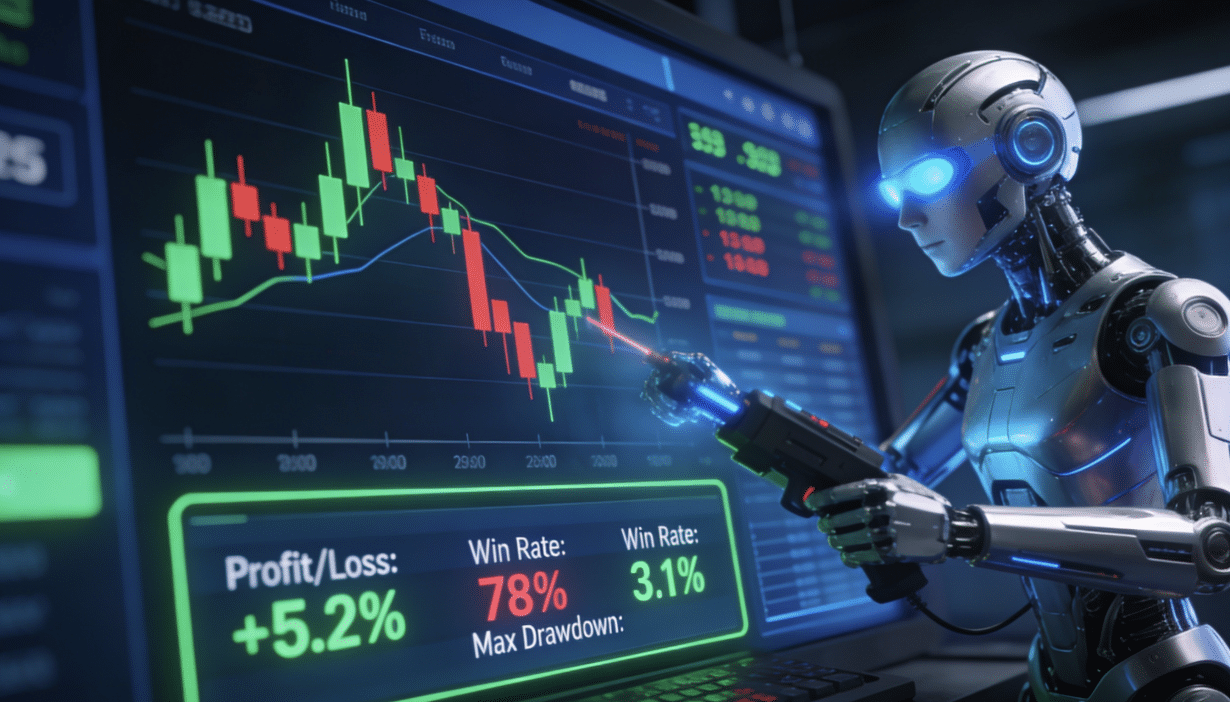
An AI stock trading robot is a software program that uses artificial intelligence to automatically buy and sell financial assets. Unlike traditional trading bots that follow fixed rules, an AI stock trading robot learns from market data. It adapts to changing conditions. It makes decisions based on patterns that humans cannot see. The robot connects to a stock exchange or crypto exchange through an API. Once connected, it can place orders, manage risk, and monitor positions 24 hours a day. Some platforms offer fully managed AI trading robots that require no programming or setup. One example is BulkQuant, a platform that focuses on AI-powered quantitative trading for both cryptocurrencies and stocks.
You can visit their website to learn more.
How Does an AI Stock Trading Robot Work?
An AI stock trading robot works through five main steps that happen in milliseconds.
First, data collection. The robot gathers price data, trading volume, news headlines, social media sentiment, and economic indicators. For crypto trading, it also collects on-chain data. For stock trading, it collects earnings reports and analyst ratings.
Second, data processing. The AI uses machine learning models to recognize patterns. It looks at hundreds of indicators at the same time. This is something no human trader can do.
Third, strategy execution. After the AI generates a signal, it executes the trade automatically through the exchange API. The entire process takes less than a second.
Fourth, risk management. A good AI robot uses stop losses, take profit levels, and position sizing to protect capital.
Fifth, learning and improvement. The robot re-trains itself on new data regularly. If a strategy stops working, the AI detects this and adjusts.
Core Technologies Behind AI Trading Robots
Machine learning is the backbone of most AI trading robots. Algorithms learn from past data to predict future price movements. Natural language processing, or NLP, allows the robot to read news and social media to detect sentiment. Reinforcement learning lets the AI learn by trial and error. Computer vision helps some robots analyze stock charts and candlestick patterns automatically.
Top Strategies That Actually Win
Not all AI trading strategies are equal. Here are the top strategies used by successful AI stock trading robots in 2026.
Strategy 1: Statistical Arbitrage
Statistical arbitrage is one of the most reliable quantitative strategies. The AI identifies two assets that usually move together. When the price relationship deviates, the AI buys the underpriced asset and sells the overpriced one. It profits when prices return to normal. This strategy is low risk because the AI is hedged. Platforms like BulkQuant use statistical arbitrage in their Model Equity StatArb plan.
Strategy 2: Momentum Trading
Momentum trading is based on the idea that assets going up tend to continue going up. The AI scans thousands of assets to find those with strong recent performance. It buys the winners and sells the losers. The AI uses indicators like RSI and MACD to confirm momentum. BulkQuant offers the Algorithmic Crypto Momentum plan, which applies this strategy.
Strategy 3: Mean Reversion
Mean reversion assumes that when an asset moves too far in one direction, it will return to its average price. The AI buys assets that have dropped too much and sells assets that have risen too much. This works best in range-bound markets using indicators like Bollinger Bands.
Strategy 4: High Frequency Trading (HFT)
High-frequency trading executes thousands of trades per second. The AI profits from tiny price differences between exchanges. The profit per trade is small, but thousands of trades add up. HFT requires low-latency technology. BulkQuant offers a Precision Crypto HFT plan that uses this technology.
Strategy 5: Sentiment Analysis
Sentiment analysis uses NLP to gauge market emotion from news, tweets, and blog comments. If sentiment is extremely positive, the AI buys. If sentiment is extremely negative, the AI sells or shorts. This strategy works well around major news events.
Real Example: BulkQuant AI Trading Plans
To understand how these strategies translate into actual trading plans, here is a real example from BulkQuant. The table below shows ten different plans using combinations of the strategies described above.
| Plan Name | Amount (USD) | Cycle (days) | Daily Earnings (USD) | Total Profit (USD) | Daily Interest Rate (%) |
| Free AI Quant Surplus Reward | 50 | 1 | 0.5 | 0.5 | 1.00% |
| Subsidized AI Quant Trial Contract | 100 | 2 | 4 | 8 | 4.00% |
| Multimodal Crypto Matrix | 500 | 5 | 8 | 40 | 1.60% |
| Algorithmic Crypto Momentum | 1100 | 8 | 18.15 | 145.2 | 1.65% |
| Autonomous Crypto Hedge | 3200 | 10 | 56 | 560 | 1.75% |
| Model Crypto Arbitrage | 6700 | 12 | 120.6 | 1447.2 | 1.80% |
| Predictive Equity Breakout | 13000 | 8 | 253.5 | 2028 | 1.95% |
| Dynamic Equity Alpha | 26000 | 5 | 546 | 2730 | 2.10% |
| Precision Crypto HFT | 54000 | 3 | 1296 | 3888 | 2.40% |
| Model Equity StatArb | 85000 | 2 | 2550 | 5100 | 3.00% |
The Free AI Quant Surplus Reward plan is a basic trial that runs for one day. The Subsidized AI Quant Trial Contract offers 4 percent daily return over two days. The Precision Crypto HFT plan pays 1,296 dollars per day. The Model Equity StatArb plan pays 2,550 dollars per day at 3 percent daily interest.
Does AI Stock Trading Really Work?
The honest answer is yes, but with conditions. No AI robot wins every trade. Even the best robots have losing trades. The goal is to have more winning trades than losing trades. Markets change. Strategies that worked last year may not work next year. This is why continuous learning is so important. Traders should also be aware of risks such as technical failures, exchange outages, and flash crashes.
How to Choose an AI Stock Trading Robot
When choosing an AI stock trading robot, look for transparency. Does the robot publish its historical performance? Consider ease of use. Some robots require programming. Others like BulkQuant are fully managed with no coding required. Check fees and security. The robot should only be able to trade, not withdraw funds.
Conclusion
An AI stock trading robot works by collecting data, processing it with machine learning, executing trades automatically, managing risk, and continuously improving. The top winning strategies include statistical arbitrage, momentum trading, mean reversion, high-frequency trading, and sentiment analysis. Each strategy has its own strengths. The key to success is matching the right strategy to current market conditions.
Platforms like BulkQuant provide access to these strategies through transparent plans ranging from 50 to 85,000 dollars. Understanding how AI stock trading robots work is the first step toward using them effectively. Start small. Learn continuously. And always respect the risks involved in trading.
Disclaimer: This is a paid post and should not be treated as news/advice.