
October 30, 2026
Fund

Fund Owners Should Harvest Losses Before Year-End Capital Gain Distributions Hit


Quick Read

  • Morningstar published its look at which funds will pay the biggest 2026 capital gains distributions on October 27, 2026.

  • Harvested losses offset fund distributions dollar for dollar on Schedule D, with excess losses cutting up to $3,000 of ordinary income annually.

  • Automatic reinvestment counts as a purchase under the wash sale rule, so turn it off before harvesting losses or forfeit the deduction.

  • Just released. Our analysts combed the entire stock market and named the ten best stocks to buy right now, and Morningstar didn’t make the cut. Enter your email to see the names that beat MORN. The report is free. Enter your email and see if any of your stocks made the cut.

You never sold a share. The mutual fund is still sitting in your taxable brokerage account, and you plan to keep it for years. Then a Form 1099-DIV shows up with a capital gain on it, and you owe tax on that gain anyway.

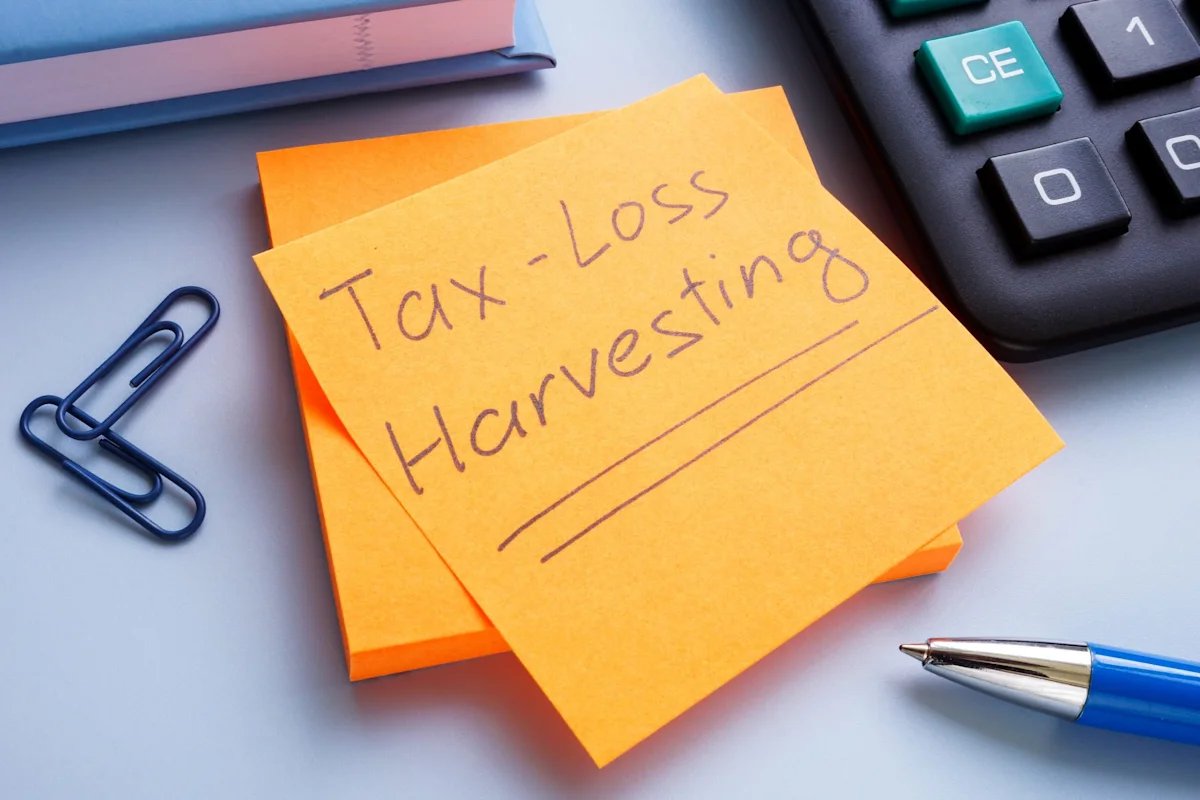
Memo stick with tax-loss harvesting phrase.
Vitalii Vodolazskyi / Shutterstock.com

The gain came from the fund’s managers. They sold winners inside the portfolio and passed the profit along to you. One common defense is selling losing positions elsewhere in a taxable account before December 31, so those losses offset the distribution on the return. Fund estimates are already coming out. Morningstar (NASDAQ:MORN) published its look at which funds will pay the biggest 2026 capital gains distributions on October 27, 2026.

Why Your Fund Sends a Tax Bill When You Never Sold

IRS Publication 550 (TY2025) says mutual funds pay capital gain distributions to you or credit them to your account. The amount shows up on Form 1099-DIV, box 2a. You report these distributions “as long-term capital gains, regardless of how long you owned your shares”. So even if you bought the fund in November, the distribution counts as long-term.

——

Free Report, Just Released

Why Didn’t MORN Make The Top 10 List?

24/7 Wall St has helped investors make money for over two decades, and our top analysts just finished ranking the definitive Top 10 Stocks To Buy Now. Not the ten biggest companies. Not the ten everyone is arguing about. The ten best stocks to buy right now.

And MORN didn’t make the cut!

The report is free, and you can see why we think each stock is a top investment today.

Enter Your Email and See the Ten →

——

Reinvesting doesn’t get you out of it. Most funds let shareholders reinvest distributions automatically. But when those new shares are bought at fair market value, “you must still report the dividends as income”. The reinvested amount becomes the cost basis of the new shares, so keep records of it and you won’t pay tax on that money a second time when you sell.


The late-year timing is written into the tax code. Under 26 U.S.C. § 4982, a fund owes a 4% excise tax on any shortfall below a required distribution. That required amount includes 98.2% of the fund’s capital gain net income for the one-year period ending October 31. That’s why the payouts pile up in the last weeks of the calendar.

How Harvested Losses Wipe Out Fund Distributions

Distributions go in Part II of Schedule D, alongside your other long-term gains and losses. Publication 544 (TY2025) puts it simply: “Capital losses are allowed in full against capital gains plus up to $3,000 of ordinary income.” Each dollar of harvested loss offsets a dollar of distribution before any tax is calculated.

If your losses are bigger than your gains, a annual limit applies to the extra: $3,000, or $1,500 if married filing separately. Whatever is left over carries forward until it is completely used up, and it remains long-term or short-term, whichever it was originally.

The IRS goes through its own example. Bob and Shelly sold securities in 2025 at a $7,000 capital loss. They had no other capital transactions and taxable income of $26,000. They deduct $3,000 on their joint 2025 return and carry the unused $4,000 forward. If they had also received fund distributions, the loss would have offset those first, dollar for dollar, before counting toward the deduction.

How much this saves depends on your bracket. For 2025, the 0% rate on net capital gain covered taxable income up to $96,700 for joint filers and $48,350 for single filers. Above those lines, most gains are taxed at 15%, with 20% at the top. If you remains inside the 0% zone, harvesting doesn’t buy you much. Above it, the savings add up.

Buying Before the Record Date Means Buying Someone Else’s Gain

When a fund pays a distribution, its share price drops by about the same amount. If you buy shares just before the record date, part of what you just invested comes straight back to you as a taxable distribution.

That’s why many fund companies post estimated distributions before the payout. Before you put new money into a fund in a taxable account late in the year, look up the estimate and the record date. Often, waiting until after the distribution avoids the bill entirely.

Wash Sale Rule Can Quietly Erase Your Harvested Loss

Publication 550 disallows your loss if you buy substantially identical securities within 30 days before or after the sale. That includes purchases in your IRA or Roth IRA. A purchase by your spouse counts too. The disallowed loss gets added to the cost of the new shares, which postpones the loss deduction until you sell those shares.

Funds set two traps here. First, switching into a near-twin fund, such as one that tracks the same index, invites a “substantially identical” challenge. Second, automatic reinvestment counts as a purchase. If the same fund reinvests a distribution within 30 days of your loss sale, you lose the deduction on a matching number of shares. Turn off reinvestment before you harvest.

ETFs and Index Funds Tend to Leave Smaller Tax Bills

Index funds trade less, so they have fewer gains to pass along. ETFs usually handle redemptions by handing securities directly to large trading firms instead of selling them. That lets them get rid of low-basis shares without triggering gains. Still, neither type of fund guarantees a zero distribution.

Where you hold a fund matters too. Active funds that trade a lot do less damage inside an IRA or 401(k), where distributions aren’t taxed when they’re paid.

Pull the distribution estimates for every fund in your taxable account and compare them against the positions sitting on losses. Investors who harvest losses typically sell before December 31, turn off reinvestment, and stay out of the same holding for more than 30 days. Choosing which lots to sell is math worth running with a CPA before the year ends.

Got $1,000? Before You Buy MORN, Read This

If you have cash sitting in your account right now, give this two minutes. After more than two decades of helping investors beat the market, our top analysts at 24/7 Wall St. put together a definitive report on the Top 10 Stocks To Buy Today. And MORN wasn’t one of them.

They combed the entire market. It’s not 10 ideas, not 10 stocks everyone is talking about, it’s what their research points to as the 10 best stocks to buy right now, and it’s free. Read more here and see which stocks made the list –>>

Contact editorial@247wallst.com for any questions or corrections.


Source link

Leave a Reply

Your email address will not be published. Required fields are marked *