Unlike basic solar installations that depend on grid power after sunset, smart microgrids are designed for near-continuous operation. When properly sized to match a company’s energy demand, they can enable businesses to operate almost independently of JPS.
AS companies intensify efforts to reduce energy costs and strengthen operational resilience, SunTerra Energy Solutions Limited is expanding its roll-out of smart solar microgrids — positioning it as a pathway to sustainability and energy independence.
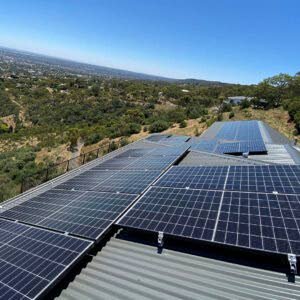
In partnership with Innovus Power, the company recently commissioned one such system at the National Health Fund (NHF) Pharmaceutical Division warehouse in Kingston. The project, which represents a major advancement for critical health-care infrastructure, also underscores SunTerra’s broader push to help businesses become more self-sufficient.
“This project demonstrates what can be achieved when technology is tailored to real-world needs,” said CEO of SunTerra Energy Emanuel DaRosa. “NHF required more than solar savings — they needed reliability, stability, and protection for a critical facility. What we delivered is a highly customised, smart solar microgrid that will operate independently from the grid most of the year and provide the resilience and control they were seeking.”
Innovus Power CEO Marc Hoffman, commenting on the project, said the installation reflects the future of energy for mission-critical operations.
“It allows the customer to operate independently, manage how power is used, and maintain high reliability while protecting sensitive equipment from unstable grid conditions,” he said, noting that the system’s flexible controls give NHF multiple operating options.
Vice-President of Communications, People & Culture Sherry DaRosa, in a recent interview with the Jamaica Observer, said that the battery-backed solar systems — often referred to as smart micro grids, have long been part of the company’s commercial offerings.
“The majority of our systems already have smart grid capacity,” she said while noting that this approach allows businesses to rely far less on the national grid.
Unlike basic solar installations that depend on grid power after sunset, smart microgrids are designed for near-continuous operation. When properly sized to match a company’s energy demand, they can enable businesses to operate almost independently of the Jamaica Public Service network.
The vice-president said that while residential users can adopt similar systems, limited roof space often restricts their ability to achieve full energy independence. Commercial operations however, can scale installations more effectively to meet higher energy demands.
SunTerra designs its systems based on the client’s usage profile, particularly for larger organisations having sufficient space to support extensive solar arrays and battery storage.
“Solar can be more than just daytime power…It can power you 24 hours a day,” DaRosa said.
The NHF system is expected to supply about 80 per cent of the facility’s annual energy needs, rising to as much as 95 per cent in some months. It will operate independently of the grid for roughly three-quarters of the year, reconnecting only when battery reserves are low.
Beyond cost savings, reliability is becoming a top priority as grid instability and outages disrupt operations. Microgrids address this by integrating solar generation, battery storage, backup generation, and advanced controls that allow seamless switching between power sources.
“For most companies, it’s not just about savings — it’s about reliability and ensuring operations are not interrupted,” DaRosa said, citing rising oil prices and climate-related risks as additional drivers of demand.
With interest growing, SunTerra expects to roll out more projects in the near term. At the same time, the company continues to work on larger initiatives, including its Midnight Sun project which aims to deliver more than 100 GWh of clean energy annually — about four per cent of Jamaica’s total electricity needs.
“Despite some delays, we continue to push forward with plans to deliver this project within the scheduled time frame,” DaRosa said.