NextEra Energy (NEE 0.45%) and Duke Energy (DUK 1.21%) are two of the largest utilities in the U.S. While one recently sold a business, the other is poised to make a historic growth move.
NextEra Energy: Navigating Volatile Revenue Fluctuations
NextEra Energy generates revenue by producing and distributing electricity to wholesale and retail customers mainly in Florida. It is the largest electric utility in the U.S. and a leading global producer of wind and solar energy.
It reported an approximate 31% net income margin for the quarter ended March 31, 2026, and proposed an all-stock $67 billion merger with Dominion Energy (D 0.59%) to create the world’s largest regulated electric utility.
Duke Energy: Maintaining a Higher Revenue Baseline
Duke Energy (DUK 1.21%) primarily generates and distributes electricity and natural gas to millions of residential, commercial, and industrial customers across the Southeastern and Midwestern United States.
It recently completed the sale of its Tennessee Piedmont Natural Gas business to Spire and reported an approximate 17% net income margin for the quarter ended March 31, 2026.
Why Revenue Matters for Retail Investors
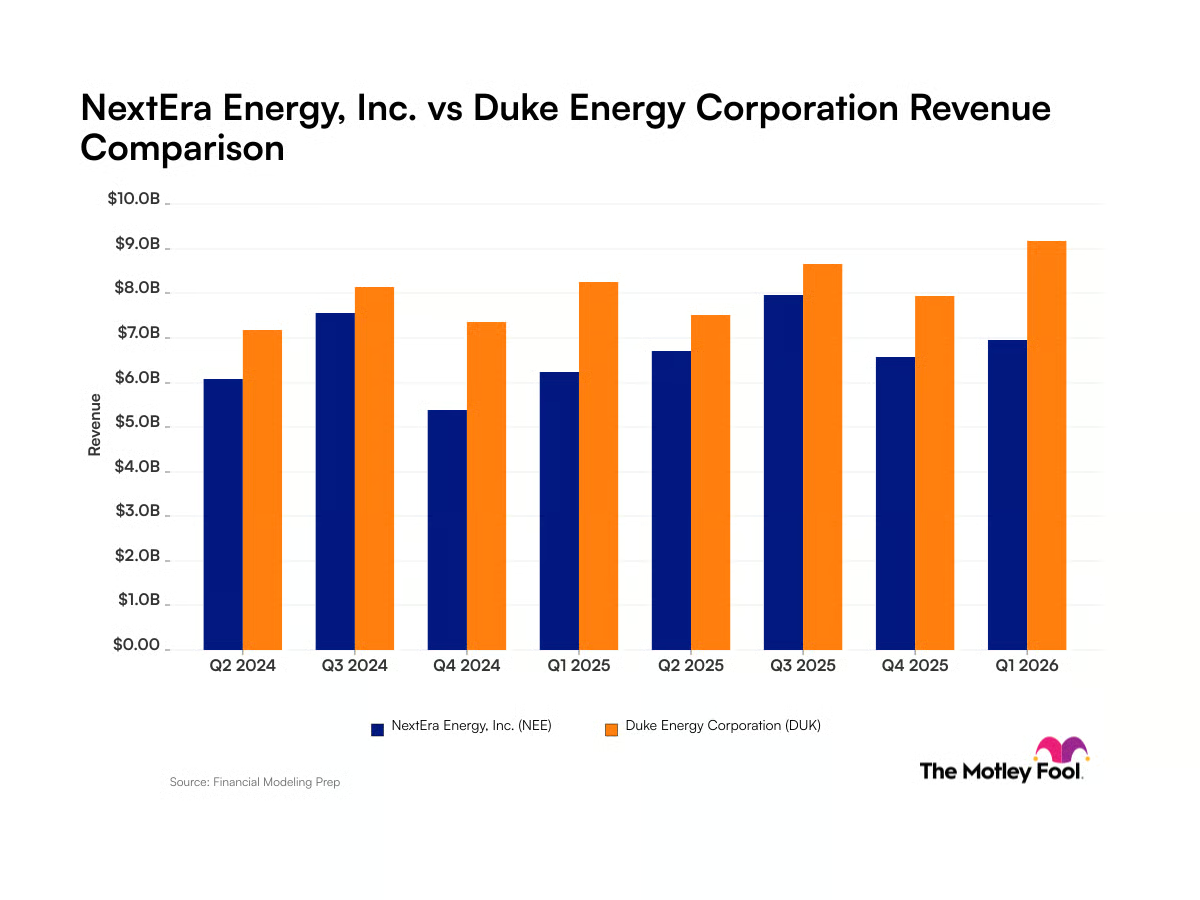
Revenue here refers to the data provider’s standardized income statement revenue line item and shows the total money brought in before any expenses are deducted, helping investors gauge basic business scale.
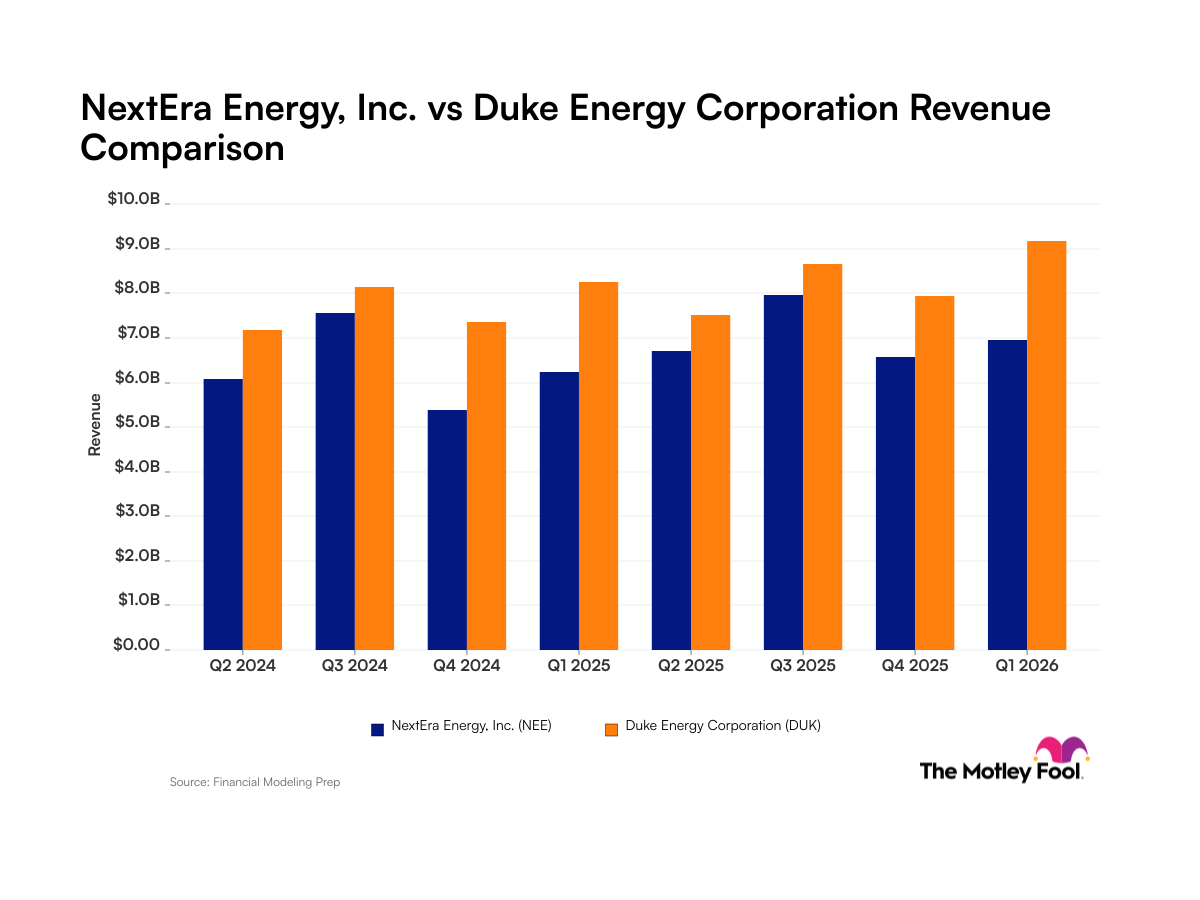
Quarterly Revenue for NextEra Energy and Duke Energy
| Quarter (Period End) | NextEra Energy Revenue | Duke Energy Revenue |
|---|---|---|
| Q2 2024 (June 2024) | $6.1 billion | $7.2 billion |
| Q3 2024 (Sept. 2024) | $7.6 billion | $8.2 billion |
| Q4 2024 (Dec. 2024) | $5.4 billion | $7.4 billion |
| Q1 2025 (March 2025) | $6.2 billion | $8.2 billion |
| Q2 2025 (June 2025) | $6.7 billion | $7.5 billion |
| Q3 2025 (Sept. 2025) | $8.0 billion | $8.7 billion |
| Q4 2025 (Dec. 2025) | $6.6 billion | $7.9 billion |
| Q1 2026 (March 2026) | $7.0 billion | $9.2 billion |
Data source: Company filings. Data as of June 23, 2026.
Foolish Take
Duke Energy is a purely regulated electricity and gas utility serving nearly 8.7 million customers across six states, which makes its revenues more predictable.
NextEra Energy, on the other hand, also owns a massive renewable energy arm, NextEra Energy Resources, which generates electricity from owned renewable assets and sells wholesale electricity under long-term contracts. Spot price fluctuations, hedging adjustments, and project timing can make quarterly revenue lumpy.
That will, however, change if the NextEra-Dominion merger goes through. By adding Dominion’s massive regulated electric utilities across Virginia, North Carolina, and South Carolina to its existing Florida footprint, NextEra will create the world’s largest regulated electric utility with more than 10 million customers, a generation capacity of 110 gigawatts (GW), and a combined rate base of $138 billion that should drive annualized adjusted EPS growth of at least 9% through 2032.
NEE & DUK: Performance Comparison
Key Financial Metrics

NEE – NextEra Energy
$87.05
–0.45% (–$0.39)

DUK – Duke Energy
$125.26
–1.21% (–$1.53)
Market Cap
$182B
52wk Range
$69.24 – $98.75
Gross Margin
36.10%
P/E Ratio
22.11
EPS (TTM)
$3.94
Dividend & Yield
$2.38 (2.73%)
Market Cap
$98B
52wk Range
$113.89 – $134.49
Gross Margin
30.76%
P/E Ratio
19.17
EPS (TTM)
$6.53
Dividend & Yield
$4.26 (3.40%)
NEE – NextEra Energy
$87.05
–0.45% (–$0.39)
Market Cap
$182B
52wk Range
$69.24 – $98.75
Gross Margin
36.10%
P/E Ratio
22.11
EPS (TTM)
$3.94
Dividend & Yield
$2.38 (2.73%)
DUK – Duke Energy
$125.26
–1.21% (–$1.53)
Market Cap
$98B
52wk Range
$113.89 – $134.49
Gross Margin
30.76%
P/E Ratio
19.17
EPS (TTM)
$6.53
Dividend & Yield
$4.26 (3.40%)
Above all, NextEra is actually placing a massive bet on artificial intelligence (AI) with the acquisition. While Duke Energy has been mapping out a massive $103 billion capital plan over the next five years to capitalize on the AI data center build-out, NextEra is trying to buy its way directly into the heart of the AI power boom, as Dominion is based in Richmond, Virginia, a booming data center hub.
If I had to buy one stock today, I’d bet on NextEra Energy for its formidable mix of regulated utility assets and renewables, and the significant AI power potential.