
Picture this: A family walks into an adviser’s office in Dubai. Its business is run from the UAE, but much of its property sits abroad, and the children who will one day inherit both live in several different countries. Ten years ago, the conversation would have been largely centred on growth, with questions about which corner of the private markets had opened up to them.
Today the first questions are more likely to be about who inherits what, and whether the plan will hold up against the family’s faith.
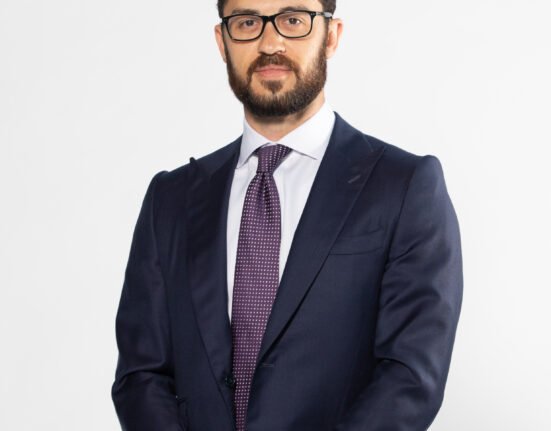
“Families are actively seeking out Shariah-compliant planning now, where once they settled for it,” says Nazneen Abbas, Vice President at the Continental Group, where she guides families through succession. “They no longer want to choose between financial planning and faith.”
For a long time, that trade-off was the norm. An affluent Muslim family could have sophisticated planning, with the flexibility and underwriting muscle a globally mobile fortune needs, or it could have a structure it was confident sat within its interpretation of Shariah. Conventional tools generally delivered the first while the compliant alternatives stayed faithful and did less, so families picked one and made their peace with the other.
The conventional route
Islamic finance was sized at $5.98 trillion in 2024. The UAE ranks as the fourth-largest Islamic finance jurisdiction in the world, with Islamic banks holding 18 per cent of the country’s banking assets, some $242.7 billion, in H1 2025. But some of the more sophisticated tools for managing private wealth developed elsewhere, and so did the people trained to use them.
“Conventional wealth planning has decades of precedent in trusts and estate structuring, and in coordinating across borders,” says Abbas. “Islamic wealth planning has matured significantly, but there was the challenge of having fewer advisors who combine genuine Shariah literacy with the technical, cross-border expertise sophisticated families need.”
Many families still assume compliance means fewer options. “In practice, it means different mechanisms working toward similar outcomes,” she says.
Shariah-compliant investments are now broad, says Neil De Sousa, Head of the Middle East at Schroders Wealth Management. “The more significant challenges tend to arise in wealth structuring, succession planning and cross-border estate planning, where families often require solutions that are simultaneously Shariah-compliant, legally robust and effective across multiple jurisdictions. Encouragingly, the market is evolving beyond basic compliance, with growing innovation aimed at providing wealthy families with the same breadth and sophistication of wealth planning available globally while remaining aligned with their beliefs and values.”
A family business cannot always be divided neatly among three children, or a property portfolio liquidated on the morning a succession dispute begins. And an operating company may be worth hundreds of millions on paper but still leave the family scrambling for cash when it needs it.
“Muslim family businesses often stall at succession even when the leadership decisions are clear,” says Abbas. “Too often, the family could not source a genuine Shariah-compliant Takaful product that would provide the liquidity to settle heirs fairly without selling or fragmenting the business.”
Shariah-compliant wealth planning catches up
In June, Manulife launched Maseera Indexed Takaful, a Shariah-compliant wealth-planning structure aimed at wealthy families and business owners. It combines life protection with growth linked to the S&P 500 Sharia Index, access to liquidity and an optional Hibah mechanism for transferring assets. It is built to work as family wealth infrastructure, with protection as one part of it.
Takaful rests on mutual cooperation among participants, in place of the conventional transfer of risk to an insurer. Structures like Maseera are designed to avoid riba, or interest, and to keep out gharar (excessive uncertainty) and maysir (gambling).
Abbas describes the outcome as a dedicated pool of value that sits outside the business itself. “The liquidity can support estate equalisation between active and non-active heirs, or fund a buyout,” she says. “Sometimes it simply gives the family time to resolve governance questions without pressure, which allows for a faster and less disputed transfer of benefits, in line with Islamic principles.”
Used thoughtfully, Abbas says, products of this kind can become “a practical bridge between faith-based requirements and the real-world liquidity demands of a multi-generational transition.”

Where the industry goes next
The UAE’s National Strategy for Islamic Finance, announced in May 2025, aims to more than double Islamic banking assets to Dh2.56 trillion ($697 billion) by 2031.
For a growing number of Muslim families in the UAE, how wealth passes to the next generation has become as pressing as how it grows. Around $1 trillion in family assets is expected to pass to a new generation in the GCC by the end of the decade.
“A large cohort of UAE family businesses is approaching succession simultaneously, and the families leading them want solutions that feel authentically theirs,” says Abbas, who expects demand for Shariah-compliant succession and legacy planning to outpace broader wealth management over the next five years.
The family in that Dubai office, with property and heirs abroad, has a further challenge.
“Overseas succession laws can differ significantly from both Shariah principles and GCC expectations, making coordinated estate planning essential,” says De Sousa. “Many families require international wills and succession arrangements to ensure their wishes are effective across jurisdictions. Probate can also become complex when assets and beneficiaries are located in different countries, while overseas assets and internationally resident heirs may create exposure to foreign inheritance, estate and gift taxes. Careful planning is therefore critical to preserving wealth across generations”
Performance still counts, but it is no longer the only question wealthy families are asking, and Abbas sees conversations about family governance increasingly taking place alongside financial planning.
“Islamic finance offers something the wider industry is only beginning to embrace, which is the idea that wealth carries responsibility as well as returns,” she says. “The opportunity lies in bringing faith and modern financial planning structures together, so families can protect and transfer wealth across generations without compromising the principles they value.”