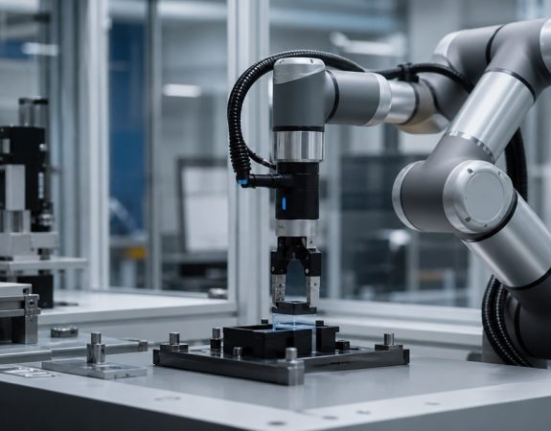
Developing nations that eagerly import advanced automated tools without overhauling their domestic educational frameworks are setting the stage for severe economic isolation. x
In the study of modern economic divergence, identifying the precise mechanisms that lift nations out of poverty is a complex statistical and analytical challenge. In the quiet halls of the Institute for Sustainable Development at The University of the West Indies, Mona, my comprehensive 2015 macroeconomic PhD thesis, supervised by Professor Anthony Clayton, sought to isolate these variables by examining paired developing states — comparing the Dominican Republic and Haiti, Botswana and Zimbabwe, and, crucially for our context, the Cayman Islands and Jamaica. By analysing extensive time-series data, the research quantified how governance, macroeconomic resilience, microeconomic efficiency, and resource allocation dictate national prosperity.
Out of this rigorous econometric analysis emerged the resource-induced poverty reducing economic condition, commonly referred to as the RIPREC model. While originally formulated to explain historical development trajectories and the long-run diminishing returns to isolated capital investments, the mathematical conditions of the RIPREC model offer a highly prophetic lens for today. As the modern world grapples with the exponential advancement of artificial intelligence (AI) and complex analytics, the RIPREC framework perfectly models the impending socio-economic shocks awaiting nations that fail to balance technological adoption with human capital development.
The Core Equilibrium: Technology v Human Capital
At its foundation, the RIPREC model posits that sustainable development and poverty reduction are inextricably linked to the relative rates of progress between two vital resources: a nation’s human capital stock and its technological stock. Assuming that investments in both areas yield specific multiplier effects, the framework mathematically explores what happens when the rates of progress between these two critical areas of societal wealth diverge. The model identifies three primary scenarios that act as roadmaps for a nation’s economic destiny.
The first scenario is technological displacement, a reality the model identifies as the AI Prophecy. In this situation, the rate of progress in the technology stock is markedly greater than that of the human capital stock. The framework’s core relationship dictates that if technology outpaces the population’s skills and education, the society risks becoming worse off. This creates profound structural displacement. A workforce ill-equipped to utilise rapidly advancing tools becomes isolated, leading to diminishing returns on technological investments because the human capital base cannot absorb or leverage the new capacity.
In 2015, this was observed in economies that imported heavy industrial technology but failed to educate their populace. Today, this is the exact paradigm threatening the global labour market as AI and automation scale exponentially. For Jamaica, a contemporary example looms over our vital business process outsourcing sector. As generative AI and automated customer service platforms become highly capable, a sudden influx of this technology without a massive, simultaneous upskilling of our local workforce to manage, audit, and direct these automated systems will lead to mass structural unemployment rather than an economic evolution.
Conversely, the model outlines a second scenario: brain drain. If human capital progresses at a rate significantly higher than the technological stock, the economy fails to provide the infrastructure and opportunities required to utilise its educated populace. The RIPREC model highlights that this imbalance leads to mass migration of a nation’s most skilled talents or severe underemployment.
A highly educated workforce trapped in a technologically stagnant economy represents a tragic misallocation of resources. Historically, Jamaica is intimately familiar with this phenomenon. For decades, our robust educational institutions have produced world-class nurses, engineers, and educators. However, when local technological and economic infrastructure fails to match their capabilities, these professionals are inevitably pushed towards the United States, the United Kingdom, or the Cayman Islands to find environments in which their high human capacity is adequately supported by advanced technological infrastructure.
The optimal condition — the RIPREC steady state — occurs when the rates of progress in human capital and technology are approximately equal and sufficiently robust. Instead of viewing one resource as superior to the other, the modelling dictates a straightforward but profound principle: For a society to achieve this perfect balance, the rate at which human skills and education progress must precisely mirror the rate at which technological capacity advances.
The AI Shock: A Predictive Validation of RIPREC
The prophetic nature of the RIPREC model is most evident when applied to the current integration of AI into the broader economy. AI represents a massive, sudden acceleration in technological capacity. From automated manufacturing to advanced judicial analytics and algorithmic decision-making, the technological stock of modern nations is surging upwards at an unprecedented pace.
If the multiplier effect of AI on the economy is to be fully realised without catastrophic social fallout, the RIPREC model dictates that investments in human skills and education must immediately scale to restore parity. If policymakers fail to respond, we will enter a pronounced displacement scenario. The model warns that a rapid divergence in which technological growth simply outstrips human skill development will not simply stall economic growth; it will actively increase the incidence of poverty through labour displacement.
Global Implications of the RIPREC Model
While highly applicable to Jamaica’s local context, the RIPREC framework serves as a profound warning for the entire global labour market as AI scales exponentially. On an international scale, the model predicts the widening chasm between nations that are prepared for the AI revolution and those that are merely consumers of it. Developing nations that eagerly import advanced automated tools without overhauling their domestic educational frameworks are setting the stage for severe economic isolation.
Globally, the integration of these tools threatens to replicate the historical mistakes of 2015, where economies imported heavy industrial technology but entirely failed to educate their populace to manage it. The international implication is a newly stratified global economy. Countries that achieve the RIPREC steady state will command massive wealth generation and increasing returns to scale. Meanwhile, nations trapped in the first scenario will face devastating structural displacement, forced to grapple with a massive, economically isolated underclass that cannot participate in the modern digital economy.
Transforming Education for the Future
The implications of the RIPREC model for our schools, colleges, and universities are urgent and transformative. To avoid the technological displacement trap, our educational institutions must abandon legacy models of passive, rote learning that were designed for an industrial era. Instead, they must implement highly engaging, volume-heavy, and collaborative instructional methodologies — such as structured cooperative learning strategies — that prioritise adaptability and complex problem-solving.
For primary and secondary schools, this means moving beyond simple computer literacy. Curricula must shift towards teaching the underlying logic of systems, including prompt engineering, data analytics, and foundational algorithmic thinking from an early age. Mathematics, critical thinking, and technical literacy must be taught with unprecedented rigour to ensure students are masters of technology rather than passive users.
At the college and university level, the focus must shift to interdisciplinary agility and lifelong learning. Higher education must be recalibrated to produce graduates who can synthesise human expertise with machine intelligence, emphasising skills that AI cannot easily replicate — such as ethical judgment, high-level strategic planning, and complex interpersonal coordination.
Furthermore, the model suggests that academic institutions must forge deeper, more responsive partnerships with the private sector. By actively monitoring technological trends, colleges and universities can align their specialised training programmes with the actual needs of a rapidly changing economy, ensuring that the human capital we produce is always calibrated to the current technological frontier.
Strategic Imperatives: Governance and Prosperity
Maintaining this delicate balance requires resilient governance, and fostering this equilibrium requires a stable macroeconomic environment, adherence to the rule of law, and institutions that prevent extractive rent-seeking. Without these foundational pillars, even massive influxes of cutting-edge technology will fail to reduce poverty, as the resultant economic gains will inevitably be hoarded by a privileged minority.
As the architecture of the modern economy transitions towards advanced analytics and machine intelligence, the RIPREC model stands as a vital economic compass. It serves as a stark reminder: Technology alone does not cure poverty. Sustainable prosperity is only forged when a society commits equally to the rigorous, continuous elevation of its people.
Dr Denarto Dennis is a consultant statistician and associate professor. Send comments to the Jamaica Observer or denarto.dennis@jamaicajudiciary.gov.jm.
Denarto Dennis