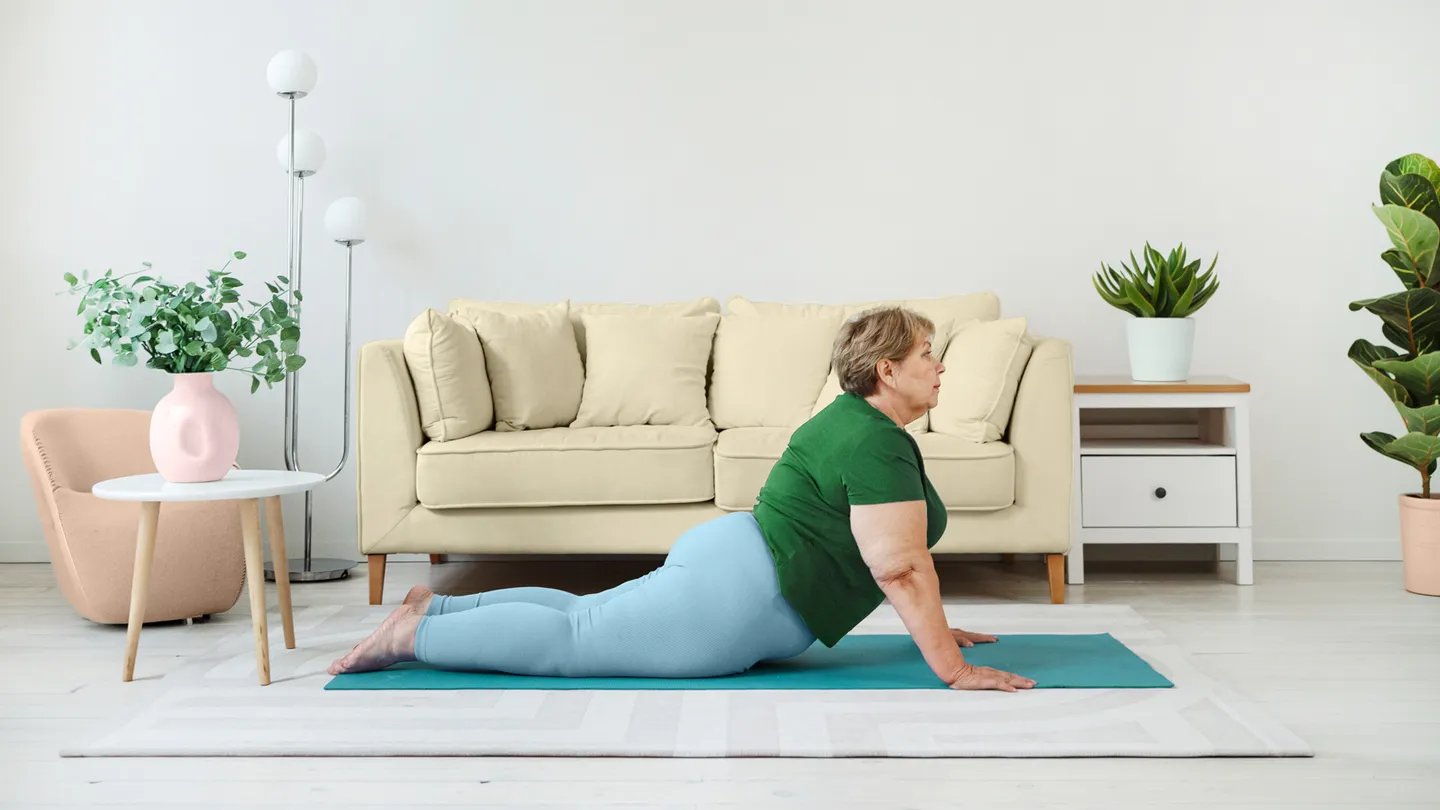
While there are many ways to treat high blood pressure — a condition affecting nearly half of American adults — new research has uncovered a surprising lifestyle move to consider: Taking up yoga.
Yoga may seem like a surprising choice compared with more intense workouts, but researchers say there’s value in this low-impact, gentler form of exercise. “People with obesity are at higher risk of cardiometabolic problems, but many do not find conventional exercise easy to start or maintain,” says study coauthor Alexios Batrakoulis, PhD, an assistant professor of life sciences at European University Cyprus. “Yoga is often seen as more accessible and less intimidating.”
Here’s how yoga can create this blood pressure-lowering effect, plus how it compares with other forms of exercise.
Yoga 3 Times a Week Made a Meaningful Difference for Blood Pressure
Published in the journal PLOS Global Public Health, the research analyzed data from 30 yoga studies that included nearly 3,000 adults who were overweight or had obesity. Of those studies, 23 were conducted in Asian countries, while the remaining studies were done in the United States, Germany, and Australia.
Scientists looked at measurements for blood pressure, lipids (fats and oils in the blood, including cholesterol), blood sugar, inflammation, and antioxidants.
The researchers discovered that study participants who practiced yoga experienced significant drops in blood pressure:
- Systolic blood pressure (the top number in a blood pressure reading) decreased by an average of 4.35 mmHg.
- Diastolic blood pressure (the bottom number) went down by 2.06 mmHg on average.
Participants who practiced yoga also saw small decreases in cholesterol levels; high cholesterol is a known risk factor for stroke.
The studies that were analyzed didn’t look at how much yoga was needed to make an impact. However, the research mostly focused on people who practiced yoga for at least 180 minutes a week — the equivalent of about three yoga classes.
How Yoga May Help Lower Blood Pressure
“Yoga is likely working through more than one pathway,” says Dr. Batrakoulis.
Yoga focuses heavily on breath work, which can impact blood pressure, according to Loretta DiPietro, PhD, MPH, a professor of exercise and nutrition sciences at the George Washington University Milken Institute School of Public Health in Washington, DC.
“The majority of benefits to blood pressure from practicing yoga regularly come from the breathing techniques — called pranayama — that use controlled breath to balance energy, reduce stress, and improve mindfulness,” she says.
That encourages people to be calmer, says Jennifer Wong, MD, cardiologist and medical director of noninvasive cardiology at MemorialCare Heart and Vascular Institute at Orange Coast Medical Center in Fountain Valley, California. “This can lower heart rate and cause the arteries to dilate, potentially contributing to better blood pressure regulation,” she explains.
Yoga combines physical movement, which is good for the cardiovascular system, along with stress reduction, says Batrakoulis. “It combines those elements rather than relying on exercise alone,” he says.
Doing yoga also helps people pivot away from unhealthy behaviors during their practice, says Myles Faith, PhD, family obesity researcher and professor in the department of counseling, school, and educational psychology at University at Buffalo SUNY in New York.
“Practicing yoga may compete with screen time and unhealthy snacking, while getting the body moving more,” he says. “Aside from its own health benefits, yoga may substitute for less healthy habits, and these may ultimately work together to impact on body weight and blood pressure.”
Some Benefits May Be Unique to Yoga
Regular exercise is linked to better cardiometabolic health, Batrakoulis points out. “Yoga is probably one useful option within that bigger picture,” he says. “It may not produce exactly the same physiological stimulus as brisk aerobic exercise or resistance training, but it may have a practical advantage: For some people, it is more approachable, more adaptable, and easier to stick with.”
That “matters a great deal” because exercise interventions only work if people are consistent, Batrakoulis says. Yoga can be practiced in a range of settings, says Jeffrey Hsu, MD, PhD, a sports cardiologist at UCLA Health and codirector of the UCLA Sports Cardiology Program in California.
“Yoga offers the benefit of accessibility, as it can be practiced in the comfort of one’s own home, and these days, guided exercises are now widely available online.”
Yoga also offers relaxation benefits people may not get from other workouts. “Many forms of exercise are known to improve cardiovascular health,” Dr. Wong says. “Yoga, however, may exert a more immediate effect on blood pressure through its emphasis on controlled breathing and relaxation techniques.”
There Are Limitations to Consider
It’s important to stress that the research did not prove that yoga lowered blood pressure; such studies can only show a link.
Because most study participants came from Asian countries, it’s not clear if the findings would apply to other races or ethnic groups. The study also excluded people with any health conditions outside of obesity.
Important Considerations for People With Obesity Before Beginning Yoga
Dr. DiPietro recommends starting a yoga practice slowly — ideally with an instructor — and making it a priority in your schedule. Batrakoulis suggests being aware of potential challenges, too.
“Some people in larger bodies may experience joint discomfort, mobility limitations, balance challenges, or simply feel unwelcome in yoga spaces that are not body-inclusive,” he says.
But Batrakoulis says people shouldn’t assume that yoga isn’t for them. Instead, he recommends adapting it to meet your individual needs.
“That can mean modified poses, use of props, chair-based options, slower pacing, and instructors who understand how to make practice safe and inclusive,” he says. “Yoga should meet the person where they are, rather than expecting the person to fit a rigid ideal of yoga.”