What Is the Burning-Cost Ratio?
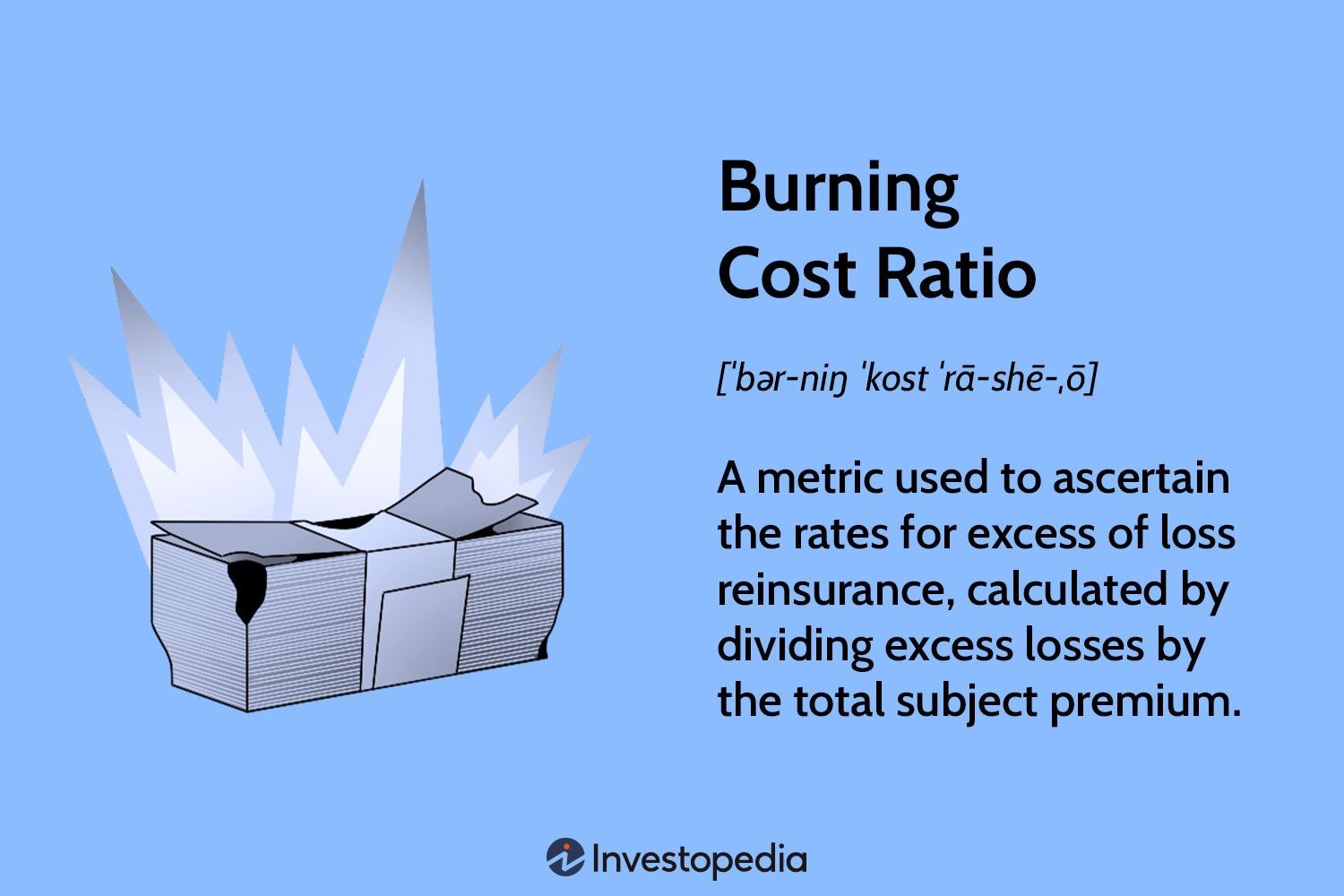
In the insurance sector, the term “burning-cost ratio” refers to a metric that can be calculated by dividing excess losses by the total subject premium. This figure is chiefly used to ascertain the rates for excess of loss reinsurance, which is the insurance that insurance companies themselves procure, to ensure that they remain solvent, should they fail to collect the adequate premiums needed to cover total claims.
Key Takeaways
- The burning-cost ratio is calculated by dividing excess losses by the total subject premium in the insurance industry.
- This ratio is crucial for setting rates in excess of loss reinsurance, helping insurers remain solvent.
- While intuitive, the burning-cost ratio requires ample claims data and may be affected by inflation and deductible variations.
- Burning-cost policies can offer financial incentives for companies to prioritize efficiency and worker safety.
- Large companies increasingly use burning-cost policies for workers’ compensation, though they carry both risks and potential savings.
Understanding the Mechanism Behind the Burning-Cost Ratio
Calculation of the burning-cost ratio is one of several, widely-used rating methods, but it requires a large amount of claims data to be accurate. This calculation is strongly related to a type of statistics called ratio estimation.
The burning-cost ratio is arguably the simplest and most intuitive approach to figuring out costs. It works by estimating the expected losses to a policy based on average losses in past years, after allowing for claims inflation, exposure changes, incurred but not reported (IBNR) claims, and any other amendments that need to be made to make the past claims data relevant to today’s situation.
The burning-cost ratio, in its simplest form, is based on total losses. However, this approach can be problematic when deductibles and limits vary, as policies might have different deductible levels over the years. Additionally, the impact of inflation is not straightforward when a deductible is involved, causing the ratio to overlook inflation trends in claims. Comparing current exposure, often premiums, with current undeveloped claims can cause the ratio to underestimate the final financial position.
Advantages and Risks of Burning-Cost Policies in Workers’ Compensation
More large companies are choosing burning-cost policies for workers’ compensation insurance, which set premiums based on the organization’s actual claims experience.
Enterprise companies that choose a policy with burning-cost pricing rather than a conventionally priced premium can reap significant financial benefits, but they can also be impacted negatively by unforeseen claims costs. For example, employers can potentially pay lower premiums for their workers’ compensation insurance. Although it also carries the risk of ultimately being higher than a conventional rate.
CFOs and brokers should be aware of the risks when choosing a workers’ compensation policy. Workers’ compensation is typically the single highest insurance expense a business will face, so examining the options and the potential impact is a worthwhile exercise.
Key Advantages of Using the Burning-Cost Ratio
The chief advantage of burning-cost pricing is that it provides a direct financial incentive for companies to operate efficiently and prioritize worker safety and rehabilitation. Incurred but not reported (IBNR) costs should also be considered, such as ongoing medical costs from problematic injuries. Company officials should also have comprehensive risk management and best-practice return-to-work programs in place to maximize the benefit of using the burning-cost ratio for workers’ compensation insurance.