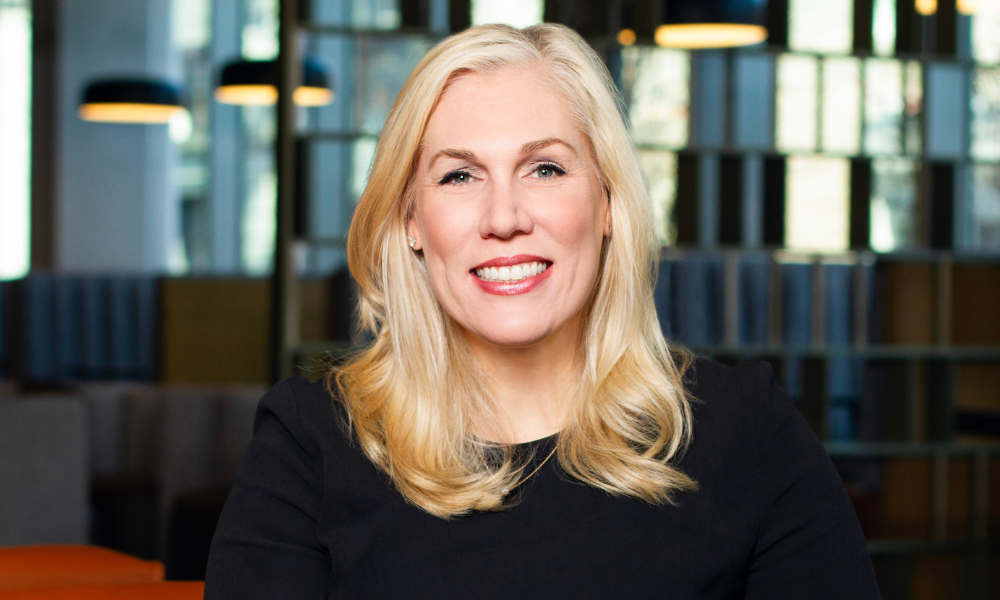
Wellington Management’s Christina Kopec Rooney on the forces reshaping how RIAs build portfolios and serve clients.
The wealth management industry is undergoing a quiet but profound transformation with RIAs consolidating, clients demanding more, and the strategies once reserved for large institutional investors making their way into advisor portfolios.
Christina Kopec Rooney, Head of US Wealth at Wellington Management, which supports more than $600 billion in US wealth assets, joined the firm in 2025 from Goldman Sachs Asset Management and works daily with the RIAs and advisors navigating these shifts.
She’s been telling InvestmentNews what the institutionalization of wealth really means in practice, and why the advisors who embrace it will be best positioned for what comes next.
“In practical terms, the institutionalization of wealth means that many RIAs are increasingly operating with similar structure and needs historically associated with institutional investors,” Rooney said. “Generally, I would say that we’re seeing more centralized decision making, CIO-led investment frameworks, and broader use of model portfolios; trends driven by RIA consolidation, generational wealth transfer, and the expansion of OCIO-style approaches in wealth management.”
As advisors adopt a more institutional mindset, Rooney said the set of portfolio building blocks they use is expanding alongside it.
“That includes greater use of alternatives across the spectrum, from private markets to liquid alternatives such as extension strategies,” she said. “Hedge fund and extension strategies, for example, have long been part of institutional portfolios. Increasingly advisors are attracted to these approaches as a way to apply active, research driven public market insights in a more impactful way, while also maintaining liquidity and scalability.”
She added that growing adoption of these strategies reflects a shift toward evaluating each strategy on its portfolio-wide contribution. “Each strategy is evaluated based on how it contributes to overall risk, return, and diversification objectives,” she said. “Advisors are seeing these strategies as a risk-efficient solution in a market where artificial intelligence and macro forces are creating winners and losers that could be exploited by investors applying deep industry and company knowledge to their decision making.”
Personalization at scale
Advisors are under growing pressure to deliver highly customized portfolios while maintaining operational efficiency. How are leading RIAs balancing personalization with scalability?
The answer, Rooney said, lies in separating portfolio design from portfolio implementation.
“At the core, they’re using scalable, model-based frameworks informed by institutional portfolio construction principles, and then layering customization around tax considerations, liquidity needs, and client objectives,” she said. “This allows them to maintain consistency and discipline at scale while still delivering outcomes that feel tailored to individual clients.”
Advisors are also leaning more heavily on partners who can translate complex strategies into client-ready solutions, she noted. “Education and implementation support have become just as important as the underlying investments themselves. Not all providers are created equal, so knowing who is really going to align with the clients’ objectives and deliver the right outcomes over time is critical.”
The private markets push
Private markets are becoming more prominent in wealth management. What is driving advisors’ growing interest in private equity, private credit, and other alternatives?
“Several structural forces are driving this interest,” Rooney said. “Asset owners increasingly recognize that public and private markets now function as an integrated ecosystem, particularly as companies stay private longer and private credit continues to supplement bank lending.”
She said advisors are also responding to client demand for differentiated sources of return, income and diversification. “As wealth portfolios become more institutional in structure, I think it is natural that advisors are reassessing long-term allocations and looking to incorporate private investments more thoughtfully alongside public market exposures.”
As private markets move into mainstream wealth portfolios, what due diligence and suitability considerations should advisors keep in mind?
Rooney said liquidity constraints, portfolio role, and investor education are the critical starting points. “Advisors need to be clear about how private investments function within a broader portfolio, including how they interact with public holdings across market cycles,” she said. “Suitability considerations, such as time horizon, cashflow needs, and client understanding, are essential, particularly as these strategies reach a broader wealth audience.”
On due diligence, she said manager selection is paramount. “Advisors increasingly value managers who can draw on deep research capabilities across both public and private markets to inform underwriting and risk assessment, rather than evaluating private opportunities in isolation.”
What RIAs want from asset managers
What are RIAs increasingly looking for from asset managers beyond product selection, and how are those expectations reshaping strategic partnerships?
“RIAs are looking for true thought partners,” Rooney said. “Beyond product selection, they want support with portfolio construction, education, implementation, and long-term asset allocation decisions.”
She described a clear industry-wide shift toward deeper, narrower manager relationships. “I’ve seen a clear shift with advisors toward working more deeply with a smaller number of managers that can offer advice, solutions, and integrated capabilities across asset classes,” she said. “Bringing together complementary capabilities is increasingly important in addressing those needs effectively.”
Wellington’s recently announced acquisition of Hartford Funds reflects that logic, she argued. “Wellington brings global institutional investment expertise and broad public and private market capabilities, while Hartford Funds contributes a scaled advisor distribution platform and deep intermediary relationships — together enhancing our ability to deliver more integrated support to advisors.”
Building the ecosystem
Wellington’s collaborations with Vanguard and Blackstone aim to broaden access to public and private markets. How do partnerships like these help advisors meet evolving client demands?
“Our alliance with Vanguard and Blackstone is designed to help advisors deliver institutional quality investment solutions in a more accessible and scalable way,” Rooney said. “By combining Wellington’s active equity management and asset allocation expertise with Vanguard’s passive and fixed income capabilities and Blackstone’s scaled private markets capabilities, the collaboration focuses on developing simplified, institutional-quality portfolios.”
The goal, she said, is to address one of the industry’s most persistent challenges. “For advisors, this helps address one of the industry’s most difficult challenges: building fully diversified portfolios that incorporate private assets while maintaining appropriate risk management, liquidity awareness, and operational simplicity.”
The road ahead
Looking ahead, how do you expect the institutionalization of wealth management to change advisor business models and portfolio construction over the next several years?
“We expect advisor business models to continue converging with institutional best practices including greater use of models, additional manager governance, and deeper reliance on strategic partners,” Rooney said. “Client expectations will evolve as well, with a growing emphasis on outcomes, transparency, and access to the kinds of investment opportunities historically reserved for large institutions.”
She said the boundary between public and private markets will keep blurring, reinforcing the need for portfolios built on a more integrated worldview. “The lines between public and private markets will continue to blur, reinforcing the need for holistic, risk-aware frameworks that treat markets as interconnected rather than siloed.”
Her closing message for advisors was clear. “Advisors who can combine institutional discipline with personalized advice will be best positioned in this next phase of wealth management.”