Making the Case for Annuities

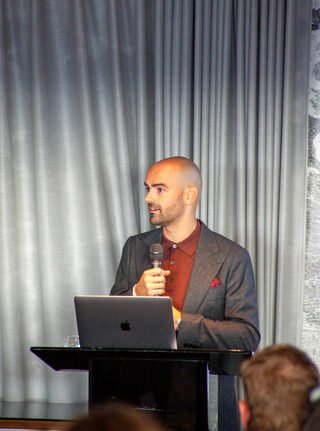
Pacific Life’s Orian Williams
RIA have historically stayed away from annuities because of the perception of risk associated with these highly regulated products, according to the presentation by Orion Williams, managing director at Pacific Life, during the Strategic Investing Summit at Wealth Management EDGE.
But research shows they present the biggest opportunity for RIAs to gather new assets organically, he noted, and client complaints related to these products are minimal compared to the size of the industry.
“The perceived risk and the actual risk are misaligned,” Williams said. In fact, annuities have characteristics similar to other products already in RIA portfolios, such as bonds and private credit allocations. They can offer full downside protection and keep income flowing, Williams noted.
Help Clients Borrow Like a Hedge Fund

Tony Yang, co-founder and CEO of SyntheticFi
In 2021, Tony Yang, co-founder and CEO of SyntheticFi, bought a new home in the San Francisco Bay Area for $1.6 million. He was offered a mortgage interest rate of 2.75% from J.P. Morgan Chase. Yang ended up securing a 1.7% interest rate, using a box spread instrument. In addition, he was able to write off the box spread financing cost as capital losses, uncapped.
Yang, who started his career as a software engineer in the Bay Area, decided to create a startup to bring this strategy to advisors. SyntheticFi provides software that allows advisors to use box spread strategies with their clients, with a $10,000 minimum. A box spread is a borrowing strategy that was commonly used by institutional players in the 1990s.

With box spreads, advisors can offer a much lower interest rate than the big wirehouses. They can use a floating-rate or fixed-rate box spread to hedge against rate hikes. They can also offer broader tax deductibility than the banks can’t match.
Yang said the No. 1 use case they are seeing with advisors is as a replacement for existing SBLOCs, with a floating rate box spreads.
—Diana Britton
What Levers to Pull to Reach the Next $5B

(L-R): Perigon Wealth Management’s Rachel Elson, Success For Advisors’ Derrick Kinney, SEIA’s Matt Matrisian and TradePMR’s Bret Feldman
During the Tech for Growth Summit at Wealth Management EDGE, executives discussed how advisors can build for the next $5 billion in assets.
The biggest lever, according to Bret Feldman, director of advisory operations at TradePMR, is leadership alignment. It’s key that the leadership team is on the same page about what they want to achieve and the short and long-term goals of the firm. They should also communicate those goals to the rest of the team.
Matt Matrisian, president of Signature Estate & Investment Advisors, said the biggest lever is operational leverage. When his firm was acquired by Reverence Capital Partners in 2022, it allowed SEIA to centralize its centers of excellence.
Matrisian also told attendees to remove the bottleneck. In other words, some firms are overly reliant on the founder to make decisions and set the firm’s trajectory. That person is not going to get the firm to the next $5 billion.
Derrick Kinney, an advisor growth expert at Success for Advisors, said firms need a common enemy they’re fighting as a firm, such as helping people avoid losing money. When you connect with a pain point people have, that’s going to drive success. The firms of the future will take complexity and make simplicity the calling card.
—Diana Britton
UHNW Advisors Must Weigh In-House vs. Vendor Multi-Family Office Services

Mariner’s Kevin Corbett (left) and Marshberry’s Rob Madore
Speakers at a UHNW Summit at Wealth Management EDGE said wealthy families are seeking more holistic services, but advisors who want to work with them must consider the costs of bringing services in-house, partnering or not focusing on this client base.
“I think [holistic services] are what families are demanding today, and they can go out, and they can create their own single-family office, but there’s complexity, there’s cost, there’s no scalability to that,” said Kevin Corbett, managing director, corporate development at Mariner. “They continue to look to their advisors to solve the complexity of the family time and time again, and that’s why this [multi-family office] model continues to get such traction.”
Corbett discussed Mariner’s approach, as an RIA overseeing more than $600 billion in assets, to build in-house teams to serve clients with $20 million or more in assets. But for smaller firms or those not practiced in the expanded services, providing them can cut into margins and create diminishing returns, said Rob Madore, a director at Marshberry focused on the wealth management sector.
“You can provide the greatest level of service to clients, and you can continue to expand and add services, but you have 9% margins for the business,” Madore said, noting that larger, successful MFO firms can have 35% to 45% margins.
He also noted the risk of taking on adjacent services such as bill pay, which, if it goes wrong, “can get you fired.”
Corbett agreed with the risks associated with operating as an MFO, noting that some firms face important decisions about whether to partner or bring services in-house. If RIAs get it right, however, UHNW families are very sticky, long-term clients.
“We do believe that if you own the complexity, you own the client, and if you own the client, you have an extremely valuable business,” he said. “There are so many things that these families have on their plate to worry about and be concerned about …. it’s something to think about in terms of how you seek out those solution providers, how do you continue to meet the needs of that family, and what does that look like in terms of the evolving of your model.”
—Alex Ortolani
Optimizing Data for Growth and Avoiding ‘Analysis Paralysis’

(L-R): Celent’s Ashley Longabaugh, Generation Capital Advisors’ Samuel Diarbakerly, Pontera’s Eric Fitz-Randolph and PureFacts Financial Solutions’ Robert O’Boyle
With the rise of artificial intelligence, there’s a lot of emphasis on the quality of client data and on how advisors can use it to drive growth.
Samuel Diarbakerly, founder and private wealth advisor at Generation Capital Advisors, said advisors should be intentional about what data they actually use. If you pull in all of the data, you can end up with “analysis paralysis.” His firm was recently onboarding three wealthy families at the same time, but they ended up pulling in money from the wrong account.
That prompted his firm to take a step back and look at what data they’re getting and how they’re implementing client service requests. They found that the cost of client acquisition and the cost of service are really important to the firm. They’re also using data to make sure the portfolios are working well.
Advisors have access to many different data sets, but the challenge is understanding that data and how it drives decisions, said Eric Fitz-Randolph, enterprise account executive at Pontera. Pontera is focused on leveraging data to drive business decisions. And the successful firms are centralizing the data, he said.
Robert O’Boyle, chief revenue officer at PureFacts, said most firms aren’t connecting data to growth outcomes, and the issue is that they need it in a single system. Accessing data that way can eliminate leakage and improve the advisor’s performance.
—Diana Britton
More than Direct Indexing
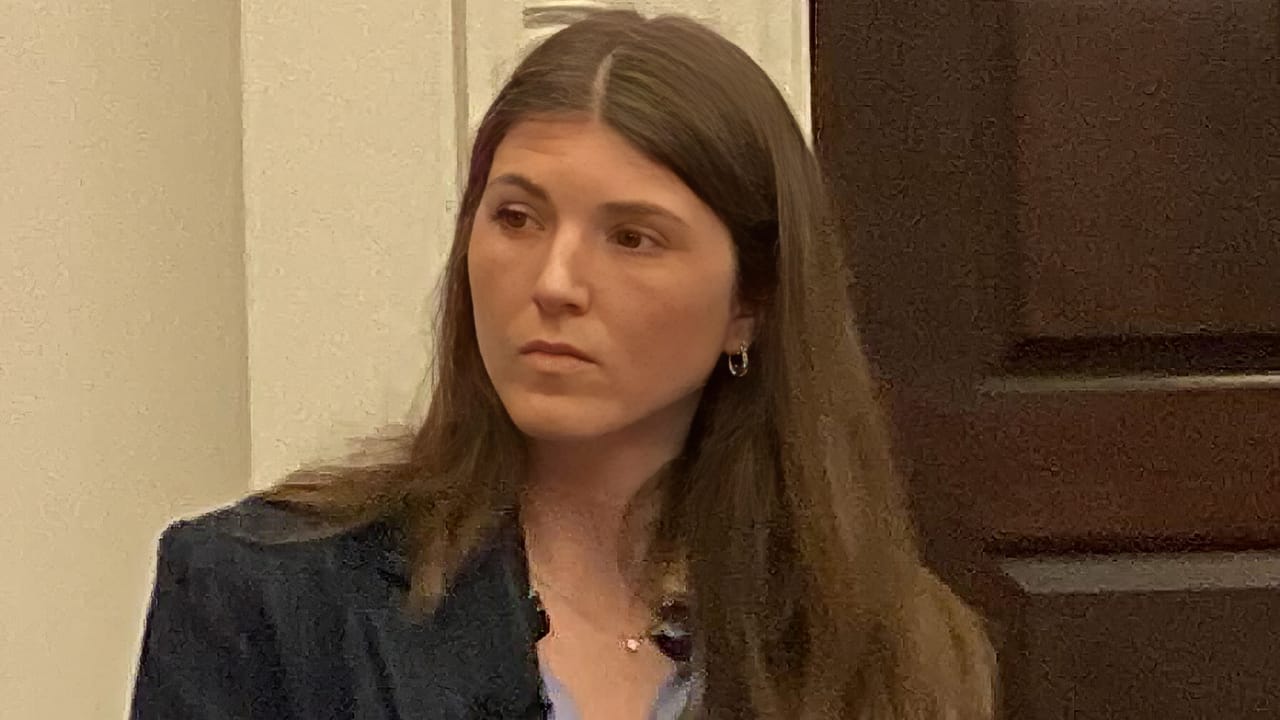
“The adoption of long-short SMAs is evidence that advisors want more out of their vehicles than what direct indexing is doing,” said Kacie Jason, regional director and vice president at Dimensional Fund Advisors, at the Strategic Investing Summit at Wealth Management EDGE.
Jason also expressed the hope that the asset management industry will move away from focusing on marketing standards-alone tax-efficient products and start coming up with ways to make those various products work together for the clients’ benefit.
—Elaine Misonzhnik
An ‘Elegant Solution’ for Crypto
Even when the price of crypto goes down, it can be used as a tax-loss harvesting tool in clients’ portfolios, according to Michael Kosoff, a senior research analyst at Mariner, during the Strategic Investing Summit at Wealth Management EDGE.
For advisors, this creates an “elegant solution” for talking about crypto allocations with investors, said James McConaghy, managing director and head of distribution at Eaglebrook.
Advisors today warn clients upfront that crypto, being a volatile asset class, will likely go down, but note that clients will be able to realize capital losses when it does.
—Elaine Misonzhnik
How to Exist Outside the Noise

(L-R): Fynancial’s Tom Fields, Lido Advisors’ Justin Barish, FINNY’s Eden Ovadia, Mission Wealth’s John Wenz
The rampant use of artificial intelligence in the wealth management space and in general is creating a lot of noise, said Justin Barish, chief marketing officer for Lido Advisors, during the AI Assembly Summit at Wealth Management EDGE.
Barish said what was important for his firm was to cut through that noise by also existing outside the digital world.
“We do that by taking a look at events, awards, gifting, sponsorships, things like that,” Barish said. “You have to be there. It’s been unbelievable for conversion.”
He said that AI search has been “killing it” for them, but “you can’t exist in a silo,” and the analog efforts complement those digital strategies.
“To show you exist in the real world is very important in a relationship business like ours,” he said.
Eden Ovadia, co-founder and CEO of FINNY, added that younger and high-net-worth investors are starting to act like each other. “They want to feel like they’re being seen and heard,” she said.
Firms can do that using AI to create personal content and develop a niche that puts them directly in front of the clients they’re looking for.
“Specificity is becoming table stakes,” Ovadia said.
—Michael H. Samuels
AI Experts Question Need For Data Lakes, Stress Value of ROI in AI Use Cases

John O’Connell, the founder and CEO of The Oasis Group | CREDIT: SPOTMYPHOTOS
When trying to streamline data structures to support artificial intelligence, data lakes (centralized systems for storing all a firm’s data) can introduce unexpected drawbacks.
According to John O’Connell, the founder and CEO of The Oasis Group, firms with under $5 billion to $7 billion in assets under management shouldn’t take on the expense of creating a data lake.
He told attendees to the AI Assembly Summit at Wealth Management EDGE that if a firm moves its data out of its CRM and source systems into a data lake, they need to clean the data twice (both in the source system and the data lake itself).
“That takes a lot of money,” he said. “And if you don’t want to spend all that money, please don’t get into doing the data lake. It’s not going to work.”
OneVest CEO Amar Ahluwalia agreed, saying that while data lakes may have made sense decades ago, what is far more important is to connect downstream “to a critical core party system” to run workflows. Without that connection, firms can use “all the AI in the world” at the front end without benefiting from agentic actions by the end.
AI assistants typically help advisors by pulling reports and gathering and coalescing disparate strands of information into preparatory documents, in the vein of an intern or junior ops analyst, according to Lauren Manchester, vice president of sales at Ridgeline.
She compared that to agents, who are completing entire tasks (if, for example, a client has a meeting, the agent will help them prepare and generate the agenda, email participants, set up and record the meeting, and then follow up.
“If you think about that job, that is an entirely different experience,” she said. “So you’re really looking at it on a case-by-case basis of ‘where am I looking for efficiency and where am I looking for something or someone to do a job for me?’”
When considering AI solutions, O’Connell warned attendees about trying to “boil the ocean” by asking agentic tools too much (in one example, he cautioned firms against creating AI tools that could answer any question about clients, as every data element in the CRM would need to be cleaned and populated). He also stressed the importance of locating a real ROI for the use case.
“If there’s not, move on to a different use case. Don’t spend the money on doing it because artificial intelligence is like a money black hole,” he said. “You can throw all the money in the world at it, and you know what it’s going to do? It’s going to eat more money.”
—Patrick Donachie
Where to Invest Outside the U.S.
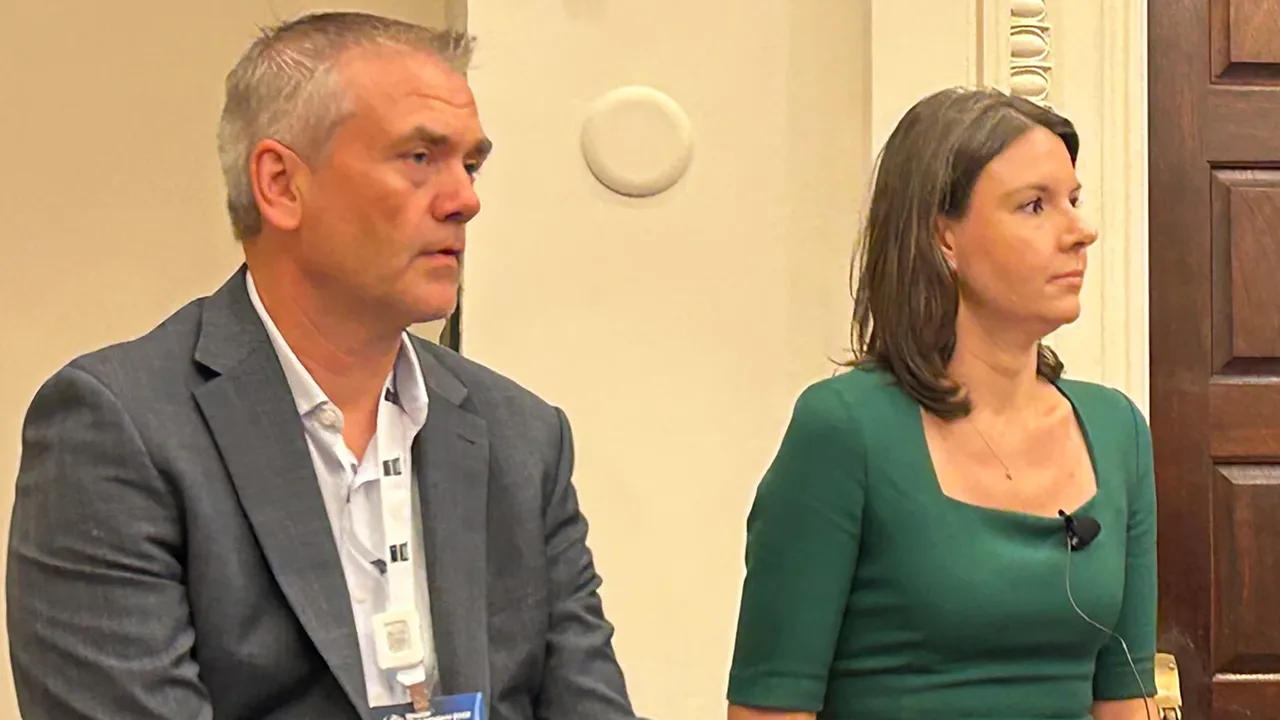
Investments in Japan and Europe can serve as a diversifier for U.S. investors, according to Eric Sterner, CIO at Apollo Wealth Management, and Katherine Bordlemay, managing director, fundamental equities, at Goldman Sachs Asset Management, at the Strategic Investment Summit at Wealth Management EDGE.
Sterner and Bordlemay said while emerging markets, including Taiwan, South Korea and China, offer attractive discounted opportunities in technology and biotech equities, developed markets, such as Japan and Europe, can be a dividend play that provides downside protection.
Bordlemay cited the defense and utilities industries as among the stronger sectors in European markets. At the same time, Sterner warned that, given the much larger number of companies in emerging-market indices than in the U.S., investors would benefit from active management rather than passive strategies there.
European markets are also not driven by AI in the same way U.S, and Asian markets are, making them a good diversifier, Bordlemay noted.
—Elaine Misonzhnik
A Commodities Supercycle

Brookwood Investment Group’s Chris Coolidge (left) and Lead-Lag Media’s Michael Gayed
Chris Coolidge, CIO at Brookwood Investment Group, said his firm is considering upping its allocation to commodities from 30% to 40% during the Strategic Investing Summit to kick off Wealth Management EDGE at The Boca Raton resort in Boca Raton, Fla.
Coolidge said the market is currently in the middle of a commodities supercycle, driven by the wars in Ukraine and Iran and the AI boom. One of the commodities Coolidge is most bullish on is copper, given its necessity for data centers and the length of time it takes to create new supply, which can take decades.
He also expects disruptions to fertilizer transport through the Strait of Hormuz and adverse weather events to drive a surge in agricultural product prices. However, Coolidge said the high flows of institutional money into and out of commodities make them more of a tactical than a strategic play.
—Elaine Misonzhnik
Focus on the ‘Trust Stack,’ Not the Tech Stack

(L-R): Prospero Wealth’s Eric Franklin, NeuBeFi’s Dr. Josh Wilson, ClientGen’s Pete Galloway and PodPony’s Brodrick Lothringer
During a panel session at Wealth Management EDGE’S Tech for Growth Summit, executives discussed how behavioral finance technology can be used to better connect with clients.
There’s so much focus on the technology stack, but rather advisors should focus on “the trust stack,” said Dr. Joshua Wilson, founder of NeuBeFi. Once you’ve democratized production and distribution, the focus shifts to attention. The human advantage is where things stand out in the long-term.
Advisors need to get the most magnetic part of themselves out there as quickly as possible, so that a prospect can choose to work with that advisor, Wilson added.
“I don’t want anything I do to feel automated,” said Eric Franklin, managing principal and owner, Prospero Wealth. “I want to put myself in front of the client.”
Franklin said his firm uses AI tools that help him push things in front of clients. He runs a smaller firm, so scale isn’t a major focus. But he’s using AI to get a quick understanding and context before a client meeting. That helps him to focus on personal stories, connection and education with his clients.
“The most important data point is not in your data set,” Wilson said.
Rather, the most important data point is why the client decided to pay attention to the advisor in the first place, he said.
—Diana Britton
‘Engagement’ an Issue with Advisors, Next-Gen Clients

(L-R): Worth Media’s Paul Stamoulis; The Pinnacle Group’s Jason Borek; Starkweather & Shipley Insurance’s Tiffany Tocco and Angeles Wealth Management’s Cameron Rogers
RIA leaders speaking on a panel at the UHNW Summit at Wealth Management EDGE said there is a pressing need for financial advisors to engage with their clients’ second-generation family members, rather than just pay lip service to the idea.
Cameron Rogers, partner at Angeles Wealth Management, said financial advisors can benefit by engaging clients’ second-generation family members early. She said advisors need to realize that families are getting more complex in their makeup, and issues of inheritance and support may veer more toward “therapy.”
“Yes, it’s about investments, and yes, it’s about growth of principal, but it’s as much about managing these conversations,” she said.
Tiffany Tocco, business development risk advisor at Starkweather & Shepley Insurance, said advisors need to stop using complex investment terms and acronyms with younger generations. Instead, she recommended financial advisors seek to “educate the next generation in terms they can understand and relate to.”
She also said advisors should stop asking whether the next generation wants to work with them more through technology, and just assume that they do.
“They don’t want to hear that you are working to offer technology options—they expect you to be using them,” she said.
Jason Borek, chief growth officer, The Pinnacle Group, said he sees among advisors “a little bit of an engagement problem.”
“The question I think most advisors are going to ask is, ‘Are we wanting to engage through the lens of preparation, or are we wanting to engage through the lens of a family crisis?’,” he said. “If this conversation hasn’t happened, you’re already too late if an advisor is stepping into the room with the next generation during a crisis.”
Borek said that the “firms that are getting it right” have committed to working with the next generation and have set up a system to support it, including hiring next-generation advisors.
—Alex Ortolani
Small Firms Needn’t Be Left Behind in AI Race

(L-R): Allworth Financial’s Brad Boekestein, Nevis’ Mark Swan, Charles Schwab’s Adam Moseley and moderator Diana Cabrices
Large firms aren’t the only beneficiaries of advancing artificial intelligence. In fact, according to Adam Moseley, Charles Schwab’s director of artificial intelligence consulting, small firms may have a tactical advantage as they “have far less red tape to work through.”
During a discussion at the AI Assembly Summit at Wealth Management EDGE, Moseley and other AI industry experts expanded on how AI-enabled firms will change over the next 12-24 months.
According to Mark Swan, the CEO and co-founder of Nevis, the industry is seeing a shift from systems to agents, meaning AI tools will no longer be considered a supplement to advisor tasks and will move further toward completing tasks “end-to-end.” While firms typically spend about 30% on operations, Swan expected big reductions, whether through cost savings or scale.
Allworth Financial Chief Marketing Officer Brad Boekestein noted that during that firm’s recent recapitalization (the third since its founding, led by Integrum Holdings), AI was the top focus. According to Boekestein, potential investors wanted to know whether AI would make firms’ current models more efficient or change them “altogether.”
“It’s to be determined, and it’s probably what every industry is struggling with,” he said. “There are pockets of folks who think it’s only going to be an efficiency shift, and I’m not sure.”
—Patrick Donachie
More AI Solutions Than Problems

(L-R): Smart Connections’ Cindy Griffin, Belay’s Lisa Zeeveld, AWS’s Ramasamy Seranthaiya, Altruist’s Mazi Bahadori and Aureus Advantage’s Amy DeTolla
Mazi Bahadori, CCO and executive vice president of operations at Altruist, argued that there are more artificial intelligence solutions out there in wealth management than there are problems.
Almost every company raising venture capital funding has an AI mandate, and these companies are raising “stupid sums of money” to build things that will become commoditized and that you can build yourself using tools like Claude.
As a result, advisors are constantly getting sold on stuff that doesn’t really add much value.
“They look really cool; they look really flashy,” he said.
The best way to address this is to identify what problem you’re trying to solve in your advisory business.
—Diana Britton
Firms Find Themselves at Different Heights on the ‘AI Pyramid’

Zoe Financial CEO and founder Andres Garcia-Amaya
Zoe Financial CEO and founder Andres Garcia-Amaya wants firms to ask themselves where they are “on the AI pyramid.”
During an opening session at the AI Assembly Summit at Wealth Management EDGE, Garcia-Amaya said that most firms have reached the base of the pyramid, which he deemed “search and discovery,” which he described as “essentially replacing Google Search” (it could also include doing basic tasks like improving copy and checking for errors).
Firms are trying to build their ability to use AI to develop “repeatable” skills that automate common tasks within the organization, saving hours per week. Garcia-Amaya surmised that this was the stage where many wealth-focused firms “want to become efficient.”
The final step of the pyramid is “agentic,” though Garcia-Amaya stressed that there were very few companies worldwide operating on agentic strategies and tools. However, he stressed that there was only one way to reach the tip of the pyramid.
“You need to get there by building skills and tasks,” he said. “It gives you a visual understanding of the promise of AI.”
According to Garcia-Amaya, you can build skills in your organization that can attract clients, and that firms are “sitting on an amazing amount of information on what your ideal client is.”
—Patrick Donachie
UHNW-Focused Advisor Sees ‘Fundamental Shift’ In Client Expectations

Heather Pelant, a managing director and wealth advisor at Cresset
Heather Pelant, a managing director and wealth advisor at Cresset, said the wealth management industry is grappling with whether, and to what extent, advice is broadening beyond investment management and financial planning.
“Are we amidst a short-term demographic shift as the great wealth transfer happens, and the next generation comes online, or are we amid a fundamental redesign of our industry?” she asked during the UHNW Summit, kicking off the Wealth Management EDGE conference.
Pelant made the case for the latter, saying this change is being driven by three key areas: the increased complexity of portfolios and investment products, shifting client expectations toward broader life advice and guidance, and the impact of technology for both advisors and clients.
“The aperture for wealth management is getting wider and deeper at the same time,” Pelant said. “I think that the goals are not necessarily about maximizing return, but we are also supposed to be having a hand in ‘what does multigenerational stewardship look like, how does capital align to what is of most importance to me and my family? What does governance look like?’ … And I don’t think this is happening in five years. I think it’s happening now.”
—Alex Ortolani
Where Does Growth Break?

SnappyKraken CEO Robert Sofia
Client and prospect relationships go through a lifecycle, from attraction through retaining a client and having them give you referrals. But there are points along that lifecycle where it stops working because growth breaks down.
Robert Sofia, CEO of Snappy Kraken, outlined the five most common places where growth breaks down. Mishandling leads is the first place. He said 68% of advisors are competing for the same leads, so you’ve got to work fast. And 78% of clients choose the first responder.
The second area is working with the wrong leads. Leads require different handling, and advisors need a place to see all lead sources and track those leads.
Third, growth can break if there’s no strategic, short-term follow-up. The vast majority of leads aren’t ready right away, but advisors need to stay visible without becoming noise. Advisors can build trust by staying relevant. “You can’t have one generic path for everyone, because humans aren’t generic,” Sofia said.
Fourth, there can sometimes be a lack of long-term follow-up. “Long-term nurture drives more engagement, which leads to more clients,” he said.
And finally, growth can break if there’s no behavior-based handoff to advisors. When advisors get leads, it’s hard to know where to focus their energy. But firms can help by providing qualified, high-intense leads. That will result in higher conversion rates.
—Diana Britton