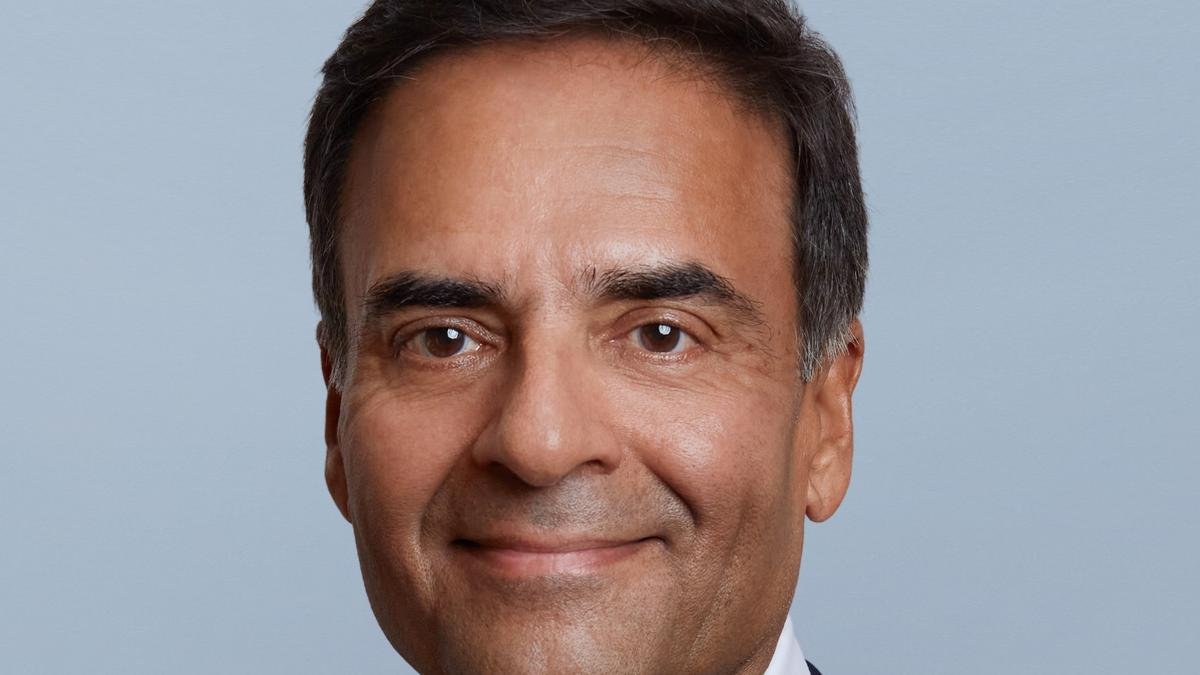
Julius Baer, one of the world’s oldest wealth management firms, has had a presence in India for nearly 30 years. The bank currently operates across seven cities and employs close to 300 people in the country. Globally, Julius Baer has a 135-year history and is one of the world’s largest pure-play wealth managers, with assets under management of CHF 547 billion ($672 billion). Rahul Malhotra, Region Head Emerging Markets and Member of the Global Wealth Management Committee (GWMC) at Julius Baer, spoke to businessline about the firm’s growth ambitions in India, changing investor preferences, among other topics.
How is Julius Baer’s business in India evolving, and what is driving its growth?
Wealth creation is happening across India, which means we cannot focus only on the major metros. That is why we are expanding our coverage and strengthening our presence beyond the largest cities. Over the past four to five years, I have seen a significant change in the way Indian clients think about offshore investments. Earlier, many clients considered keeping around 5-7 per cent of their wealth offshore. Today, that proportion is typically 10-15 per cent and, for some families, can be as high as 20 per cent. We are well positioned to serve this requirement. We have a global NRI business with a presence in Singapore, Hong Kong, Dubai and Switzerland. Resident Indians are increasingly looking to invest and diversify offshore, while NRIs want to invest in India. That two-way proposition gives us a distinct advantage.
What is your growth ambition for India over the next three to five years?
We would like to double our business in India over the next five years. We intend to achieve this by increasing the number of people on the ground, expanding our coverage and deepening our relationships with clients. Our approach is to operate through hubs and cover surrounding cities from those locations. For example, Pune can serve as a hub for Maharashtra and Goa, while Jaipur can cover neighbouring markets. Mumbai will remain our head office, but smaller hubs in Pune, Jaipur, Bengaluru and Chennai can help us build stronger pools of resources and capabilities. We believe a hub-and-spoke model will allow us to build deeper expertise and serve clients more effectively. We are also strengthening our teams in smaller cities.
What is the most hyped investment trend in India today?
I think direct investing is somewhat overhyped. Investors are constantly looking for the next deal that could generate five or ten times their investment, particularly in pre-IPO companies. The problem is that people tend to talk about investments where they made five or ten times their money, but rarely discuss those where they lost money. Direct investments and pre-IPOs can certainly have a place in a portfolio, but investors need to size these bets appropriately and understand that they could lose their entire capital. The key is to approach such investments with your eyes wide open and allocate only a portion of the portfolio that you are comfortable putting at risk.
How is artificial intelligence changing wealth management?
AI is making life simpler and more efficient for employees and relationship managers. At Julius Baer, we are exploring how AI can support both clients and employees and streamline day-to-day activities. AI is becoming increasingly embedded in the wealth management industry. It can provide information and support analysis, but clients still want a human interface. They want to speak to someone who understands their circumstances and can provide insight into their portfolio. A relationship manager equipped with AI tools can make the advisory process much more efficient. AI will complement wealth managers by helping them do their jobs better rather than taking over the role entirely.
What are the biggest opportunities you see among HNIs in the current market?
Many HNIs have created substantial wealth through real estate and equities. However, over the past 18 months, equity markets have not delivered the returns investors had become accustomed to. As a result, investors are looking beyond equities and exploring fixed income and other asset classes. We are seeing greater interest in fixed income, REITs, InvITs, structured products and alternative investments. At the same time, clients want greater access to global markets and are looking to diversify their wealth offshore. Global diversification is therefore an important theme for us. Resident Indians increasingly want to invest overseas, while NRIs continue to look at investment opportunities in India.
Have Indian HNIs become more conservative because of market volatility?
They have become more balanced. When markets decline or move sideways, investors realise that they cannot expect their portfolios to rise by 30-40 per cent every year. They are therefore looking at fixed income, alternative assets, private equity, direct investments and offshore opportunities. The belief that Indian markets would continuously deliver 15-25 per cent returns has not been borne out. The current environment is encouraging investors to construct portfolios in a much more balanced manner rather than concentrating heavily on a single asset class.
Has the geopolitical environment changed investor demand?
It has reinforced the importance of global diversification. Investors increasingly understand that they should not have all their investments linked to a single market. They are looking at the US and Europe while maintaining an interest in Asia. At the same time, they are considering domestic fixed income, where returns can be attractive depending on the asset. We continue to like equities, but investors are taking a much more balanced approach rather than allocating 100 per cent of their portfolios to equities.
Is there greater appetite for private equity, private credit and other alternative investments?
There is increased demand for private credit, private debt and direct investments, along with greater interest in hedge funds. Indian investors also have a strong appetite for direct investments, including pre-IPO opportunities. However, they need to understand that these investments carry considerably higher risks. One or two investments may generate very strong returns, while others may only return the original capital or result in losses. Investors therefore need to be educated about the risks involved. The trend is clearly towards a broader range of investments rather than traditional long-only equity products.