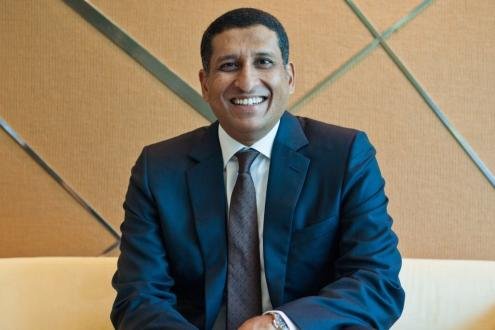
As regional wealth flows diversify and client expectations shift towards multi-hub connectivity, offshore platforms are being tested on their ability to scale without diluting focus. The requirement is increasingly twofold: build distribution that is credible with (ultra-high-net-worth) UHNW clients, while investing in the operational architecture that supports complex cross-border servicing, product origination and governance requirements. Nomura International Wealth Management (IWM) has approached this through calibrated hiring, deeper wallet-share ambitions and expanded booking centre optionality, while keeping its strategy anchored in offshore wealth rather than onshore expansion. In an exclusive interview with Hubbis, Ravi Raju, Head of International Wealth Management at Nomura, discusses growth progress, regional priorities and why productivity, not client volume, remains the core operating metric.
Key Takeaways
- Productivity over volume: Nomura has prioritised banker productivity and average client size over client numbers, lifting average AUM per RM from roughly USD 125 million to nearly USD 400 million.
- UHNW strategic pivot: Since 2020, the franchise has deliberately repositioned away from mass affluent clients to focus on the top 50–100 families per market, targeting deeper wallet share and USD 20 million+ relationships.
- Calibrated regional expansion: Hiring and geographic growth across Hong Kong, Singapore and Dubai have been measured, with expansion pace adjusted to market conditions and geopolitical developments.
- Platform depth and open architecture: An open architecture model with around 25 counterparties, alongside investment in core banking, credit monitoring and KYC infrastructure, underpins scalable cross-border servicing.
- Offshore focus with booking optionality: The business remains firmly offshore-led, with Singapore as the primary booking centre and Switzerland under assessment, while no near-term plans exist for an onshore India wealth build-out.
The results have been tangible. As of December 2025, the business reported USD 38 billion in assets under management (AUM), reflecting steady year-on-year growth. Revenues have increased almost sixfold since Raju assumed leadership five years ago, while banker productivity has risen materially over the same period. “Progress has been great. We are running ahead of plan,” he explains, noting that original targets were set across AUM, top-line revenues and bottom-line contribution.
Measured Expansion Across Regions
While headcount has expanded, Raju emphasises that growth has been calibrated. Approximately 25 relationship managers (RMs) were hired over the past 12 months across Hong Kong, Singapore and Dubai. Yet he acknowledges that the pace of hiring was intentionally moderated in certain markets.
“We slowed down a little bit on our planned relationship management hires because we wanted fewer client onboardings, more quality, and larger ticket clients,” he says. The objective was not simply balance-sheet growth, but improved average client size and deeper wallet share.
Leadership changes have also shaped regional dynamics. In North Asia, Raju now oversees coverage directly, supported by Francis Liu. In Southeast Asia and the Middle East, senior appointments, namely Harish Hemandas and Anurag Mahesh, have reinforced management oversight. Dubai, in particular, has been expansionary, with the team moving into office space that is double the previous footprint. “We had not planned for it, but because plans were running ahead of schedule, we took that space up,” he notes.
Looking ahead, franchise expansion through relationship management remains central. Growth is expected to be balanced between North Asia and Southeast Asia, with particular attention on servicing mainland Chinese offshore wealth from Hong Kong. “We still find that we are under-leveraged and under-penetrated in China onshore,” Raju observes, clarifying that coverage remains strictly offshore.
Dubai had been positioned for further acceleration, with plans to hire an additional 10 RMs in the next fiscal year. However, recent geopolitical developments have prompted reassessment. “We have to take a look at what happens in the markets and local conditions to see whether we want to continue to expand at the same pace,” he says.
Open Architecture and Platform Depth
On the product side, Raju describes a platform that has matured significantly. The past fiscal year saw strong client engagement in equities and structured products, particularly amid volatility.
“We have almost 25 counterparties where we originate trades and pricing from. It’s a total open architecture,” he explains. While structured products contributed meaningfully to revenues, progress was also made in managed investments, including mutual funds, hedge funds, private equity, and credit allocations.
The infrastructure underpinning that platform has been a parallel focus. Significant investment has gone into core banking systems, pricing capabilities, credit monitoring, KYC processes and rolling reviews. Raju stresses that platform scalability has constrained headline growth at times. “We could have grown more, but our platform was not built to scale at that pace,” he admits.
Operational scale is further supported by Nomura’s broader franchise, particularly its Powai, Mumbai operations hub. With approximately 5,000 employees based there, half of the International Wealth Management (IWM) operations team and a significant portion of research and content functions have been relocated to leverage group synergies. The intention is to integrate more closely with Nomura’s Wholesale capabilities. This broader integration reflects a deliberate effort to leverage the wider Nomura ecosystem. Raju emphasises that the growth of International Wealth Management is not the product of a single division, but the result of collaboration across multiple parts of the group. The platform increasingly draws on capabilities across Wholesale, Investment Management and Wealth Management, alongside other Nomura group entities. In practical terms, this has enabled IWM clients to access differentiated opportunities from Nomura’s home market in Japan, including real estate investments that leverage the firm’s domestic market leadership.
Booking Centres and Jurisdictional Strategy
Jurisdictional optionality is another strategic pillar. Currently, the vast majority of bookings are conducted in Singapore, where the business operates under a merchant banking licence. However, a Swiss booking centre is under assessment, with a target launch by February next year.
“As we move more towards Dubai and start covering clients in the Middle East, a choice of booking centre between Singapore and Switzerland would be good for our clients,” Raju explains. Switzerland would complement Singapore as one of the leading offshore wealth hubs outside the United States.
Hong Kong remains a coverage hub, but not a primary booking centre. Nomura holds a securities licence there, though the overwhelming majority of assets are booked in Singapore. Raju views Hong Kong, Switzerland and Singapore the three most important global financial centres by 2030, with Dubai playing a growing regional role. Maintaining boots on the ground across these locations is, in his words, essential for client connectivity and long-term positioning.
Focused on Offshore, Not Onshore India
Despite Nomura’s significant onshore India presence in investment banking and global markets, there are no immediate plans to build an onshore wealth management franchise. The firm services Indian diaspora clients offshore, particularly those with cross-border capital flows, but remains focused on international wealth.
“Given the management bandwidth and how much we are growing, we want to stay focused on our offshore franchise at the moment,” Raju says. While structures such as GIFT City are being assessed and discussions with onshore partners continue, no inorganic transactions or joint ventures are currently in the pipeline.
The Ultra-High-Net-Worth Pivot
Central to Nomura’s outperformance relative to some peers has been its deliberate repositioning away from the mass affluent segment. Raju is explicit about this strategic inflection point, which began in September 2020. Since that strategic reset, the business has undertaken a comprehensive platform transformation. Front-to-back investments have expanded the product suite, strengthened the core banking platform, improved client communication systems and digitised engagement processes. Workflow automation has also been introduced to increase operational efficiency and support the scaling of more complex UHNW relationships.
“We didn’t want to be a mass affluent player,” he states. Competing with global commercial banks in retail and mass affluent banking was neither structurally aligned nor strategically compelling. Instead, the business pivoted to focus on the top 50 to 100 families in each market – those with operating businesses and meaningful capital pools.
The rationale was adjacency. Nomura’s global markets and investment banking capabilities were already serving institutional clients. Extending that product capability to ultra-high-net-worth individuals required distribution, not reinvention.
“We had the product capability; we just didn’t have the distribution to go after the high net worth and UHNW,” Raju explains.
The impact on productivity has been significant. RM headcount has increased from 61 five years ago to approximately 120 today. Over the same period, AUM has risen fivefold. Average assets per RM has increased from roughly USD 125 million to close to USD 400 million.
“Productivity is what we’re going after,” he says. The business has also rationalised smaller accounts, raising minimum thresholds to ensure relevance. “If you don’t have upwards of USD 20 million with us, we can’t be relevant to you.” The result is fewer clients, but deeper and more meaningful relationships. “For us, less is more.”
Next Generation: An Honest Appraisal
When asked about next-generation strategy, Raju is candid. Despite industry-wide rhetoric around intergenerational wealth transfer, he believes implementation remains limited.
“I’d give myself a two out of ten in implementing that plan,” he says. While the firm possesses investment banking capabilities that could resonate with next-generation interests – including technology, AI and emerging sectors – a fully articulated strategy has yet to be executed.
The shift in industrial focus across generations is clear to him. First-generation wealth may have been created in raw materials or manufacturing; the next generation is increasingly oriented toward technology and innovation. The question, he suggests, is how effectively wealth managers can integrate investment banking capabilities with wealth advisory to remain relevant.
“We have the raw materials to bring it together, but no, we’ve not really put anything in place as a strategy for the next generation,” he acknowledges. In his view, the broader industry is similarly early in its response.
Strategic Discipline Over Scale for Its Own Sake
Ultimately, Nomura IWM’s growth over the past five years has been shaped less by aggressive asset gathering and more by disciplined positioning. By narrowing its client focus, reinforcing product depth, investing in scalable infrastructure and leveraging group adjacencies, the business has prioritised productivity over volume.
The emphasis remains squarely offshore, UHNW and platform-driven. As booking centre optionality expands and regional footprints mature, the core philosophy appears unchanged: fewer clients, deeper relationships, and a scalable architecture designed to support sustained growth rather than episodic expansion.