As wealth management markets across the Middle East, Africa and India continue to evolve at different speeds, the pressure on financial institutions is becoming more complex. Firms are no longer focused only on front-end digital tools or client-facing applications. They are being pushed to consolidate legacy systems, improve data quality, support new advisory models, serve younger and more sophisticated investors, and integrate emerging technologies such as AI within resilient, regulated operating frameworks.
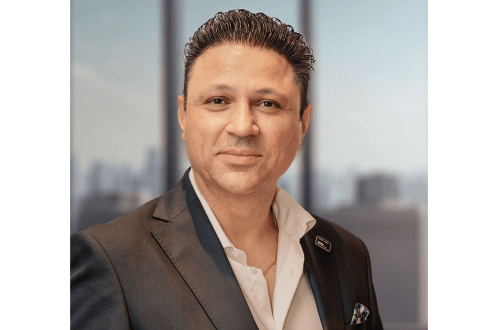
For Akash Anand, Managing Director, Middle East, Africa and India (MEAI) at Avaloq, the opportunity lies in helping banks and wealth managers build the infrastructure required for that next phase of growth. Across the GCC, India and Africa, he sees different market dynamics, but a common direction of travel: wealth firms need more scalable, specialised and intelligent platforms if they are to capture growth, retain client assets, and deliver more personalised advisory services.
Key Takeaways
- Avaloq’s regional scope has expanded: In 2026, Avaloq’s Akash Anand expanded his remit from MEA (Middle East and Africa) to MEAI, bringing India formally into the Middle East and Africa regional coverage model.
- India is becoming a strategic growth market: Akash sees India as an opportunity market for wealth technology, driven by rising affluence, a growing investor base, stronger financial literacy, a large diaspora, remittance flows, and demand for more sophisticated digital advisory platforms.
- The GCC is moving from expansion to consolidation: In the Middle East, particularly the UAE, wealth institutions are increasingly focused on consolidating fragmented systems, improving operating efficiency, and modernising infrastructure after several years of strong growth.
- Africa is evolving at different speeds: More established hubs such as South Africa and Mauritius are leading technology adoption, while digitalisation is accelerating across the wider continent. Avaloq’s collaboration with NEC XON is designed to combine global platform capability with local implementation expertise.
- Indian institutions face a private wealth service gap: Many affluent and mass-affluent investors still lack access to specialised wealth management and private banking services, creating an opportunity for local banks.
- Younger investors are changing expectations: Across India and the Gulf, younger and more digitally native investors expect intuitive digital experiences, personalised advisory, consolidated reporting, and access to broader investment propositions.
- Operational infrastructure is now the constraint: Akash says many firms have invested in client-facing digital applications while leaving core systems and data architecture fragmented, limiting scalability, automation and innovation.
- AI is becoming an organisational requirement: AI adoption is moving beyond experimentation. Wealth institutions need AI literacy, better data foundations, and the ability to embed digital capability into daily operations.
- Avaloq’s role is to support scalable transformation: Across MEAI, the firm is positioning itself as a core technology partner for institutions seeking to modernise platforms, improve operating resilience, support advisory growth, and build more intelligent wealth management models.
In 2026, Avaloq’s Akash Anand expanded his regional scope from MEA (Middle East and Africa) to MEAI, reflecting India’s emerging prominence as a growth market for wealth management technology.
That sentiment was reflected in Avaloq’s India Community Connect event in Pune earlier this year, where the firm highlighted changing investor behaviour in the Indian market. Akash points to a move away from traditional savings-led behaviour towards diversified portfolios, personalised advisory services, and more sophisticated digital wealth platforms.
At a global level, Avaloq has also reached two important milestones in its joint offering with Aladdin: the first go-live with CMB Monaco and the first Swiss bank, Arab Bank Switzerland, opting for the solution. For Akash, these developments sit alongside the regional expansion story, reinforcing Avaloq’s broader focus on platform capability, integration and institutional-grade wealth infrastructure.
A Region Connected By Growth, But Defined By Different Speeds
Akash is clear that the Middle East, Africa and India cannot be treated as a single uniform wealth market. Each has different levels of maturity, different client expectations, different regulatory dynamics, and different technology priorities.
The Middle East, and particularly the UAE, is already a mature and internationalised wealth market. After several years of strong expansion, many institutions are now looking inward at the infrastructure required to support continued growth.
That consolidation agenda is becoming increasingly important. As wealth firms expand their client base, product shelf, advisory capabilities and booking models, fragmented systems become harder to sustain. Institutions need better data management, more integrated architecture, and infrastructure that can support new client segments and broader business lines.
India, by contrast, is defined less by consolidation and more by growth potential. Rising affluence, a large global diaspora, strong remittance inflows and a new generation of tech-savvy investors are creating demand for more specialised wealth management and advisory services.
“India is considered a high-growth opportunity wealth market,” Akash says. “Many institutions see an opportunity to attract wealth that has historically flowed offshore, but they will need more specialised platforms and advisory capabilities to do so.”
Africa is different again. Akash sees a rapidly evolving market, with more established financial hubs such as South Africa and Mauritius leading technology adoption, while broader digitalisation accelerates across the continent. Avaloq’s collaboration with NEC XON is intended to address that diversity by combining Avaloq’s wealth management platform with local delivery expertise.
The implication is that Avaloq’s regional strategy must be adaptable. In some markets, the priority is modernisation and consolidation. In others, it is building specialised wealth capability on top of banks’ existing retail platform. Across all of them, however, the direction is clear: wealth management needs scalable, efficient and digitally enabled operating models.
India’s Wealth Opportunity Moves Beyond Basic Access
India is an important addition to Avaloq’s regional focus. Akash sees a market in which affluent and mass-affluent wealth is expanding, but where the supply of specialised wealth management and private banking services has not yet fully caught up with demand.
That gap creates a domestic opportunity. As Indian investors become more sophisticated, they are increasingly looking beyond traditional savings products. They want diversified portfolios, digital investment access, personalised advisory and more intuitive engagement with financial institutions.
The Indian wealth opportunity is also becoming more complex because client needs are expanding beyond investment access. Wealth preservation, retirement planning, succession and intergenerational wealth transfer are all becoming more relevant as demographics change and entrepreneurial wealth grows.
For banks and wealth managers, that creates a more demanding service model. It is not enough to offer investment products. Institutions need advisory tools, planning capability, data-driven personalisation, and platforms that can support more holistic client engagement.
The Gulf’s Next Phase Is Onshore, Sophisticated And Transparent
In the GCC, Avaloq is seeing a different but equally important transformation. Akash points to substantial wealth inflows into the Gulf, the rise of next-generation investors, and increasing demand for transparency and personalised advisory services.
The long-term shift is towards more onshore wealth management. This creates demand for wealth platforms that can support local relationship models while still enabling global investment reach.
For Avaloq, this is where the firm’s DIFC presence and regional focus fit into the wider direction of the market. The GCC wealth sector is not simply growing. It is becoming more institutional, more onshore, more transparent and more operationally complex.
The Operational Gap Behind Digital Transformation
Akash is direct about the gap between digital transformation claims and operational reality. Many institutions have invested in client-facing applications, portals and digital tools, without adequately addressing how underlying systems integrate and interact.
This is one of the central constraints facing wealth management firms. Client-facing tools may improve the visible experience, but they cannot fully solve inefficiency if the core infrastructure remains fragmented. Siloed data, legacy systems and disconnected operating processes limit automation, scalability and innovation.
That fragmentation becomes more problematic as firms attempt to scale. It affects adviser productivity, reporting, compliance, client service, product integration and the ability to deploy AI effectively. In markets where wealth inflows are rising and client expectations are becoming more sophisticated, poor infrastructure can become a commercial constraint.
AI Requires Data, Skills And Organisational Change
For Akash, one of the key benefits of AI in wealth management is the enhanced automation and operational efficiency it offers.
In the UAE, in particular, the move to embed AI into operating models is being supported by the regulatory and policy environment. Akash points to the UAE government’s ambition for half of government services to be AI-driven by 2028, as well as Dubai’s programme to help the private sector move towards AI-driven and autonomous business operations through training, incubators and funding support. He also notes the DIFC’s stated ambition to become the first native AI financial centre in the region.
For Avaloq, these developments align with a longer-term innovation strategy. The firm has continued to invest in technology innovation and R&D to keep clients close to the front edge of market development.
But AI adoption is not only a technology question. Akash also sees a skills transformation challenge. Financial institutions increasingly recognise that AI literacy needs to become embedded across the organisation, not confined to technology teams.
AI will only create meaningful value where firms have the right data foundations, the right governance, the right workflows and the right people.
Preparing for the Next Phase of Growth in Wealth Management
Across MEAI, Akash sees different markets at different stages of the same structural journey. The UAE is consolidating and institutionalising after rapid growth. India is scaling into a more sophisticated domestic wealth opportunity. Africa is digitalising across a diverse set of financial markets, with established hubs leading adoption. Across all three, banks and wealth managers face the same fundamental question: whether their current infrastructure is strong enough for the next phase of client demand.
As Akash frames it, the next phase of wealth management in the region will be shaped by firms that can combine proximity, sophistication and scale. Clients want local relevance and global access. Advisers need better tools and cleaner data. Institutions need resilient platforms capable of supporting growth across markets that are becoming more complex, more digital and more demanding.