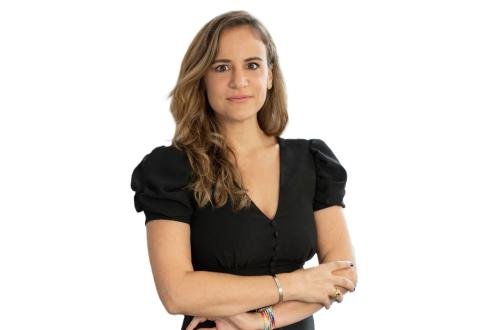
As private wealth continues to expand globally, multi-family offices are increasingly competing not just on investment performance but on operational discipline, trust and the ability to provide genuine strategic guidance to entrepreneurial clients. For Chiara Bartoletti, Managing Partner and Chief Operating Officer at Eightstone, the foundations of a successful wealth management platform lie less in product innovation and more in consistent execution, risk discipline and long-term relationships.
Eightstone operates as a multi-family office managing approximately SGD 3 billion in assets, primarily through discretionary managed accounts alongside a selection of specialised thematic funds. The firm’s focus is deliberately narrow: entrepreneurs and ultra-high-net-worth individuals whose wealth typically sits in the USD 10 million to USD 50 million range.
Rather than targeting billionaires with established institutional structures, Bartoletti explains that the firm concentrates on individuals who are still navigating the transition from entrepreneurial success to long-term wealth stewardship. In this segment, the core value proposition is often less about complex financial engineering and more about clarity, discipline and time efficiency.
Bartoletti notes that many successful entrepreneurs reach a point where managing their financial affairs becomes a significant burden. By centralising investment management and decision-making, she argues, a multi-family office can remove much of that operational pressure. In practice, the goal is not to pursue aggressive returns but to provide stability and rational decision-making across different market environments.
The firm’s investment philosophy reflects that approach. Bartoletti explains that maintaining discipline through volatility is one of the most important contributions a wealth manager can make. “Our role is to behave rationally through different market cycles,” she says, noting that disciplined risk management often means resisting the emotional impulses that drive many investment decisions.
In her view, the industry’s tendency to chase high returns can sometimes undermine long-term portfolio stability. Eightstone instead focuses on managing volatility and preserving capital, prioritising steady outcomes over headline performance figures.
Trust and Cultural Fit Over Product Differentiation
In an industry crowded with service providers offering broadly similar capabilities, Bartoletti believes that true differentiation is rarely about marketing narratives or product innovation.
While firms often emphasise unique selling propositions or specialised strategies, she suggests that the real determinants of success are far more fundamental. Ultimately, she argues, wealth management is about organisation, track record and trust.
According to Bartoletti, clients evaluating advisory firms often discover that most institutions deliver broadly comparable services. What ultimately shapes the decision is the level of confidence clients feel in the people managing their wealth. “At the end of the day, what we are selling is trust,” she explains, emphasising that the relationship between client and adviser remains deeply personal.
That dynamic means that selecting a wealth manager often comes down to cultural alignment and interpersonal chemistry rather than technical differences between firms. For clients who choose a well-structured organisation with a proven track record, Bartoletti believes the likelihood of a successful relationship is already high.
Automating Operations to Strengthen Human Service
While trust and relationships remain central to the model, Eightstone is increasingly investing in technology to improve operational efficiency and free up time for client engagement.
One of the firm’s recent initiatives has been the recruitment of a data automation engineer, a move that Bartoletti acknowledges is somewhat unusual for a wealth management firm of Eightstone’s size. The decision reflects a deliberate strategy to automate routine tasks that add little value when performed manually.
Bartoletti argues that repetitive operational processes often create unnecessary inefficiencies within financial organisations. In some cases, she suggests, having humans perform these tasks can even introduce additional risks through manual errors.
The objective of automation, therefore, is not to replace people but to allow the team to focus on areas where human judgement genuinely matters.
“We want to free up time for our team so they can deliver high-quality service,” she explains, adding that the true value of wealth management lies in the human interaction with clients.
From Bartoletti’s perspective as Chief Operating Officer, improving operational infrastructure is therefore one of the most important priorities for the firm.
Expanding Data and Reporting Capabilities
Alongside automation efforts, Eightstone is also investing in expanding its data aggregation and reporting capabilities.
The firm recently committed to implementing a new platform designed to improve consolidation and client reporting. While Eightstone already operates portfolio management and risk monitoring systems, Bartoletti explains that the new technology will enhance the firm’s ability to aggregate client data across multiple custodians and present it in a more client-facing format.
Although the platform is currently in the implementation phase, Bartoletti prefers not to publicly identify the provider until the system is fully operational. For her, the priority is ensuring the technology delivers meaningful improvements rather than promoting specific vendors prematurely.
The broader objective is to provide clients with clearer visibility into their portfolios while strengthening internal data infrastructure.
Recruitment and Cultural Alignment
Beyond operational enhancements, Eightstone is also focused on selectively expanding its advisory team.
The firm is currently seeking to recruit relationship managers with discretionary portfolios, a segment of talent that Bartoletti acknowledges can be difficult to find. In many cases, experienced advisers working within large financial institutions are reluctant to move into more independent environments where they must operate with greater autonomy.
Cultural alignment is also a key consideration in the hiring process. Bartoletti emphasises that new team members must share the firm’s philosophy around disciplined investing and long-term client relationships.
For Eightstone, maintaining a cohesive internal culture is considered just as important as expanding the firm’s client base.
The Constant Challenges of Wealth Management
When asked about the challenges facing the industry in the coming year, Bartoletti adopts a characteristically pragmatic perspective.
She notes that every year tends to be framed as uniquely difficult, yet the underlying pressures confronting wealth managers remain remarkably consistent. Market volatility, geopolitical uncertainty and regulatory developments all contribute to a constantly shifting environment.
At the same time, firms must continuously improve their capabilities in order to remain competitive. Bartoletti observes that wealth managers are constantly balancing several priorities simultaneously – managing investment risk, retaining talented employees and ensuring their platforms remain technologically relevant.
The external context may evolve from year to year, but the core demands of the industry remain largely unchanged. As Bartoletti puts it, wealth managers must continually adapt while maintaining discipline and perspective. “You always need to be better, perform better and manage risk,” she says.
In that sense, the wealth management business is less about responding to one-off crises than about maintaining consistent performance and relevance over the long term.
Chiara is speaking at the upcoming Hubbis Independent Wealth Management Forum – Singapore 2026, taking place on May 5th from 9.00am to 4.00pm. View the event homepage HERE.
To get a better idea of the goings on, CLICK HERE to view the content summary from the 2025 event.