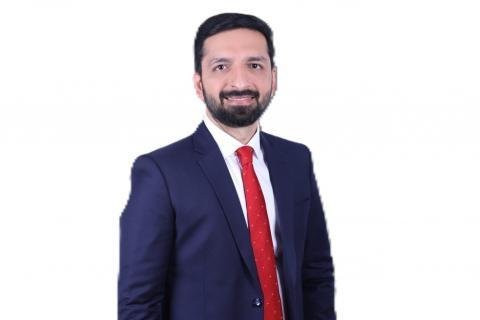
As UHNW and HNW families in the Middle East move beyond performance-led conversations toward fully integrated wealth stewardship, expectations are shifting decisively toward holistic, relationship-driven advice. In his contribution to the Middle East Private Wealth Management Outlook 2026, Bhavnesh Thakkar, Chief Executive Officer of Taurus Wealth Advisors, reflects on why the next phase of private wealth management will be defined less by algorithms and more by judgement, trust and long-term perspective. He outlines how Taurus is strengthening its role as a central confidante for families—coordinating across governance, succession, investments and global mobility—while using technology as an enabler rather than a substitute for human insight in an increasingly complex and interconnected regional wealth ecosystem.
How are UHNW and HNW client expectations evolving as we enter 2026, and how is your organisation enhancing the client experience in response?
Client expectations are becoming significantly more sophisticated and holistic. UHNW and HNW families are no longer looking only at portfolio performance but they are expecting an integrated advice that spans wealth structuring, global mobility, succession, philanthropy, and governance. There is also a stronger demand for transparency, faster responsiveness, and advisers who understand the family context beyond investments.
At our Firm, we are enhancing the client experience by deepening our advisory model around long-term relationships rather than transactional interactions. This includes more structured family wealth reviews, consolidated reporting across custodians and asset classes, and proactive engagement on life events and generational transitions. Clients increasingly value a trusted adviser who can act as a central coordinator beyond wealth planning and investment disciplines, and that is a role we continue to strengthen.
How will your firm leverage digital tools, AI and data intelligence in 2026 to strengthen advisor productivity and scale high-touch private wealth services?
Technology is not going to replace advice, but will significantly elevate the quality of advice. In 2026 and ahead, digital tools, AI and data intelligence will play a key role in enhancing advisors’ productivity by automating routine processes, improving data aggregation, and generating deeper portfolio and risk insights. This allows advisors to spend more time on strategic conversations with clients rather than administrative tasks.
We are investing in platforms that provide real-time portfolio visibility, risk analytics, and scenario modelling, which support our advisors to be more proactive, better prepared, and more relevant, while allowing us to scale without compromising the high-touch nature of private wealth management.
That said, for ultra-high-net-worth families, wealth has never been just about portfolios. It is about people, relationships, timing, and judgment. The industry is slowly moving away from the idea that algorithms can replace human advisors. Algorithms can optimize inputs, but they cannot navigate family dynamics, inter-generational transitions, reputational considerations, or geopolitical uncertainty. This is where the confidante advisor becomes critical: someone who understands how a family makes decisions, where sensitivities lie, when not to act despite market signals, and how personal, business, and global factors intersect. Technology remains a powerful enabler, but it works best behind the advisor, not instead of one. The future of ultra-high-net-worth wealth management is relationship-first, supported by intelligence, experience, and trust built over time. When wealth becomes complex, clarity does not come from code. It comes from counsel.
As family businesses deepen their focus on governance, succession and next-generation leadership, how is your organisation supporting clients in building long-term structures?
Family enterprises are increasingly focused on continuity, professionalism, and intergenerational alignment. We are seeing a shift from informal structures towards more formal governance frameworks, family constitutions, and clearly defined succession roadmaps.
Our role is to work alongside families and their advisors to help design structures that balance control, flexibility, and long-term resilience. This includes supporting the establishment of holding structures, trusts and foundations where appropriate, as well as facilitating family meetings that address shared values, decision-making processes, and next-generation education. Preparing the next generation is particularly important. We engage younger family members early through financial literacy, exposure to governance discussions, and gradual involvement in stewardship responsibilities.
Which investment themes, products and strategies do you expect will resonate most with UHNW and HNW clients in 2026, and why?
In 2026, we expect continued demand for diversification across geographies, currencies, and asset classes, particularly in an environment where macroeconomic and geopolitical shifts remain a key consideration.
As part of our approach, our foremost objective is to protect the capital while pursuing sustainable long-term growth. Given the strong performance achieved last year and the current macroeconomic uncertainties, it is prudent to focus on risk management and timely portfolio diversification as we enter 2026.
Alternative funds (as an Asset class) are increasingly becoming a focus point of all our client conversations. The current investment environment is marked by uncertain geopolitical shifts, sticky inflation and volatile equity markets. Clients are seeking exposure to strategies which behave differently from traditional equities, bonds and 60/40 portfolios while still delivering superior risk-adjusted returns. Taurus offers curated access to such funds, combining our investment expertise and professional oversight.
Private market investments — including private equity, , real assets etc. — will remain attractive for clients seeking long-term growth and income opportunities beyond traditional public markets.
We also see increasing interest in income-generating strategies, capital preservation structures, and bespoke discretionary mandates that reflect each family’s risk profile and liquidity needs. Sustainable and thematic investments are gaining traction as well, especially where they align with long-term structural trends such as energy transition, technology innovation, and healthcare. Ultimately, clients are looking for resilient portfolios that balance growth with downside protection.
How do you see the private wealth landscape in the Middle East continuing to develop in 2026, which types of clients are driving the strongest interest in the region, and how do you expect the broader wealth ecosystem — advisers, platforms, structures and providers — to evolve in response?
The Middle East continues to establish itself as a global wealth hub, driven by regulatory advancements, attractive residency frameworks, and increasing institutional depth. We are seeing strong interest from regional family businesses, international entrepreneurs relocating to the region, and globally mobile families seeking stable, well-regulated jurisdictions for wealth management and structuring.
As the ecosystem matures, we expect greater collaboration between advisors, fiduciary providers, and financial institutions, along with more specialised platforms that cater to complex cross-border needs. Clients have started to favour firms that combine international
capability with strong regional understanding. The competitive edge will lie not just in product access, but in advisory quality, governance expertise, and the ability to deliver coordinated, multi-jurisdictional solutions.