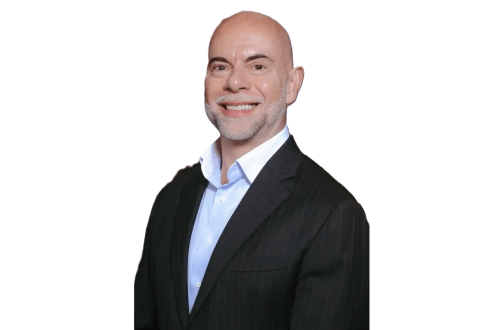
Independent wealth management is entering a period of structural change, driven not only by technology but by a broader redefinition of what clients are willing to pay for. For Howard Clark-Burton, Chief Executive Officer and Founding Director of BMP Wealth, artificial intelligence (AI) is not simply another tool entering the adviser’s workflow. It is reshaping client behaviour, widening access to financial guidance and forcing wealth managers to become clearer about where their real value lies.
In his view, the result will not be the disappearance of the profession, but its evolution. Advice is likely to become more democratised, costs will continue to come under pressure and clients will arrive more informed, more questioning and more demanding than before. For firms that want to remain relevant, Clark-Burton argues, the answer lies in trust, transparency, experience and a service model that can justify its fees in a market where information is no longer scarce.
AI is changing both client behaviour and the advisory model
For Clark-Burton, the most obvious trend in wealth management today is the impact of AI on the client relationship itself. Clients are no longer approaching advisers as passive recipients of information. Increasingly, they arrive armed with AI-generated questions and use the same tools to interrogate written recommendations after the fact.
“We’re seeing clients come in with AI list of questions,” he says. “They’re pre-armed with a lot of questions from the AI system already.”
That, he argues, is placing new pressure on advisers. Reports can now be uploaded into AI systems, checked and challenged, creating further rounds of questions and scrutiny. The consequence is that clients are becoming better informed, while advisers are under greater pressure to demonstrate depth of knowledge, judgement and practical experience.
Clark-Burton sees this as part of a broader democratisation of wealth management. Traditionally, he notes, only a relatively small portion of the population could afford personalised wealth advice. Increasingly, AI will provide a version of that service to a far wider audience.
“What I think you are seeing now coming as a trend is democratisation of wealth management services,” he says.
That does not mean human advisers disappear. Rather, their role becomes more specialised. At the higher end of the market, the value shifts towards judgement, experience, emotional discipline and the ability to connect disparate issues in a way that AI alone cannot easily replicate. “If you want to remain a fee-based adviser, you have to focus at the top end still,” he says.
Clients are more informed, but fee pressure is also rising
Clark-Burton says the client shift is not only about AI. It also reflects a growing gap between Hong Kong and other more mature advisory markets when it comes to pricing and remuneration models.
He argues that Hong Kong remains behind markets such as the United Kingdom, Australia, the United States, Canada and Europe, where commissions have largely disappeared from mainstream wealth management. In those markets, he says, advisory has moved much more clearly towards ongoing fee-based relationships, with clients paying for service and advice rather than through embedded product commissions.
In Hong Kong, by contrast, he still sees products carrying high commissions, raising questions about whether clients are genuinely receiving fair value. “You’ve got to ask questions,” he says. “Is the sale of that product’s value proposition worth the commission?”
For Clark-Burton, the issue is not whether advisers should be paid, but whether the payment structure is transparent and defensible. He references the United Kingdom’s focus on consumer duty and value, suggesting that if charges cannot be clearly justified, then overcharging becomes a real concern.
He is also critical of what he sees as gaps in the regulatory environment, particularly around practitioners working with Hong Kong clients from outside the jurisdiction. In his view, there is room for tighter oversight and a more proactive approach to emerging market practices.
A UK-style model built around trust
Asked what differentiates BMP Wealth, Clark-Burton returns to a single word: trust. He argues that many firms claim to be client-centric, but that the test lies in whether the operating model genuinely aligns with client outcomes.
“What it is is the word ‘trust’,” he says. “We generally put client centre to everything.”
That philosophy, he argues, is reflected in BMP Wealth’s decision to bring what he describes as a United Kingdom-style model into Hong Kong. The firm uses low-cost products, low fees and a centralised investment solution for most clients. Rather than leaving each adviser to manage money independently, the investment process is overseen centrally by professionals, with most clients choosing a discretionary rather than advisory model.
“Ninety percent of clients don’t,” he says of bespoke advisory relationships. “They go for the discretionary relationship, which is centralised.”
Clark-Burton argues that this structure creates greater consistency, stronger oversight and better client outcomes. He also points to the firm’s emphasis on regulated, transparent solutions, and to the depth of industry experience among its team. “We’ve been in the industry for decades,” he says. “People come for the experience, the wisdom.”
Low costs, blended portfolios and institutional access
In portfolio construction, Clark-Burton sees value as starting with cost control. He says the total cost of BMP Wealth’s portfolios, including platform, funds and firm fees, remains below one percent.
“We keep the costs very low,” he says. “The whole thing is below one percent.”
Beyond that, he points to the resources available through the firm’s investment committee, including research access via Marlborough, one of BMP Wealth’s shareholders. That gives the firm, he says, the ability to combine internal judgement with the support of a larger and experienced asset management infrastructure.
Clark-Burton also rejects the notion that firms must choose between active and passive investing. Instead, BMP Wealth blends both approaches, using each where it is most effective. “We don’t believe in either active or passive,” he says. “We believe both have their place.”
The final element is fund selection. According to Clark-Burton, the firm uses institutional share classes and avoids trail commissions, ensuring that returns flow back to the client rather than being eroded by distribution structures.
Using AI in operations, research and marketing
Like many firms, BMP Wealth is still in what Clark-Burton describes as the early stage of AI adoption. But he is clear that the technology cannot be ignored.
“AI won’t replace us, but the next wave of advisers using AI will replace us,” he says.
At present, the firm is using Microsoft Copilot within its internal environment to improve efficiency across emails, documents and operational workflows, while keeping data security contained within its own systems. It also uses tools such as Claude, ChatGPT and others for non-client-specific research, presentations and broader internal work.
Clark-Burton says the implications extend beyond productivity. Marketing itself is changing. Firms are no longer only adapting to search engines such as Google; they are also adapting to how AI systems gather, rank and interpret information. BMP Wealth, he says, has redesigned its website and broader marketing approach with that shift in mind.
Scale is the next priority
Looking ahead, Clark-Burton says the firm’s main priority over the next 12 to 18 months is scale. “Scale number one priority,” he says.
That ambition is shaped by changes in the Hong Kong market itself. He argues that the departure of many expatriates and the shrinking of the competitive field have altered the traditional recruitment landscape. Where firms might once have scaled by hiring proven advisers locally, that path is now narrower.
As a result, BMP Wealth is considering a combination of overseas hiring and regional acquisitions, with Hong Kong remaining the central hub. For Clark-Burton, scale is not just about growth. It is about building the operational weight and regional reach needed to compete in a more demanding, more transparent and increasingly AI-shaped wealth management industry.