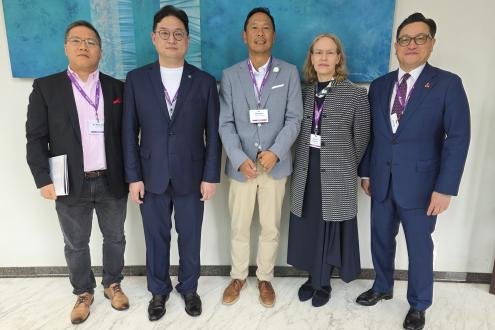
At the Hubbis Independent Wealth Management Forum – Hong Kong 2026, industry leaders examined whether independent wealth managers truly deliver better outcomes than private banks, or whether their advantage lies primarily in stronger alignment with client interests. The discussion explored the differences between bank-led and independent advice, the importance of open architecture and open custody, and the growing demand for highly customised portfolios across public markets, private markets, tax, estate planning, and family governance.
The panel also highlighted the changing economics of the independent wealth model in Asia. As family needs become more complex, firms are being challenged to provide broader advice, stronger infrastructure, better data, deeper specialist expertise, and more scalable operating models. The conversation made clear that the next phase of growth will not depend only on independence as a concept, but on whether independent firms can combine alignment, trust, technology, technical capability, and institutional discipline.
Chair: Alex Ng, Managing Director, Head of Intermediary, Asia Client Group, Janus Henderson Investors
Speakers
- Dr. Nick Xiao, Founder and CEO, Annum Capital
- Kenny Ho, Founder and Managing Partner, Carret Private Capital
- Jessica Cutrera, Co-Founder, Co-CEO, Leo Wealth
- Grant Ko, Chairman, Founding Partner, Wisdom Family Office
Key Takeaways
- Independent wealth managers argue that their advantage lies in longer time horizons, stronger alignment, open architecture, open custody, and the ability to act without captive product pressure.
- Portfolio construction is increasingly defined by customisation, transparency, cross-custodian visibility, tax awareness, currency considerations, and the evolving needs of globally connected families.
- Private markets remain a major area of differentiation, particularly where independent firms can access more specialised, nimble, or tailored opportunities beyond standard bank-distributed products.
- Holistic advice requires better data, stronger technology, specialist talent, continuous training, and the ability to coordinate across investments, tax, estate planning, governance, and family needs.
- Advice can be monetised beyond investments, but only when firms give relationships enough time to mature and respond to the client’s priorities at the right moment.
- Scaling an independent platform requires focus, infrastructure, culture, talent development, risk control, and clarity over which capabilities should be built in-house and which should be outsourced.
- The Asian independent wealth market remains significantly underpenetrated relative to the US and Europe, creating strong growth potential for firms that can adapt to local client behaviours and regulatory structures.
Panellists argued that independent wealth managers can deliver better outcomes where they are able to operate with a longer investment and relationship horizon than traditional private banking platforms. The independent model allows advisers and principals to think over years or decades, rather than being constrained by short-term asset-gathering targets, internal product priorities, or frequent institutional moves.
This longer horizon was presented as a structural advantage. Where bank relationship managers may be measured against aggressive three-year targets or encouraged to move books between institutions, independent firms are more likely to build around continuity, client trust, and long-term decision-making.
“Clients do not need an adviser who is thinking about the next platform move – they need someone who is thinking about the next decade of the family,” said a panellist.
The discussion also emphasised that independent firms are not captive to any single bank, house view, or product shelf. Their ability to evaluate opportunities across custodians, banks, managers, and structures gives them a broader field from which to construct solutions. This is particularly important in a market where clients are increasingly sophisticated and often have multiple banking relationships already in place.
Open Custody Is Becoming As Important As Open Architecture
Several panellists noted that open architecture alone is no longer sufficient. While many institutions now claim to offer access to third-party products, independent firms are increasingly differentiating themselves through open custody – the ability to advise across multiple bank accounts, custodian platforms, and booking centres.
This matters because clients rarely have all their needs met by one institution. Different banks may be stronger in different products, jurisdictions, lending solutions, private market opportunities, or execution capabilities. Independent advisers can therefore play a coordinating role across the client’s total financial architecture rather than focusing on one account or one platform.
“Open architecture is useful, but open custody is where the independent model becomes genuinely powerful,” said a panellist. “The client’s wealth does not sit neatly in one account, so advice should not be limited to one account either.”
This cross-custodian approach also helps reduce the risk of portfolios being shaped by a bank’s own investment banking pipeline or preferred product distribution agenda. Panellists argued that this freedom from internal product economics is central to the independent proposition.
Private Markets Are A Key Area Of Differentiation
Private markets were identified as one of the most important areas where independent firms can create differentiated value. Panellists noted that private banks often distribute similar large-scale private market products, with clients across institutions being shown the same major managers and strategies. While these may be credible offerings, they are not always sufficiently customised to the client’s needs.
Independent firms, by contrast, may be able to source more targeted opportunities, review niche transactions, and move more quickly where suitable deals arise. This is particularly relevant for clients seeking access to private equity, real estate, venture, direct transactions, or specialised thematic opportunities.
The discussion also pointed to the operational differences between banks and independent firms. Larger institutions may require lengthy committee processes before approving smaller or more unusual private market transactions, while independent firms can be more nimble if they have the right due diligence capability.
“Private markets reward selectivity, speed, and judgement,” said a panellist. “Independents can be much more effective when they are not waiting for a large institution to approve every opportunity through multiple committees.”
The Best Portfolio Is Individual, Dynamic, and Transparent
Panellists stressed that there is no single model portfolio that can be described as optimal for all clients. A good portfolio in 2026 is one that reflects the client’s specific objectives, family situation, tax profile, liquidity needs, currency exposures, jurisdictional considerations, time horizon, and legacy goals.
This requires a more detailed understanding of the client than a conventional product-led model can usually provide. Families in Asia are often highly international, with members, assets, businesses, tax obligations, and lifestyle needs spread across multiple countries. The portfolio must therefore be designed around a broader view of the family’s life and wealth architecture.
“The best portfolio is not the most sophisticated one on paper – it is the one that actually fits the family’s circumstances,” said a panellist.
The panel also emphasised that portfolios should not be static. Client needs evolve, family structures change, tax rules shift, currencies move, liquidity needs arise, and investment opportunities change. Independent advisers therefore need to revisit assumptions regularly, rather than treating portfolio construction as a one-off exercise.
Transparency was presented as another critical requirement. Many Asian families work with multiple banks, EAMs, MFOs, and advisers. Without consolidated data, analytics, and visibility across the full portfolio, it is difficult to understand true exposure, risk, overlap, liquidity, or performance.
Holistic Advice Requires Data, People, and Continuous Training
The panel then moved beyond portfolio construction to the broader question of holistic advice. Panellists agreed that families increasingly expect support across governance, succession, estate planning, tax, structuring, philanthropy, operating businesses, liquidity events, and intergenerational transition. However, delivering that advice consistently remains challenging.
One panellist argued that holistic advice starts with information. Firms need the ability to collect accurate data across the client’s structures, accounts, investments, and family circumstances, ideally in real time or close to it. Technology, APIs, automation, and AI are making this increasingly achievable, but the process still requires disciplined infrastructure.
“Holistic advice begins with knowing what is actually happening across the family’s wealth,” said a panellist. “Without the right data, the advice is fragmented before it even begins.”
The second requirement is talent. Independent firms need people who can move beyond traditional relationship management and act as solution partners for clients. This may include in-house specialists, external advisers, tax experts, legal partners, investment professionals, governance specialists, and family office practitioners.
The third requirement is training. Policies, tax rules, cross-border structures, investment products, and family needs are changing quickly. Firms that want to advise across multiple dimensions must continuously upgrade their knowledge base and ensure their teams remain current.
Advice Can Be Monetised, But Timing Matters
The discussion also addressed whether independent firms can monetise advice beyond investments. Panellists suggested that advice can be commercially valuable, but only when it is delivered at the right time, in response to the client’s actual priorities.
Clients do not consider all issues simultaneously. A family may focus on investment performance at one point, succession at another, liquidity before a transaction, tax before a relocation, or estate planning after a family event. Independent advisers therefore need patience and continuity. Advice becomes monetisable when the relationship has matured and when the client recognises the relevance of the issue.
“Advice is valuable, but it cannot be forced into every conversation,” said a panellist. “The relationship has to develop at the client’s pace.”
Panellists noted that advice may ultimately lead to investment management mandates, discretionary portfolios, private market transactions, insurance, trust planning, tax coordination, or other solutions. However, the commercial reward follows trust and timing. Firms that rush the process risk undermining the relationship.
This reinforces one of the core arguments for the independent model: time horizon matters not only for investing, but also for advice monetisation.
Scaling Requires Focus, Infrastructure, Culture, and Risk Control
Scale was another major theme. Panellists noted that independent firms cannot grow sustainably by relying only on founder relationships or a small number of senior advisers. They need infrastructure, clear client segmentation, operational discipline, technology, compliance, risk management, and talent development.
One panellist noted that scaling begins with focus. Firms need to understand which markets, client segments, and service lines they are targeting. Without this clarity, growth can become fragmented and difficult to control.
Infrastructure was also identified as essential. As firms expand, they need systems that allow them to manage more clients, more data, more reporting obligations, more regulatory requirements, and more complex portfolios without compromising quality.
“Scale is not just adding more clients – it is building the machinery to serve them consistently,” said a panellist.
Culture and talent development were highlighted as equally important. Larger independent firms need to train people from within, define the type of professionals they want to attract, and build a consistent advisory culture. This helps maintain quality and manage risk as the business becomes more sizeable.
Build In-House Where Client Knowledge Creates An Edge
Panellists also discussed which capabilities should be developed internally and which should be outsourced. The answer depends heavily on client needs, firm positioning, regulatory considerations, and the availability of external expertise.
Some services may be worth building in-house when intimate knowledge of the client creates a better outcome. Family mediation was cited as an example. While external mediators may be highly qualified, they may not understand the family history, personalities, conflicts, and context as quickly as a trusted adviser who has worked closely with the family.
Other areas, particularly legal work, may be better handled by external specialists due to regulatory constraints and the depth of technical expertise required. The key is to avoid assuming that every client need should become an internal revenue line.
“Build where proximity to the client gives you an advantage; outsource where specialist depth matters more,” said a panellist.
The panel also highlighted the value of collaboration among boutiques, family offices, and independent firms. In some cases, a firm may outsource work to another independent platform that has built a stronger specialist capability, even if that firm could otherwise be viewed as a competitor. This collaborative mindset is becoming a strength of the Hong Kong family office and independent wealth ecosystem.
Cross-Border Complexity Is Creating Specialist Demand
The panel explored the growing demand for specialist cross-border advice, particularly for Asian families with US connections. These families may not see themselves as US-centric, but may have family members with US passports, green cards, US tax exposure, US investments, US-educated children, or business interests in the United States.
One case discussed involved a PRC management team that had built a successful technology business headquartered in Texas and was preparing for an IPO. Over time, senior principals had taken US status, children had moved to California, and shares had been held through offshore structures based on advice received many years earlier. When the company approached an IPO process, tax compliance and estate planning issues emerged.
The example demonstrated how cross-border complexity can remain hidden until a major liquidity event forces full scrutiny. In such cases, the role of the adviser is not only to identify problems, but also to coordinate remediation, reduce future exposure, and improve the outcome before monetisation.
“Many families look entirely Asian on the surface, but one passport, one green card, one child in California, or one US asset can change the whole planning picture,” said a panellist.
The discussion also showed why some capabilities are difficult to outsource neatly. Highly specific needs – such as Mandarin-speaking advice for greater China families facing Japanese or US cross-border tax issues – may not be readily available in the market and may justify building specialist capability inside the firm.
The Independent Market In Asia Remains Underpenetrated
Panellists expressed optimism about the long-term growth of independent wealth management in Asia. The regional market was described as large, expanding, and still significantly underpenetrated compared with the US and Europe.
One panellist estimated that independent wealth players currently represent only around 5% penetration in Asia, compared with approximately 35% in the US and Europe. While Asian private banking continues to grow, independent wealth management was expected to grow faster as more clients seek aligned advice and more advisers consider moving away from bank platforms.
This growth, however, will not be uniform across markets. Client behaviour, regulation, pricing expectations, and levels of trust vary materially between jurisdictions. In some markets, clients may be more willing to pay fixed management fees or explicit advisory fees. In others, particularly where first-generation wealth remains dominant, clients may still prefer to retain closer control over decision-making and may be more sceptical of paid advice models.
“The opportunity is large, but Asia cannot simply import the US or European model wholesale,” said a panellist. “The independent model has to adapt to how families here actually think, decide, and pay for advice.”
Regulation, Generational Change, and Pricing Will Shape The Winners
The panel suggested that the next phase of industry development will depend on several structural factors. Regulation is one of them. In markets where rules more clearly distinguish advice from product distribution, fee-based independent advice may be easier to establish. In Asia, regulatory frameworks remain different from Europe and the US, which affects how quickly pricing models can evolve.
Generational change is another important factor. First-generation wealth creators may be less inclined to delegate fully, particularly if they built the wealth themselves and are accustomed to making key decisions. Later generations may be more willing to accept structured advice, institutional processes, and transparent fee models.
Pricing will also be critical. Panellists suggested that the industry is likely to move gradually towards models where clients pay for advice more explicitly, rather than relying on product incentives. However, the pace of this shift will vary by market and client segment.
“The direction of travel is towards paid, conflict-light advice, but the route will be different in every Asian market,” said a panellist.
Firms most at risk are likely to be those that remain overly product-driven, lack scale, fail to invest in infrastructure, or cannot articulate a clear value proposition beyond access to products.
The Next Phase Will Reward Firms With Clear Identity and Institutional Depth
In closing, the discussion pointed to a highly positive outlook for independent wealth management in Asia, but also a more demanding operating environment. Clients are becoming more sophisticated, portfolios are becoming more complex, and families increasingly need support across tax, structuring, governance, succession, private markets, and global mobility.
The winners are likely to be firms that can combine independence with institutional depth. This means strong people, strong infrastructure, robust compliance, differentiated access, careful partner selection, and the ability to deliver advice across multiple dimensions without losing personal trust.
“The independent model will grow because clients want advice that is aligned, but alignment alone is not enough,” said a panellist. “The firms that win will be those that can turn alignment into consistent execution.”
As Hong Kong continues to strengthen its role as a regional and international wealth hub, independent wealth managers and family office platforms are likely to play an increasingly important role in serving entrepreneurs, UHNW families, and globally connected clients. The challenge is no longer simply to argue that independence matters. It is to prove that independence can be delivered with scale, discipline, specialist capability, and measurable value across generations.