The public finances were boosted by stronger-than-expected out-turns in income tax, VAT and corporation tax in the first four months of the year, the latest exchequer returns show.
Overall tax receipts rose by 4.2 per cent to €28 billion for the four-month period, despite the Iran war and the ensuing oil price shock.
On a cumulative basis, income tax generated €12.4 billion, up 5.7 per cent or €672 million on the same period last year, reflecting the buoyancy of the labour market where a record 2.83 million people are employed.
VAT receipts for the four months came to €8.3 billion, up 4.5 per cent or €356 million on last year.
The Government is set to benefit from the raised level of inflation caused by conflict in the Middle East with consumers spending more to buy the same amount of goods.
While most of the Government’s corporate tax haul comes later in the year, the total so far – €3.5 billion – was up 8.6 per cent on the equivalent period last year.
On a cumulative basis, tax revenues of €28 billion were collected to the end of April, down by €587 million on last year.
However, when once-off receipts arising from the Apple tax ruling are excluded from the 2025 figures, total tax receipts were up on last year by €1.1 billion or 4.2 per cent.
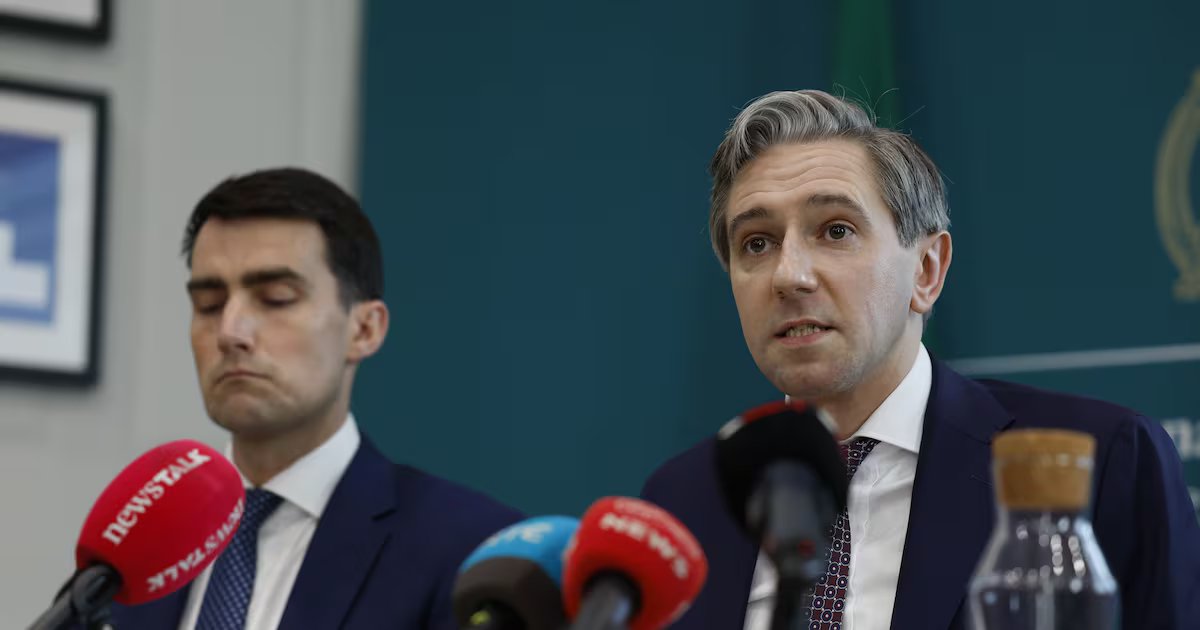
“Today’s Exchequer returns are encouraging, highlighting Ireland’s economic resilience during a period of deep global uncertainty,” Minister for Finance Simon Harris said.
[ Solid tax trends will only increase demands on the Government for energy supportsOpens in new window ]
“Employment is at record levels, and the income tax returns reflect a strong labour market,” he said.
Harris noted that overall tax revenues for April amounted to €5.3 billion, up by almost 8 per cent on the same period last year, reflecting strong income tax, VAT and corporation tax growth for the year to date.
“These strong revenues provide us with the firepower necessary to support people throughout the coming months,” he said.
The latest figures showed total voted expenditure amounted to €36 billion for the four months, €2.9 billion (8.9 per cent) ahead of 2025.
The Government used its positive budgetary position to pay for an additional €505 million in fuel supports. The package – announced last month – came after a week of protest and blockades led to severe diesel and petrol shortages.
Of the increased spending overall, Minister for Public Expenditure Jack Chambers said: “This level of investment reflects the implementation of Budget 2026 policies including increases in social welfare rates, additional funding for health, education and disability services, and provision for the continued roll-out of housing and transport.”
The figures indicated an exchequer deficit of €4.7 billion was recorded for the four-month period compared to a surplus of €2.8 billion in the same period last year, a decrease of €7.5 billion.
The year-on-year comparison was, however, impacted by the Apple tax case.
When these revenues are excluded from 2025, a decline of €4.2 billion was recorded in the underlying exchequer balance, the department said.
This was “largely due to the timing of transfers this year” from the exchequer to the Future Ireland Fund and Infrastructure, Climate and Nature Fund, it said.
Responding to the latest figures, Peter Vale, tax partner at Grant Thornton Ireland, said: “Positive April income tax results are typically generated by a mix of bonuses and share awards, reflective of strong 2025 corporate earnings.”
[ Special savings scheme will benefit wealthy at State’s expense, say economistsOpens in new window ]
“With recurring income tax receipts also solid, fuelled by high employment, the picture here looks healthy,” he said.
“Recent job loss announcements are a cause for concern but any impact on income tax receipts will not be seen for some months,” Vale said.