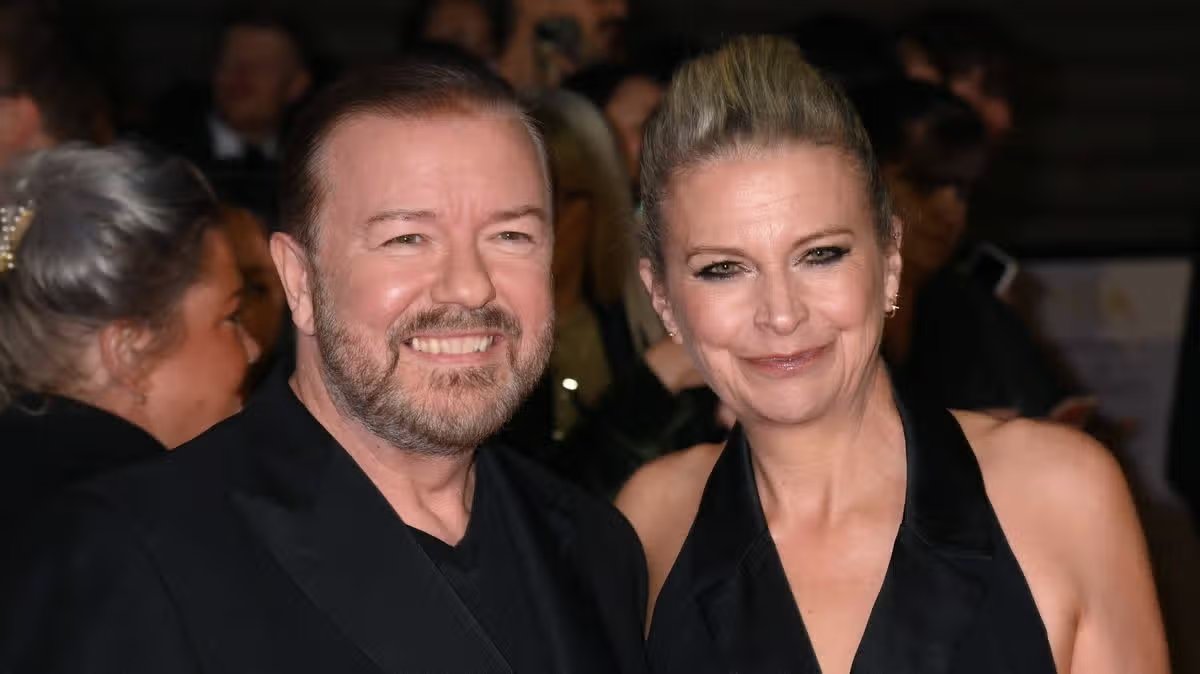
Ricky Gervais has been with his partner Jane Fallon for 44 years and the comedian has now admitted he is considering finally getting married

Ricky Gervais and Jane Fallon attend the National Television Awards back in 2022(Image: Dave J Hogan, Dave J. Hogan/Getty Images)
Ricky Gervais has been with his partner Jane Fallon for 44 years, and now he’s revealed he’s contemplating tying the knot – all because of a tax bill. The Office creator confessed in a new interview that he’s mulling over marriage to Jane specifically to avoid a tax bill when he passes away.
“And that will be the reason I marry. We haven’t done it yet. But if it wasn’t for [tax], why?” he told Saga Magazine. “It’s mad. How more married can you be? We share all our money, we’ve been living together for 40 years. Some marriages don’t last a year.”
That tax is inheritance tax. Gervais, who co-owns properties with Fallon across London, New York and Buckinghamshire and boasts an estimated fortune of £141 million, continued: “It’s horrible, isn’t it? I’ve got to get around to marrying before I die.”
The pair have been together since 1982 and have shared a home since 1984. So what exactly are the inheritance tax regulations for couples when one partner dies? HMRC provides guidance on this matter.
The standard Inheritance Tax rate stands at 40%, charged only on the portion of your estate exceeding the threshold. Inheritance Tax applies to the estate (property, money and possessions) of someone who ‘s died. And if you are not married to your partner or in a civil partnership, you would be liable to pay the tax.
Gervais is discussing what would happen if they do tie the knot. HMRC rules on their website state that there’s normally no Inheritance Tax to pay if either:
- the value of your estate is below the £325,000 threshold.
- you leave everything above the £325,000 threshold to your spouse, civil partner, a charity or a community amateur sports club.
You may still need to report the estate’s value even if it’s below the threshold. If you give away your home to your children (including adopted, foster or stepchildren) or grandchildren your threshold can increase to £500,000 – although Ricky and Jane do not have kids.
If you’re married or in a civil partnership and your estate is worth less than your threshold, any unused threshold can be added to your partner’s threshold when you die. Some gifts you give while you’re alive may be taxed after your death. Depending on when you gave the gift, ‘taper relief’ might mean the Inheritance Tax charged on the gift is less than 40%.
Marriage can make a ‘significant’ difference with estate planning
Other reliefs, such as Business Relief or Agricultural Relief, allow some assets to be passed on free of Inheritance Tax or with a reduced bill. Legal experts suggest that marriage can be viewed as a financial decision as well as a romantic one. Thornton Jones solicitors, which has offices in Yorkshire, states on its website: “The legal distinction between married and unmarried couples has significant consequences when it comes to estate planning.”
It says “entering into a marriage or civil partnership could be a strategic step to mitigate inheritance tax liabilities and safeguard assets for future generations.” Jonathan Halberda, a specialist financial adviser at Wesleyan Financial Services, revealed to Saga magazine last year that he has encountered cases where individuals have wed close friends later in life to ensure their estate or pension benefits are passed on.
“While it may sound unusual, these arrangements can make sense in situations where there’s a close, trusted relationship, with no children or close family members to inherit. It can be a way for individuals to ensure that someone they care about, such as a long-time friend, benefits from their estate or survivor pension after their passing.”