You may be overpaying and not know it

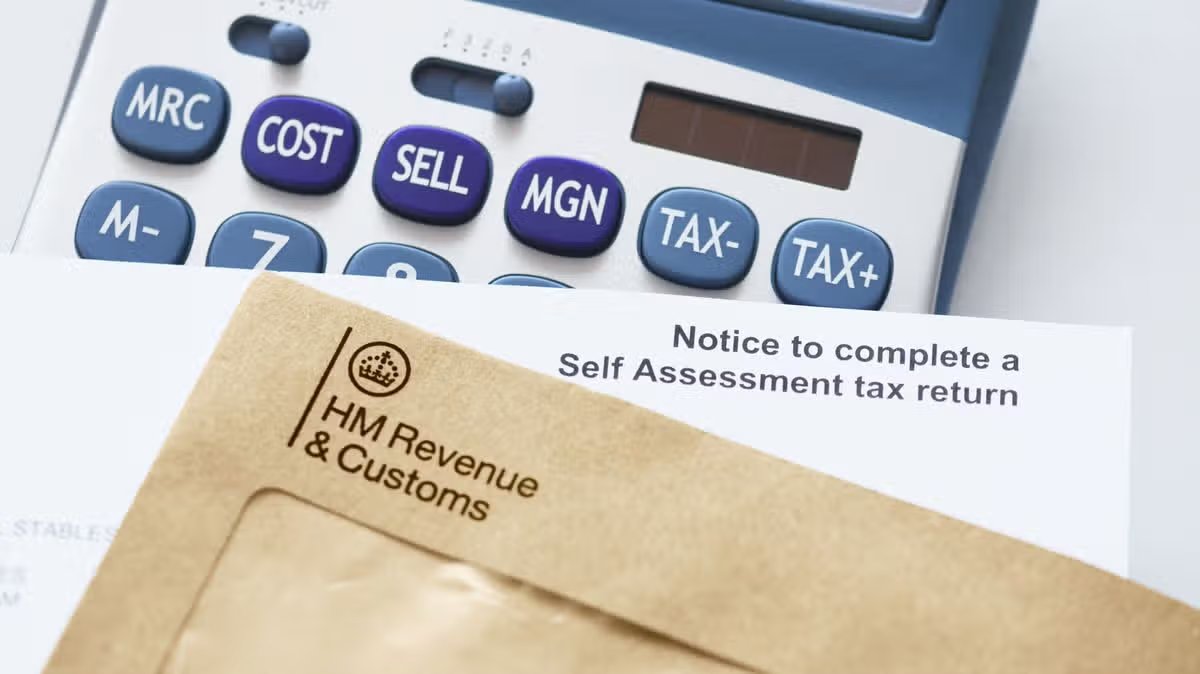
HMRC stands for Her Majesty’s Revenue and Customs(Image: Getty)
Her Majesty’s Revenue and Customs (HMRC) is the UK’s tax, payments and customs authority. It collects money that funds public services, and the amount people pay varies.
Each tax code tells your employer or pension provider how much Income Tax to deduct from your pay or pension. HMRC tells them which code to use, and you’ll have a separate tax code for each job or pension you receive – this means you could have more than one code at the same time.
Your tax code can change for reasons other than starting a new job. It could change if, for example, you start getting income from an additional job or pension, if your weekly State Pension amount changes, or if you need to repay the Winter Fuel Payment.
How do I find my tax code?
Not everyone will have a tax code – for example, if you’re fully self-employed, unemployed, or only receive the State Pension. You can find your tax code:
If you check your tax code online or in the HMRC app, you can also view your tax codes from previous tax years and opt in to paperless notifications. This means HMRC will email you whenever your tax code changes.
Why has my tax code changed?
HMRC can change your tax code for several reasons, usually because your income or circumstances have changed and you need to pay a different amount of tax. If your tax code changes, they will usually contact you to explain how they calculated your new code.
For example, it could change because:
- You start a new job
- You get taxable state benefits
- You start to get income from an additional job or pension
- The interest on your savings is more than your Personal Savings Allowance
- Your weekly State Pension amount changes
- Your employer tells HMRC you have started or stopped getting benefits from your job
- You claim Marriage Allowance
- You claim expenses that you get tax relief on
- You’re paying the High Income Child Benefit Charge through your wages or pension
- You need to pay back the Winter Fuel Payment or Pension Age Winter Heating Payment
- You’ve been on the wrong tax code and owe tax
If you start a new job and your employer does not yet have details of your previous income, you may be put on an emergency tax code. If your tax code has changed, you can use HMRC’s “Check your Income Tax” online service to find out why.
You could be on the wrong tax code, says MSE
Money Saving Expert (MSE), founded by Martin Lewis, has urged people to act quickly, as some people may be more at risk of being on the wrong tax code. The financial experts note that while “anyone can be affected”, there are some groups that may want to check sooner rather than later if one of the following situations has applied to you recently:
- You changed jobs – HMRC can mistakenly think you have two jobs if your old employer hasn’t told it you’ve left.
- You have more than one income – If you have more than one source of income, such as a second job, you may find you’ve been taxed wrongly on some of your earnings.
- You receive employee benefits – If part of your pay includes company benefits like a company car, a healthcare cash plan or medical insurance, you could be paying the wrong amount of tax.
- You’ve started your first job – If you start your first job partway through the tax year, you can easily end up on an emergency tax code. Don’t assume your first few payslips are correct.
- You have more than one pension, have recently retired or started to receive a pension while still working – If you have income from more than one pension, retired in the past couple of years, or have recently started receiving the State Pension, you may have been taxed incorrectly.
What does my tax code mean?
Tax codes are made up of numbers and letters. For most people with one job or pension, the current standard tax code is 1257L.
You can enter your code in the check what your tax code means tool here. This will tell you what the numbers and letters mean, how much tax you’ll pay and if you need to do anything.
The numbers in your tax code tell your employer or pension provider how much tax-free income you get from them in that tax year.
To work out your individual number, HMRC starts with your tax-free Personal Allowance and takes off any:
- Income you have not paid tax on (such as untaxed interest or part-time earnings)
- Other deductions in your tax code (such as company benefits or the High Income Child Benefit Charge)
They then replace the final digit with a letter. However, if you have a K in your tax code the calculation is different.
HMRC’s example explains: “You’re entitled to the standard tax-free Personal Allowance of £12,570, but you also get medical insurance from your employer. As this is a company benefit it lowers your Personal Allowance and changes your tax code.
“The medical insurance benefit of £1,570 is taken away from your Personal Allowance, leaving you with a tax-free amount of £11,000. This would mean your tax code is 1100L.”
Letters in your tax code refer to your situation, and how it affects your tax-free Personal Allowance and the rates of tax you pay.
- 0T – Your Personal Allowance has been used up, or you’ve started a new job and your employer does not have the details they need to give you a tax code
- T – Your tax code includes other calculations to work out your Personal Allowance
- W – You’re on an emergency tax code
- X – You’re on an emergency tax code
- BR – All your income from this job or pension is taxed at the basic rate (usually used if you’ve got more than one job or pension)
- M – Marriage Allowance: you’ve received a transfer of 10% of your partner’s Personal Allowance
- N – Marriage Allowance: you’ve transferred 10% of your Personal Allowance to your partner
- C – Your income or pension is taxed using the rates in Wales
- C0T – Your Personal Allowance (Wales) has been used up, or you’ve started a new job and your employer does not have the details they need to give you a tax code
- L – You’re entitled to the standard tax-free Personal Allowance
- D0 – All your income from this job or pension is taxed at the higher rate (usually used if you’ve got more than one job or pension)
- M1 – You’re on an emergency tax code
- NT – You’re not paying any tax on this income
- CBR – All your income from this job or pension is taxed at the basic rate in Wales (usually used if you’ve got more than one job or pension)
- CD0 – All your income from this job or pension is taxed at the higher rate in Wales (usually used if you’ve got more than one job or pension)
- S0T – Your Personal Allowance (Scotland) has been used up, or you’ve started a new job and your employer does not have the details they need to give you a tax code
- NONCUM – You’re on an emergency tax code
- SD1 – All your income from this job or pension is taxed at the higher rate in Scotland (usually used if you’ve got more than one job or pension)
- K – You have income that you are not paying tax on which is more than your Personal Allowance – find out about a K in your tax code
- D1 – All your income from this job or pension is taxed at the additional rate (usually used if you’ve got more than one job or pension)
- SD3 – All your income from this job or pension is taxed at the top rate in Scotland (usually used if you’ve got more than one job or pension)
- S – Your income or pension is taxed using the rates in Scotland
- CD1 – All your income from this job or pension is taxed at the additional rate in Wales (usually used if you’ve got more than one job or pension)
- SBR – All your income from this job or pension is taxed at the basic rate in Scotland (usually used if you’ve got more than one job or pension)
- SD2 – All your income from this job or pension is taxed at the advanced rate in Scotland (usually used if you’ve got more than one job or pension)
What are HMRC responsible for?
Established by Act of Parliament in 2005, HMRC is responsible for:
- Income Tax, Corporation Tax, Capital Gains Tax, Inheritance Tax, Insurance Premium Tax, Stamp, Land and Petroleum Revenue Taxes
- environmental taxes
- climate change and aggregates levy and landfill tax
- Value Added Tax (VAT), including import VAT
- customs duty
- excise duties
- trade statistics
- National Insurance
- tax credits
- Child Benefit
- enforcement of the National Minimum Wage
- recovery of Student Loan repayments
- anti-money laundering supervision
- property valuations that support taxation and benefits