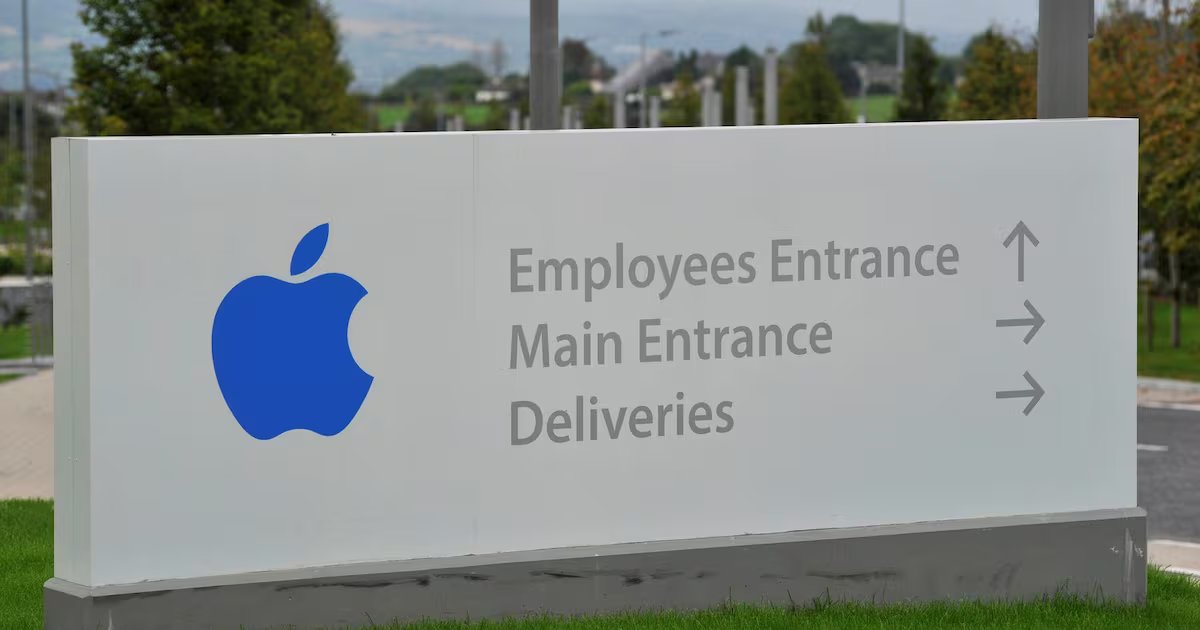
We used to talk about 10 firms paying the bulk of Ireland’s corporate tax. Then we refined it to just five before the Irish Fiscal Advisory Council told us that the largesse (half of it) could be traced to just three: Apple, Microsoft and Pfizer. More recently, weight-loss drug manufacturer Eli Lilly has replaced Pfizer in the top three.
Apple, however, has always been at the top of the pile.
Exchequer returns last week indicated the Government collected €2.1 billion in receipts from the business tax in March, which was up 7.5 per cent on a year earlier. Some €2.9 billion was collected for the first three months of 2026 cumulatively, down €95 million year on year.
The first quarter isn’t that significant in terms of corporation tax. But the March receipts have changed. Since 2022, they’ve been in the €1.5-€2.5 billion range. Previous to that, they rarely topped €350 million.
Apple is the reason behind the surge in the first quarter of recent years. The iPhone maker is relatively unique in having a financial year ending in September, which means the company makes a half-year tax payment to Revenue in March based on what it thinks it will have to pay for the full year ending in September.
“The uptick since 2022 would indicate that something in Apple’s tax profile changed dramatically in that year,” said one source.
“Very hard to say what that might have been, maybe some tax losses used up [unlikely], maybe some IP [intellectual property] allowances fully utilised, or a change in transfer pricing approach regarding split of taxable profits between jurisdictions.
“But the figures would definitely suggest that something happened in one company that changed March CT [corporate tax] receipts profile.”
Ireland’s corporate tax base is bulging − and at both ends of the calendar year − reflecting the State’s increased reliance on foreign direct investment, which itself is increasingly centred on just a few companies, hence the concentration warnings.
“Back yourself”: Aimee Connolly shares her story of 10 years in business
Recent accounts for Apple’s main Irish subsidiary − Apple Operations International Ltd − indicate it recorded a profit after tax of $73.66 billion last year.
While the accounts did not disclose the company’s corporate tax liability here, they stated that a 12.5 per cent corporate tax charge would have resulted in corporation taxes of $10 billion (€8.5 billion).
These are whopping numbers to be paying into one small (by international terms) exchequer. And Apple’s tax liability this year is likely to be even bigger with the new 15 per cent minimum rate applying for the first time.