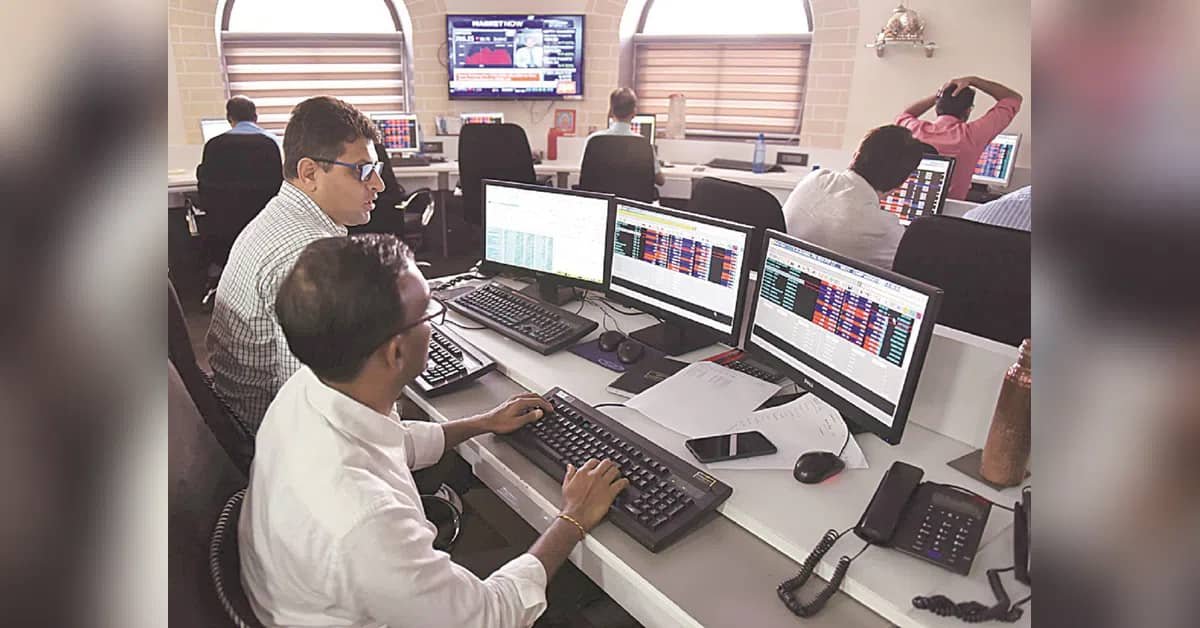
Stock brokers on Tuesday met officials of the Central Board of Direct Taxes (CBDT) with demands and suggestions for the next Union Budget, according to sources.
Some of the suggestions raised by the stock brokers included withdrawal of the long-term capital gains (LTCG) tax on equity investments, removal of Securities Transaction Tax (STT) in the cash segment, and revival of certain rebates on business income, according to people familiar with the developments.
Sources said that brokers representing the stock broking industry associations met the government officials to discuss the recommendations. The meetings follow CBDT’s meetings with several other industry players, including those from mutual fund and insurance sectors.
The suggestions come at a time when the demand for revisiting STT and LTCG tax has grown from several factions of the markets, including foreign portfolio investors (FPIs) and other industry associations.
“The industry has suggested removing STT on delivery based cash transactions. Brokers have also sought revival of Section 88E of the Income Tax Act,” said a person with direct knowledge.
Section 88E provided a rebate (deduction) equal to the STT paid on business income arising from taxable securities transactions. It reduced income-tax otherwise payable by those in the securities trading business — not a general rebate for every investor.
It was effectively withdrawn from Assessment Year 2009-10.
Emailed queries to CBDT remained unanswered till the time of press.
In the Union Budget 2024-25, the government had increased LTCG tax from 10 per cent to 12.5 per cent on gains exceeding ₹1.25 lakh. This is without indexation.
In the cash segment or equity delivery, 0.1 per cent STT is charged both on the buy and sell side.
“Reviving Section 88E could primarily benefit high-turnover market participants, such as brokers and arbitrage traders, for whom STT can be a meaningful cost against relatively thin margins. Allowing qualifying STT as a credit against income tax, rather than merely as a business deduction, should reduce their effective trading cost,” said Hitesh Sawhney, Partner, Price Waterhouse & Co.
He added that the revenue impact, however, will depend on how the relief is designed.
“A narrowly targeted, non-refundable credit limited to specified cash-equity transactions, with no carry-forward, could help contain revenue impact for the Government, while retaining upfront STT collection,” said Sawhney.
From April 1, STT on futures was increased to 0.05 per cent of traded value from 0.02 per cent earlier. In options, the tax on premium turnover was raised to 0.15 per cent from 0.1 per cent, while the levy on exercised options was increased to 0.15 per cent of intrinsic value from 0.125 per cent.
Since 2024, this was the second hike in STT by the government.
In FY26, the total STT collection stood at ₹57,522 crore compared to ₹53,296 crore in FY25.
In the Union Budget, the government projected a mop-up of ₹73,700 crore from STT in 2026-27 (FY27).
Following the hike, the derivatives volume had seen some moderation. However, the volumes have since revived to a seven-month high of ₹509 trillion in October.