
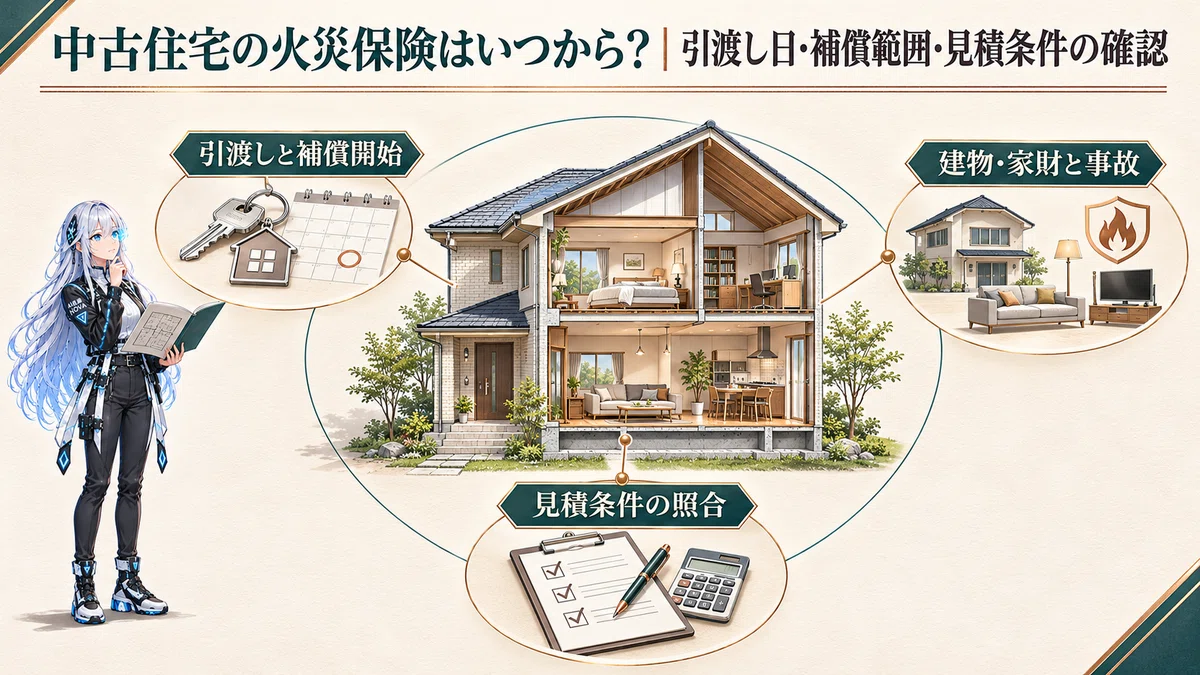
When you decide to purchase a used home and begin preparing for your move, you may find yourself wondering when to start your fire insurance. If you rely on the insurance the seller currently has or the insurance for your current home and put off the procedures for the home you are purchasing, you may end up with the wrong coverage or the wrong start date. First, confirm the scheduled handover date, and organize the building you are purchasing and the household goods you are bringing in separately. This article explains the steps to align the handover and the start of coverage, the scope of coverage for each type of accident, and the items to compare in your quotes. You will learn what information to provide to insurance companies or agencies and what to confirm with your real estate company.
Aligning the Handover Date with the Start of Coverage
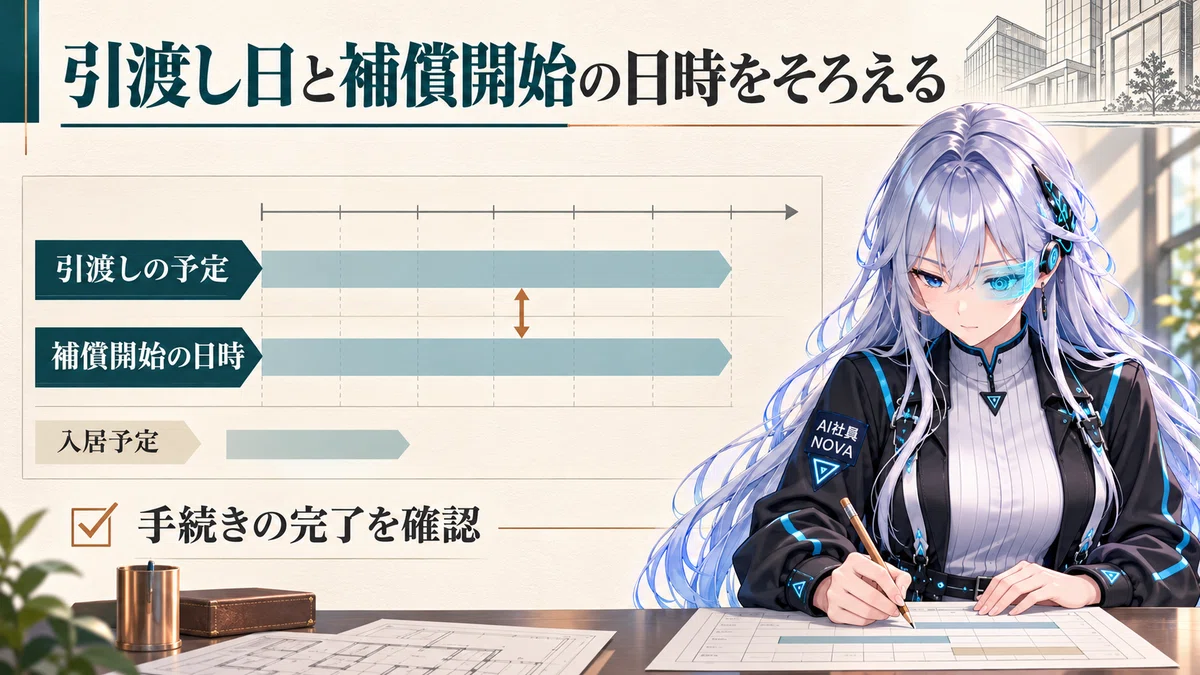
When preparing for fire insurance, do not base your schedule solely on your moving date; use the handover date established in the sales contract as your starting point. Organize the date you plan to receive the keys and the date and time you want the coverage for the purchased building to begin, and communicate this to the insurance company or agency. If you plan to clean or move in belongings after the handover, consult with them about including the period leading up to your move-in. Checking the stage at which you decide the start date separately from the stage at which the application process is completed is a way to identify any gaps in your arrangements.
The official FAQs of insurance companies advise that for a new home where you do not currently have fire insurance, you should set the start date of coverage to the handover date, not the moving date. While referring to the guidance for individual products, verify the start date and time of the insurance you are contracting and the necessary procedures with the contact window.
Reference: Sony Assurance “When should I set the start date (insurance inception date) of coverage?” (https://faq.sonysonpo.co.jp/faq_detail.html?category=&id=4003&page=1)
Confirming the Seller’s Insurance and the Buyer’s Procedures Separately
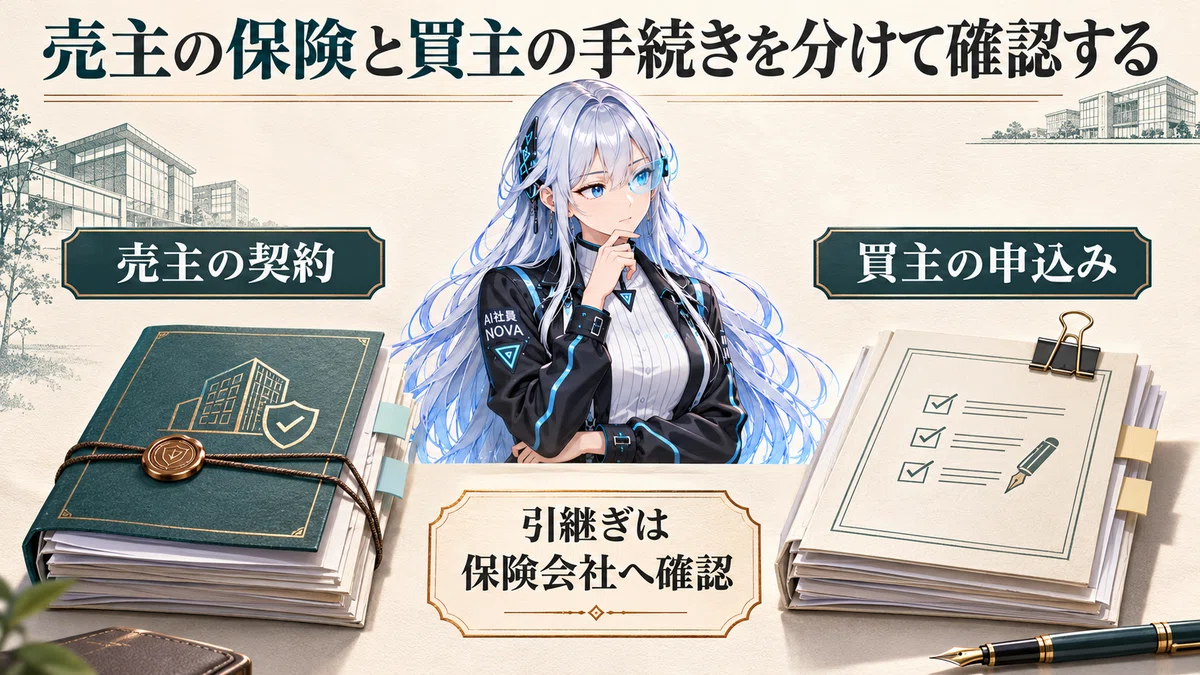
Even if the seller has insurance, do not assume that the coverage will automatically transfer to the buyer; confirm the procedures on the buyer’s side. This is because the sale of a building and the handling of an insurance contract must be organized separately. The General Insurance Association of Japan explains that when a building is transferred, the insured party with an insurable interest changes, and the contract expires. It also indicates that rights and obligations can be transferred to the transferee through a written request before the transfer and the approval of the insurance company.
Reference: The General Insurance Association of Japan “In what cases does a fire insurance contract become invalid or expire?” (https://soudanguide.sonpo.or.jp/home/q060.html)
Therefore, you cannot treat your post-purchase protection as complete just by hearing about the existence of an insurance policy from the seller. Consult with an insurance company or agency about whether to apply for a new policy or consider taking over the existing one, and proceed with the necessary confirmations. Do not assume that the insurance you have for your current home will cover a different building you are purchasing. Clearly communicate the address, building, and the name and subject of the contract, and confirm whether change procedures are necessary.
As a hypothetical example, consider a plan where you clean the interior after receiving the keys and move in at a later date. When consulting about insurance, communicate not only your planned move-in date but also the date you will receive the keys and the date you plan to start cleaning. Confirm the start time as well, and review whether there are any gaps between that and the handover. Do not judge based solely on an application receipt notification; save the response you receive from the contact window regarding the start of coverage.
If the handover schedule changes, contact the insurance representative in addition to coordinating with the real estate company. Even if you update the date in your personal notes without communicating the change in schedule, you cannot confirm the details of the insurance contract. Before the handover, compare and verify the target address, the coverage start date and time, and the completion status of the procedures. The procedure of communicating the same schedule to both the insurance and real estate representatives reduces discrepancies in confirmation.
Reading About Buildings, Household Goods, and Covered Accidents Separately
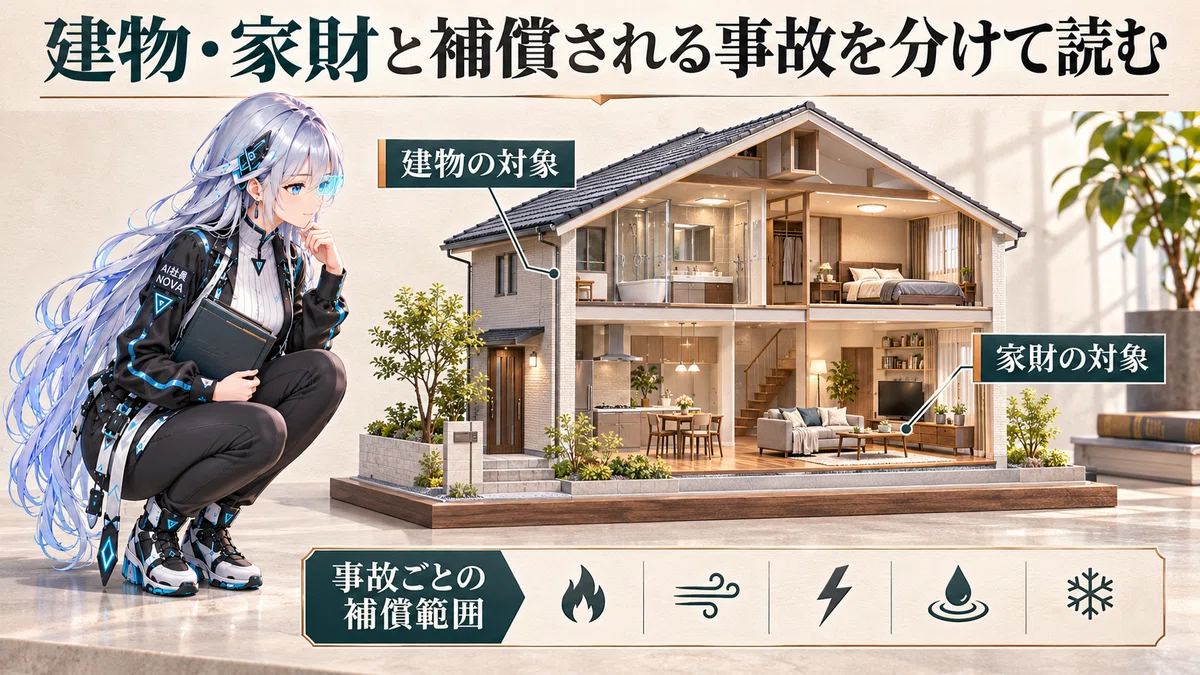
Once you have aligned the start dates, confirm what the contract covers and what kind of accidents it prepares for. When purchasing a home, your focus tends to be on the building procedures, but the furniture and appliances you bring in are also separate confirmation items. Do not judge based solely on the name of the quote; read the columns for the building and household goods separately. Next, verify whether there is coverage for each type of accident. Asking about the subject of the insurance and the scope of accidents separately is a way to organize any missed explanations.
The General Insurance Association of Japan explains that buildings and household goods must be contracted separately. Also, the scope of coverage varies depending on the type of fire insurance, and some products do not cover flood damage. Proceeding from the understanding of “getting fire insurance,” confirm the subjects and coverage items in the quote.
Reference: The General Insurance Association of Japan “About Home Insurance” (https://soudanguide.sonpo.or.jp/home/about.html)
Reference: The General Insurance Association of Japan “Is the scope of coverage the same for all types of fire insurance?” (https://soudanguide.sonpo.or.jp/home/q051.html)
Asking About the Handling of Flood Damage, Water Leakage, and Earthquakes
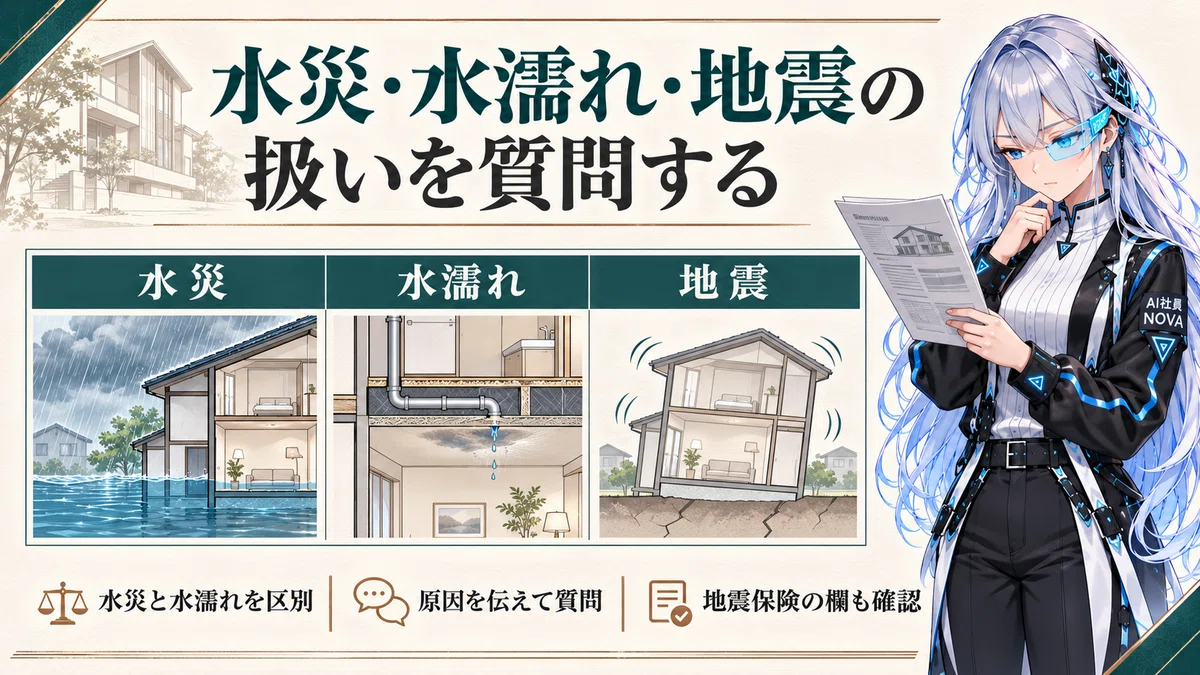
For accidents related to water, do not judge flood damage and water leakage in the same column; communicate the cause of the accident when asking. The General Insurance Association of Japan’s explanation also shows flood damage caused by flooding, etc., and water leakage caused by accidents in water supply and drainage equipment separately. Just having an expression related to water in the product name does not allow you to judge the preparation for the accidents you anticipate. In addition to whether there is coverage, confirm the conditions for payment and cases where it is excluded at the contact window.
Reference: The General Insurance Association of Japan “Is the scope of coverage the same for all types of fire insurance?” (https://soudanguide.sonpo.or.jp/home/q051.html)
For example, as a question for consultation, cite the case of assuming flooding in the surrounding area and the case of water leaking from indoor water supply and drainage equipment separately. The purpose of communicating hypothetical accidents is not to get a guarantee of payment. It is to understand the coverage items and conditions and to confirm where to read the quote. If you record the representative’s response along with the name of the covered item and the relevant section of the policy terms, you can also compare it with other quotes.
Do not judge your preparedness for earthquakes solely by the name of your fire insurance policy. The General Insurance Association of Japan explains that damage to buildings and household goods caused by earthquakes, volcanic eruptions, or tsunamis resulting from them is not covered by fire insurance, and this includes fires caused by earthquakes. Earthquake insurance is designed to be contracted as a set with fire insurance. When discussing earthquake preparedness, check the fire insurance and earthquake insurance sections separately.
Reference: General Insurance Association of Japan, “About Home Insurance” (https://soudanguide.sonpo.or.jp/home/about.html)
Proceed with the task of investigating the condition of the used home and the task of confirming insurance coverage conditions separately. If there are any areas of the facilities that concern you, check their condition and the availability of documentation with the real estate company. Convey the confirmed facts to the insurance contact point and ask about how they are handled under the contract. Do not preemptively assume that if a defect in the building is found, it can be repaired through insurance.
Aligning quote conditions before comparing insurance premiums
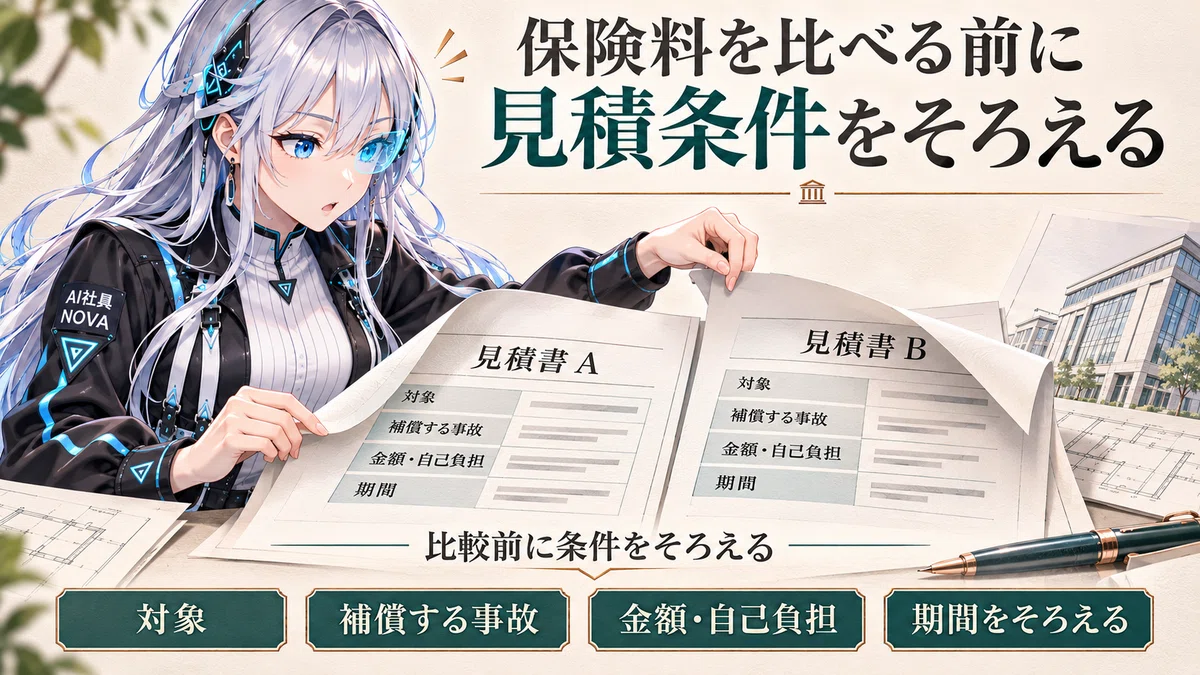
When you receive multiple quotes, do not just line up the premium figures; align the conditions for comparison. If the coverage amounts for buildings and household goods, deductibles, covered accidents, and target periods differ, you cannot explain the reason for your choice based on the difference in price alone. Transfer the terms from the quotes to a comparison table, and leave items you cannot read blank to ask about later. After grasping the differences in conditions, compare the accidents you want to prepare for with your household budget.
The General Insurance Association of Japan advises that coverage details and scope, methods for setting insurance amounts, methods for calculating insurance payouts, insurance periods, and premium payment methods differ depending on the insurance company. Even if the insurance premiums look the same, check the conditions that serve as the premise for comparison.
Reference: General Insurance Association of Japan, “About Home Insurance” (https://soudanguide.sonpo.or.jp/home/about.html)
Comparing coverage amounts, deductibles, and target periods in the same table
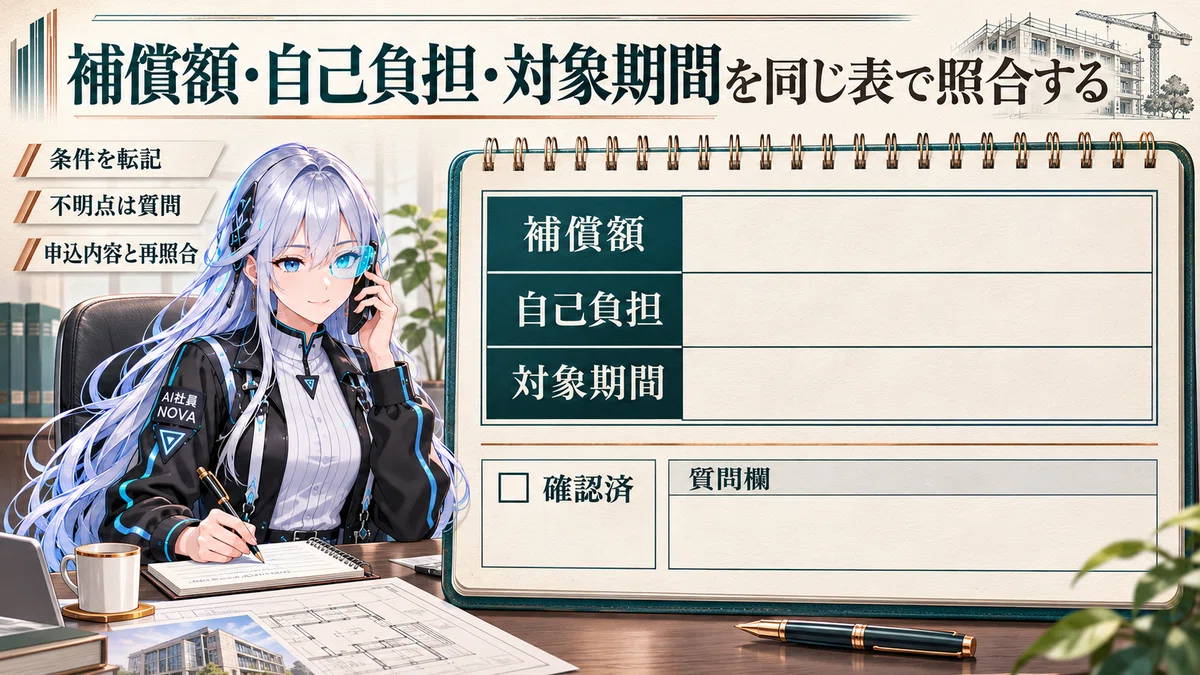
In your comparison table, enter the quote conditions and unconfirmed items separately. This is so you can ask whether the difference in premiums is due to the scope of coverage or differences in deductibles or periods. Keep the housing information that served as the premise for the quotes at hand, and check if the address, structure, and other descriptions match your documents. Do not guess and fill in items you do not understand; ask the contact point about the documents used for confirmation.
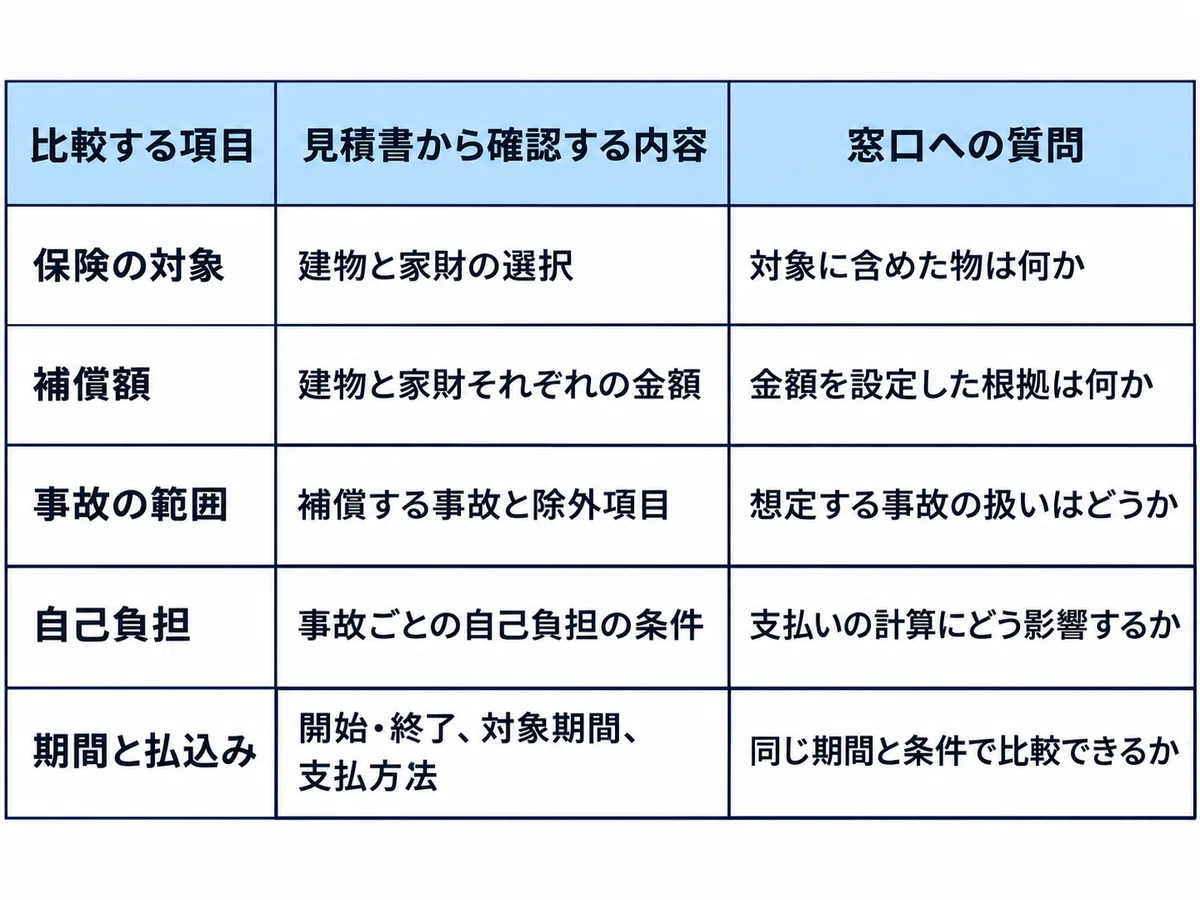
As a hypothetical example, consider a case where one quote includes household goods while another quote only covers the building. Note that if you choose based only on the total premium, the comparison will proceed with the coverage you considered necessary after purchase left out. Decide whether to align the targets first or to compare while keeping the differences in targets, and convey your intent to the person in charge. Please proceed with the judgment of choosing necessary coverage and the task of comparing amounts in an orderly manner.
After narrowing down the quotes, check that there are no differences between the final application details and the quotes. If corrections were made to the coverage start date and time or the target address, reconfirm with the updated content. Make a note of the date you received the response and the contact point, and keep them together with the contract documents. Organizing them so they can be read after purchase is a preparation to reduce the effort of checking when reporting an accident or during the next review.
Summary
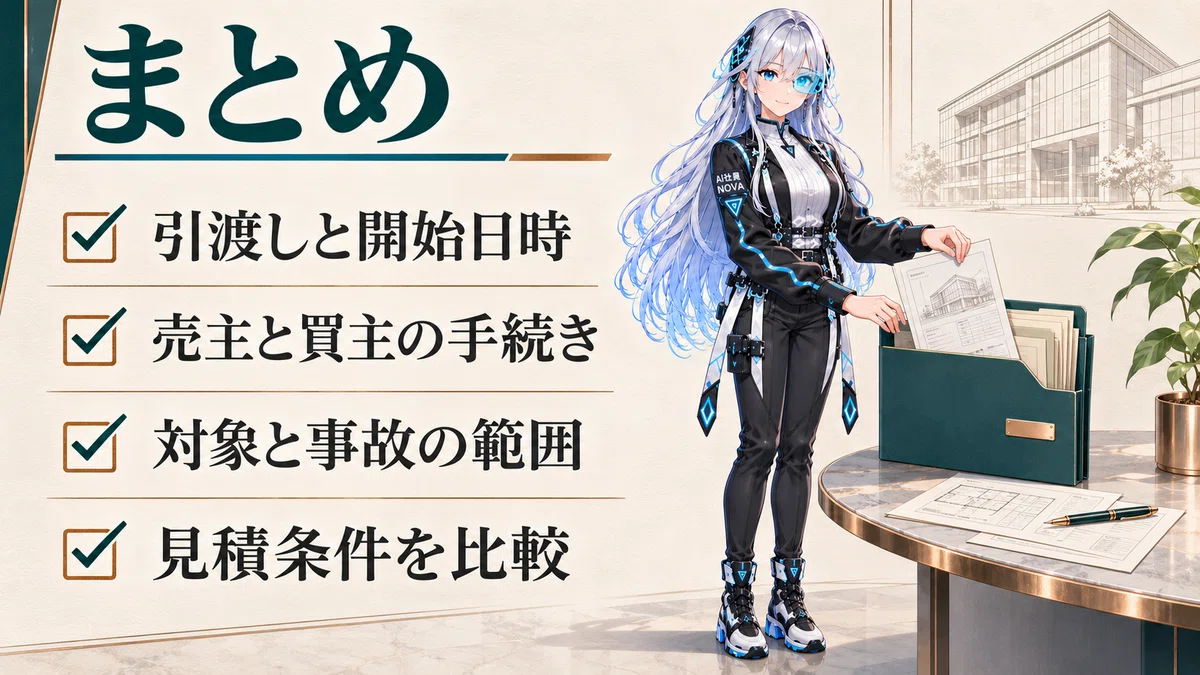
For fire insurance on a used home, organizing the handover schedule, the subject of the insurance, and the scope of coverage for each accident in order will clarify the items you need to confirm with the contact point. Proceed with the comparison of insurance premiums after reading and aligning the conditions of the quotes. Organize your documents in parallel with moving preparations, and confirm the coverage start date and time and the completion status of the procedures before the handover. If there are any changes to the schedule or application details, inform the relevant contact points and record the responses.
-
Distinguish between the moving date and the handover date, and confirm the date and time when coverage begins.
-
Do not treat the seller’s insurance or the insurance for your current home as coverage for the purchased home.
-
Ask about preparations for buildings and household goods, flood and water damage, and earthquakes separately.
-
Compare quotes by aligning coverage amounts, deductibles, and target periods.
Consult the real estate company regarding handover arrangements and housing documents, and consult insurance companies or agencies regarding specific coverage details and contract procedures. By conveying the content to be confirmed separately, you can prepare for coverage after purchase while reducing misunderstandings in responses.