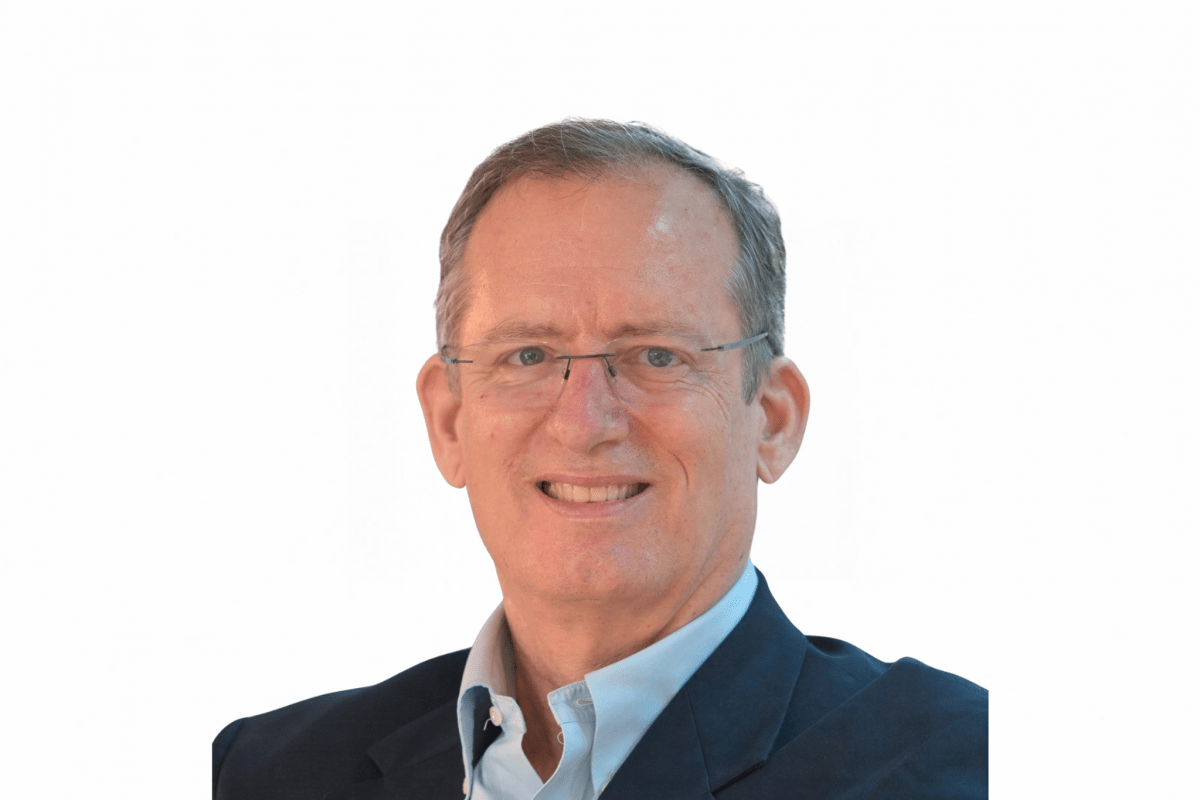
Apex Group’s work in tokenisation brings together two groups of clients: fund managers seeking new investors and businesses from the blockchain world seeking to establish investment products. Vincent Turcotte, Sales Director, Asia Pacific for Apex Digital, works between them, drawing on the group’s fund servicing capabilities to help turn interest in digital assets into structures that clients can use.
For managers, the initial attraction is often distribution. Tokenisation offers a way to reach investors whose money is already held on blockchain networks, while potentially making funds accessible at smaller investment amounts. Turcotte also sees an opportunity to reduce the cost of administering those investments, particularly through changes to transfer agency and the records on which it depends.
Speaking to Hubbis, he explains the different routes to tokenising a fund, why digital money matters to adoption and how Apex is developing its operational infrastructure. His perspective reflects a career that began on the Chicago futures floor and has taken him through several generations of financial technology in Asia.
Key Takeaways
- Distribution is an immediate draw: Managers can use tokenised structures to reach investors holding digital money and, where appropriate, offer smaller investment sizes.
- Fund structures differ: A digital representation of an existing fund and a fund issued natively on a blockchain have different operational arrangements.
- Digital cash supports investment activity: Stablecoins and other forms of digital money can make it easier to subscribe for and redeem tokenised investments.
- Transfer agency offers scope for savings: Turcotte sees the fund register as a foundation for reducing manual work and improving reporting.
- Multiple chains need consistent records: Wider distribution requires ownership and compliance information to remain coordinated across blockchain networks.
- Portfolio automation is a further development: He sees potential in combining tokenised funds into portfolios managed through smart contracts, while describing current applications as experimental.
Finding the Investors
Turcotte describes part of his audience as the “token curious”: managers exploring whether blockchain distribution can expand their businesses. Some want to reach a different investor base; others are considering whether fractional ownership can make a strategy practical at a lower investment threshold. He gives the illustrative example of a private credit fund reducing its minimum investment from $500,000 to $10,000 through a tokenised structure. Any reduction still has to fit the fund’s structure and investor eligibility requirements.
Another source of demand comes from investors who already hold stablecoins. Moving that money into conventional investments can require conversion into fiat currency and transfers between different systems. Tokenised money market funds and short-term bond products have broadened the options available to them. Turcotte sees further room for diversification into gold, equity funds and private market investments.
For a family office already active in digital assets, that ability to diversify without repeatedly moving money off a blockchain is a practical benefit. Over time, he believes more efficient settlement and reporting could also lower the cost of managing a portfolio. His work extends in the other direction too, helping blockchain businesses understand the fund structures and servicing arrangements needed to establish investment products.
Choosing the Fund Structure
A manager testing tokenisation can begin with an existing fund. Turcotte describes an arrangement in which shares are held through a special purpose vehicle or trust, with tokens representing an interest in that structure. Often described as a digital twin, this retains conventional fund infrastructure beneath the tokenised representation.
A natively tokenised fund is structured so that the token itself represents the investor’s holding and the blockchain serves as the ownership register. This changes how interests in the fund are issued and recorded, while the underlying investments can still be held through conventional custodians and banks.
One example he highlights is the Baillie Gifford Enhanced Yield Fund, a UK-regulated fund authorised by the Financial Conduct Authority. It is also available to eligible professional investors in Hong Kong, subject to applicable restrictions. Its native structure demonstrates how blockchain ownership records can form part of a regulated fund’s core arrangements.
The approach is extending to other investment products. Turcotte points to HSBC’s digitally native structured product issued in Hong Kong, with Marketnode acting as tokenisation agent and digital paying agent. For wealth managers, such developments broaden the types of investments that can be held and serviced through digital infrastructure.
The Role of Digital Money
The growth of tokenised investments also depends on how investors pay for them. Turcotte sees demand for subscriptions and redemptions using digital money, allowing the payment and asset sides of a transaction to operate together. Funds can accept fiat subscriptions, but stablecoin settlement gives investors already holding digital money another route into them.
He highlights the Hong Kong use case involving ChinaAMC (HK), Standard Chartered and OSL, in which HKDAP was used to subscribe for and redeem digital money market fund units. The stablecoin is issued by Anchorpoint Financial, the joint venture involving Standard Chartered, HKT and Animoca Brands. It is a concrete example of digital cash being used within an investment process.
His interest extends to everyday uses of that money. He cites Argentina, where demand for dollar stablecoins reflects concerns about the local currency, as an example of digital money acquiring uses beyond trading. At Chainlink, he recalls proposing an e-HKD ecosystem in which a person could receive income, pay bills and make retirement investments using digital financial infrastructure. He describes it as a thought exercise, but the underlying ambition remains relevant to his work. “To grow the entire pool of digital assets, the digital money part of the equation has to be solved,” he says.
Key Priorities
Within Apex, Turcotte is particularly interested in modernising transfer agency. The group acquired a majority stake in Tokeny in 2025, bringing additional engineering expertise into its digital business. Tokeny’s engineers also helped develop ERC-3643, a token standard for regulated assets. He points to Apex Invest as a way to distribute both conventional and tokenised assets through a more efficient portal, with the next stage focused on the administration supporting those investments.
He jokes about the traditional image of transfer agents wearing visors and rolling up their sleeves over spreadsheets and calls to banks. The caricature reflects a serious interest in how much work can be removed when ownership records are maintained on a blockchain. Those records can feed the systems producing regulatory reports and capitalisation tables, reducing the need to assemble information separately.
Transfer agency involves responsibilities to investors, issuers and regulators as well as maintaining a register. “TA is really at the centre of this,” he says. He sees the current phase as using blockchain records to support existing systems. His longer-term ambition is to move more of the transfer agency process itself on chain, using smart contracts to automate work around those records. He estimates two to five years before a fully on-chain transfer agent becomes a practical reality at scale.
Distribution across several blockchains creates a related requirement for consistent ownership and compliance information. Turcotte highlights T-REX Ledger, part of the T-REX Network, as infrastructure addressing that problem. T-REX Network is being developed by the same team that built Tokeny and continues to work with Apex, but is not an Apex Group company. Apex has announced plans to use it to coordinate tokenised assets across chains. The objective is to reach investors on different networks while maintaining a common reference for the records and controls that transfer agents need.
Education remains part of the commercial work. He describes regular discussions with the Hong Kong Monetary Authority, the Monetary Authority of Singapore and Hong Kong’s Securities and Futures Commission, alongside engagement with Web3 Harbour and the FinTech Association of Hong Kong. Helping managers understand how to introduce digital assets safely is, in his view, still essential to adoption.
Into the Future
Automating the Portfolio
Turcotte’s interest in the next generation of products centres on composability: the ability to combine digital assets and their functions within other applications. He describes vault structures holding several tokenised investments in a portfolio, with smart contracts applying rules to rebalance the holdings. A mix of tokenised equity and bond funds could, for example, be managed against a chosen allocation.
He says Apex works with firms exploring these structures, largely from the blockchain community, but regards the activity as experimental. The immediate priority is to advance the technology supporting them. Artificial intelligence could play a role in more automated financial activity, and he points to Web3 Harbour’s work on how payments initiated by AI agents might be brought into wider use safely. For him, these developments will become more useful as investors have more digital money and investment products with which to work.
Getting Personal with Vincent Turcotte
Turcotte was born and raised in Ann Arbor, Michigan, with little expectation that he would build his life in Asia. He studied English literature at Western Michigan University, with a minor in economics and a particular interest in Keats and Joyce. He jokes that “Shakespeare couldn’t feed the kids”, and followed a stockbroker’s recommendation to attend graduate school at DePaul University in Chicago.
To pay for his studies, he worked on the floor of the Chicago Mercantile Exchange during the day and attended classes at night. It was an education in the futures business from the ground up. In the winter of 1991, after suffering frostbite while waiting for a train, he volunteered for a posting to one of his firm’s overseas offices. He assumed it might be London.
By July, Chicago had become considerably more appealing. He was sailing on the lake, playing softball and going to baseball games when his boss offered Hong Kong. He found it on a map, obtained a passport and arrived expecting to stay for six months. When the firm subsequently proposed moving him to Singapore, he had become attached enough to Hong Kong to join another business and remain there.
Assignments in Tokyo and Singapore followed, but Hong Kong became home. He values the experience of living abroad while recognising what a mobile life gives up. “I don’t have a house with little lines on the door where my kids have grown up,” he says. His three sons were aged 30, 29 and 16 at the time of the interview. The older two live on Long Island in the United States and the youngest in Sweden; they stay close through frequent calls and time together, including summers.
Professionally, he has watched markets move from open outcry to electronic trading and worked through the Asian financial crisis and the global financial crisis. The move to screens initially prompted fears about the future of the business, before easier access helped trading volumes grow. Those experiences inform his interest in how financial disruption can lead to changes in technology and regulation.
Away from work, Hong Kong’s hiking trails are a particular pleasure. He enjoys the MacLehose Trail, Dragon’s Back and the Twins, as well as opportunities to get out on the water on a junk. From his home in Ap Lei Chau, he values being able to reach somewhere quiet and green within a short journey.
American sport remains close, too. For 20 years, he has belonged to the American League Far East fantasy baseball league with former colleagues from the credit and futures markets. He has also developed a love of rugby through Hong Kong’s Sevens, although cricket remains harder to fathom. He does, however, appreciate the Pimm’s and cucumber sandwiches.