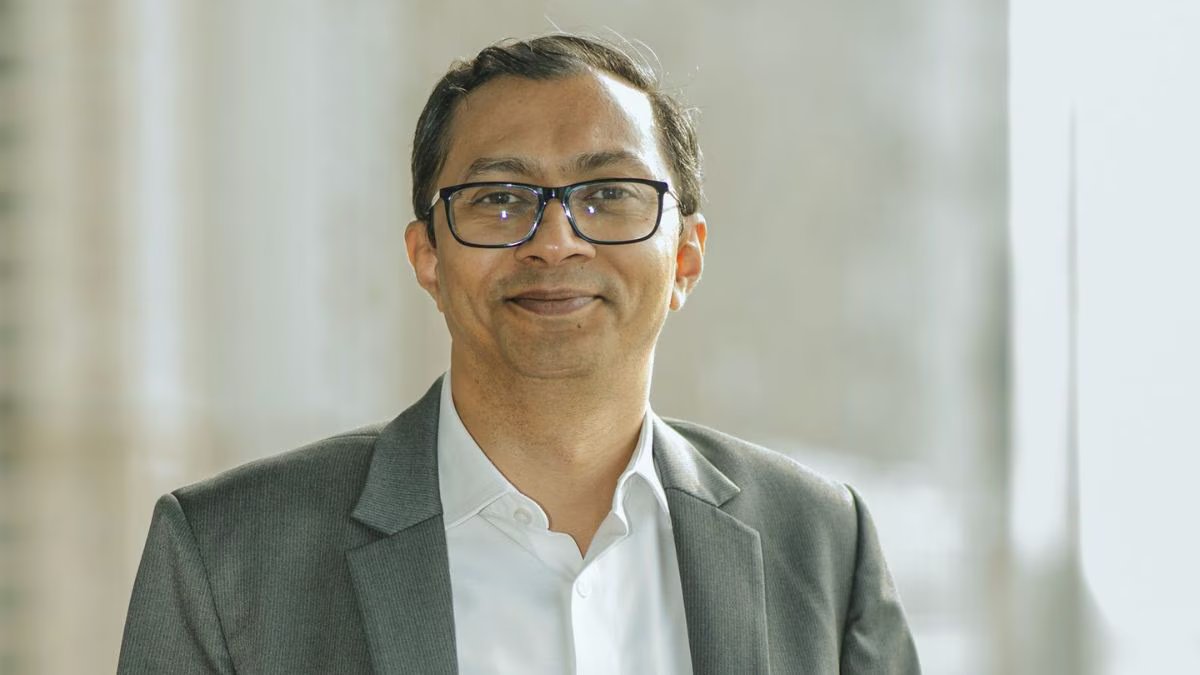
SilverX Fund, a venture capital firm that has backed startups such as OnFinance, SuperK, VAMA and Dhruva Space, plans to make four–six investments by the end of this year and 10–12 in 2027. These investments will be made from its recently launched Fund II, which has a total corpus of $90 million along with an additional greenshoe option of approximately $45 million.
Under Fund I, launched in August 2022 — when the firm operated as Silverneedle Ventures — it made 16 investments. The corpus of Rs 76 crore was fully deployed within 24 months, spanning startups across segments such as SaaS, consumer technology and deeptech.
The investment firm is currently looking to back startups across three broad themes. “First would be artificial intelligence (AI), but not the wrapper plays. The real opportunity is in the infrastructure underneath: data reliability, compliance, vertical AI with proprietary moats,” Ajay Jain, founder and managing partner, SilverX Fund, told FE.
What’s the second area of Focus?
The second area of focus is deeptech, including space, robotics and IP-driven hardware. “The policy environment in India has genuinely shifted, and we are seeing companies that would have been unbankable five years ago now closing serious rounds,” Jain added. The third would be semiconductors and advanced materials.
From Fund II, the firm has already made a $5-million pre-IPO investment in an AI infrastructure platform focused on addressing hallucination risks and improving enterprise AI reliability. “Term sheet is signed, closing March 2026. Their client list is remarkable, with great revenue, PBT and margin numbers. It’s a strong first bet for the fund,” Jain said.
For other investments, the firm is targeting an initial cheque size of $1–2 million, with about 60% of the fund earmarked for follow-on rounds. This, the firm believes, is one of its most important structural decisions.
“The lesson from Fund I was clear: if you get into a great company but don’t own enough, you won’t generate the returns even when the company succeeds. So we protect our ownership, and we double down on the winners,” he said.
The firm also invests in firms that show a clear path to profitability — startups that may not necessarily be profitable today, but have a credible, specific roadmap to positive unit economics. “We want founders who understand the business model, not just the product,” he said.
Favourable startup trends
Some of the favourable startup trends, according to Jain, are AI crossing the line from hype to real enterprise buying, improved deeptech policy environment, better founder quality at seed+, second-time founders with real operating scars re-entering the market, global capital coming back to India, especially for late-stage and pre-IPO and lastly compelling data on VC returns, such as Preqin benchmarks showing Indian early-stage VC at 29.5% Net IRR.
But, on the other hand, it’s also a tough environment in some ways, Jain pointed out. “LPs want DPI and not just marked-up valuations. That pressure is real, and a lot of funds are feeling it. Fundraising cycles have stretched significantly. What used to take six months is now 12 to 18,” he said.
Additionally, he believes the exit market has a big gap in the middle: IPOs only really work above $300 million, M&A works below $100 million, and the $100 to $300 million range has very few natural buyers.
“That’s where a lot of portfolio companies are sitting. And ownership dilution is a quiet killer- if you don’t have the follow-on reserves or the lead position, a great company outcome can still produce a poor fund return,” he said.
Additionally, a few areas the firm is consciously avoiding are generic AI wrappers with no proprietary data, no moat, just a thin layer on top of GPT, quick commerce, mass market edtech and D2C consumer brands without a real distribution edge.
“Brand alone isn’t a moat in India’s consumer market, and we need to see a technology or data advantage before we get interested. In quick commerce, the capital intensity is brutal, and the unit economics still haven’t worked at scale after years of trying,” Jain said.