Unlock the Editor’s Digest for free
Roula Khalaf, Editor of the FT, selects her favourite stories in this weekly newsletter.
The UK’s windfall tax on North Sea oil and gas producers looked unfair when energy prices were low. With oil nudging $100 per barrel and European natural gas prices almost double what they were a week ago, the case for cutting or scrapping the Energy Profits Levy has only got stronger.
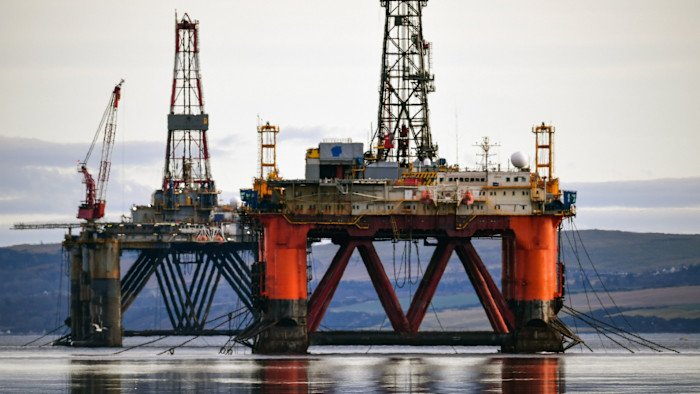
There is little doubt that the tax, which sees the government creaming off an extra 38 per cent of profit unless oil falls below $76.12 per barrel and gas below £20 per megawatt hour, has hit investment in the North Sea. Even without it, producers face a 40 per cent profit tax. And they have been squealing, loudly. Harbour Energy has put £2bn of capital projects on hold. Production from the area has been declining, so government revenue has undershot targets.

The oil and gas industry believes that this can be reversed. Watering down the windfall tax, so it only kicks in when oil prices are above $90 a barrel and gas prices above £30 per megawatt hour and only applies to revenue exceeding these thresholds, would unlock £50bn of investments in 111 projects in the basin, says industry association Offshore Energies UK.
Assuming it costs $25 of investment in drilling and facilities to suck up one barrel, in simple terms, that sort of investment would yield a quantity equivalent to 550,000 barrels a day over a decade. That would be sufficient to halt production declines in the basin, according to Stifel analysts, bringing UK North Sea oil and gas production back up above 1mn barrels a day in the 2030s.

This would be well worth doing. The UK consumes roughly 1.4mn barrels of oil a day, and natural gas equivalent to about 1.1mn barrels per day, so a revitalised North Sea could provide energy for some 40 per cent of the country’s needs. It is true, of course, that demand for fossil fuels is set to decline as the country gets further down its decarbonisation pathway. But, looking at natural gas at least, National Energy System Operator still estimates that we will be using between 63 and 93 per cent of 2024 volumes by 2035.
More domestic production wouldn’t shield UK consumers from higher energy bills. The country is interconnected with its neighbours and would see domestic prices rise to international levels. But higher profit in one area of the economy, and the accompanying jobs and taxes, would at least partly cushion the pain.
One might think that if prices get high enough, oil producers should want to drill anyway, windfall taxes or not. That’s true. But they would have to rise a lot, and stay high: investment decisions are taken on long-term price scenarios, and it is still too soon to know how long the US war on Iran will last.
Reforming the windfall tax, on the other hand, raises the possibility of a sustainable increase in domestic production. While the extra North Sea barrels won’t come soon enough for the current energy crisis, it would leave the UK in better shape when the next one arrives.