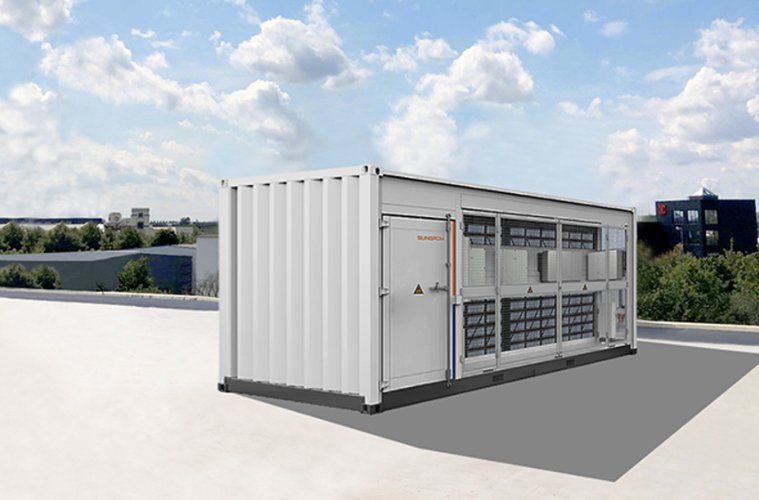
Every grid battery has a piece of equipment between it and the power lines that few people notice. The power conversion system, the inverter equipment that turns grid power into something a battery can store and sends it back out when needed, connects to outside networks, and its settings can be changed remotely. At an energy forum in Seoul, Chungbuk National University electrical engineering professor Kim Jae-eon argued that this is where storage buyers should be looking harder.
If someone tampered with the inverter’s core software, Kim said, they could disrupt how the battery charges and discharges and threaten the power supply it is meant to support. He also noted that some Chinese-made units are sold in Korea under Korean brands, so the name on the equipment may not match the factory that built it.
His fix is to make security count when storage contracts are awarded. Korea’s storage tender this year does not explicitly score resistance to hacking or tampering, and Kim proposed certification standards, so security is weighed alongside price. Korean companies could hold their own against cheaper Chinese rivals in markets that care about safety and security, he said, if they design their own conversion equipment and can prove it stands up to outside interference.
China Builds Most of the Systems
The question reaches well beyond Korea because China assembles most of the world’s storage systems. Chinese-headquartered integrators held 76% of the global market in 2025, and eight of the 10 largest were based in China, research firm Wood Mackenzie reported in June. Tesla and Sungrow held the top two spots worldwide, and Tesla led in North America.
Korean-based Samsung SDI recently announced that it will supply Jupiter Power, a BlackRock-owned developer, with 16 gigawatt-hours of lithium iron phosphate batteries from its Indiana plant over three years starting in 2029. In October, the company said it would ship 1 gigawatt-hour of complete storage systems from Kokomo to Alpha Omega Power by year-end. Neither announcement names an inverter supplier.
U.S. Rules Already Reach the Inverter
U.S. regulators have already moved on the equipment Kim described. On July 28, the Federal Communications Commission (FCC) added foreign-produced power inverters to its Covered List, which bars new models from receiving U.S. equipment authorizations. After an August revision, the listing covers inverters that can be reached remotely over a wired or wireless connection. Inverters that qualify for the federal manufacturing tax credit under Section 45X no longer count as foreign-produced, and models cleared by the Department of War or the Department of Homeland Security are exempt.
Tax credits raise a related question about who stands behind the equipment. Under IRS Notice 2026-15, developers claiming the Section 48E credit for storage projects that began construction after 2025 have to determine whether a prohibited foreign entity provided material assistance. The rule has pushed buyers to look past a supplier’s factory address to who owns and controls it.
Keeping Equipment Running
The FCC did leave room for equipment already in the field. A waiver issued with the July listing lets manufacturers keep sending software and firmware updates that reduce potential harm to U.S. consumers. Over a system’s life, whoever services the equipment also shapes who pays when something breaks, a question that has come up in leased storage deals.
Kim wants Korea to go further, with joint testing alongside European certification bodies so Korean equipment can prove its security to buyers abroad. Simply avoiding Chinese products is not enough, he said, and verifiable security should become a Korean standard.