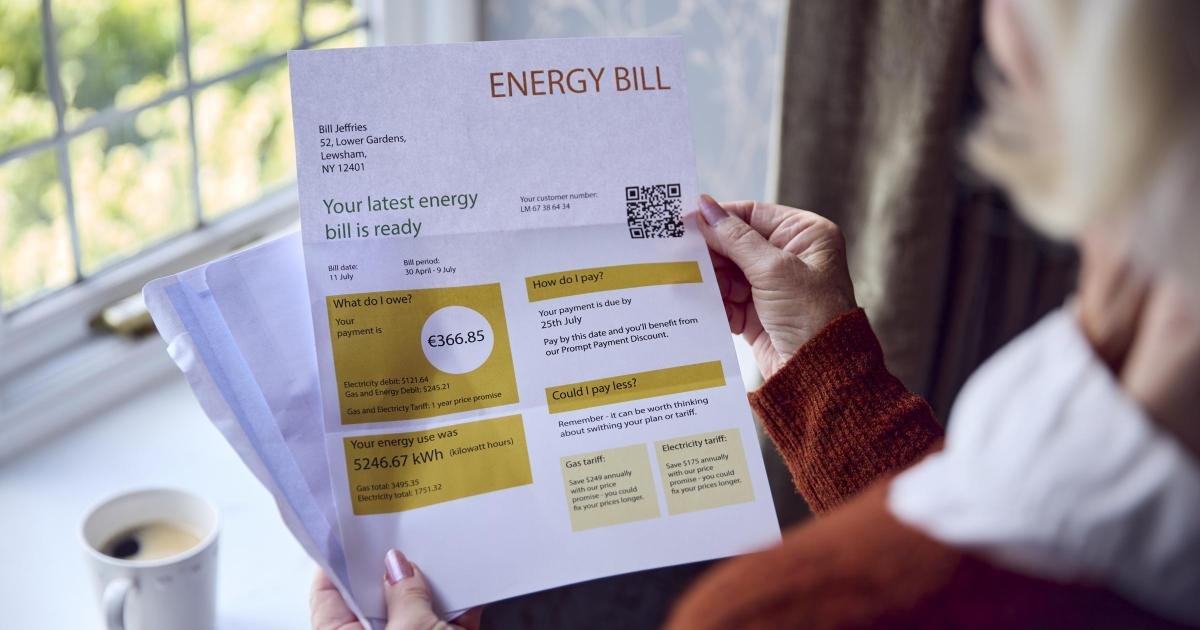
“That is a very, very large energy bill. I mean, you’re almost using in a month what a typical usage is in a year,” said Mr Lewis, on his Martin Lewis Podcast.
The family, who live in a large home with “lots of perks”, said their bills had been extremely high for years. After a meter change, they briefly saw lower costs — only for charges to shoot back up again. Their smart meter also “doesn’t always work”.
So what should you do if you’re in a similar position?
Is my energy bill wrong? Do credit cards repay 0% debt first? Is Martin’s Quantum AI investment a scam (spoiler: yes)? NEW QUESTION TIME PODCAST where you ask about these, my fave sci-fi & more. Do listenhttps://t.co/O7b14FLwb2https://t.co/R4eZdU6Xi2https://t.co/RCrSyznDx9
— Martin Lewis (@MartinSLewis) February 16, 2026
Step One: Put usage in perspective
Lewis first stressed the importance of understanding just how unusual very high bills are.
“You’re paying £20,000 a year, right? That’s a lot… that is really, really big.”
However, he acknowledged that lifestyle factors matter.
“Is it a hot tub, a swimming pool, a sauna?” he asked. “Anything of that ilk, which is using heating for pleasure massively, puts up your costs.”
Large properties alone can double typical consumption – but heating-based luxury appliances running continuously can multiply it further.
Step Two: Check the Smart Meter – properly
Lewis explained that many people confuse the smart meter itself with the in-home display.
“A smart meter is a meter that sends readings to the energy firm of exactly how much you’ve used,” he explained. “You will also then have an in-house display, which shows you how much you are using.”
Often, it’s the display that stops working – not the meter sending readings.
If your display is functioning, he recommends a hands-on experiment.
Step Three: Turn everything off
Lewis says this is where you start detective work.
“I would start and try and turn everything you could possibly turn off, off in the house… so you’re getting down to near as damn it zero usage,” he said.
Then switch appliances back on one by one, watching the live usage.
Energy appliances are measured in watts or kilowatts. Bills are charged per kilowatt hour (kWh).
He gave this simple rule of thumb: “Let’s say you have an appliance that is 1,500 watts… that’s 1.5 kilowatts. If you left it on for an hour, you would expect it to use 1.5 kilowatt hours.”
If electricity costs roughly 28p per kWh under the price cap, that appliance would cost around 40p per hour to run.
This method helps identify what’s consuming extraordinary amounts of energy.
Step Four: Look for always-on heat devices
Lewis suspects that for bills this high, the cause is likely:
“Some form of heat-based device that is using a lot of energy and is on all the time.”
Possible culprits include:
- Underfloor heating
- Immersion heaters
- Hot tubs
- Heated swimming pools
- Water heating systems
Even one incorrectly configured system can quietly burn thousands of pounds per year.
Step Five: Check your solar panels
Solar systems should reduce bills — not leave them unchanged.
Lewis warned: “There’s a lot of issues with solar panels recording or even going the wrong way.
“So you need to be careful that your solar panels are actually reducing your bills.”
If export or generation isn’t recorded correctly, you may not be receiving full benefit.
Step Six: If you still suspect a meter problem, complain
If your investigations show no excessive appliance usage, it may be time to escalate.
“I would be going back to my energy firm and making a formal complaint that something must be wrong… and you want to investigate that the meters are working,” he said.
If unresolved, you can take the complaint to the Energy Ombudsman.
Recommended reading:
What to do if your bills feel excessive
- Compare your annual usage to national averages.
- Use your smart meter display to monitor live consumption.
- Turn everything off and test appliances individually.
- Investigate heat-based systems first.
- Check solar output is properly credited.
- Escalate complaints if necessary.